

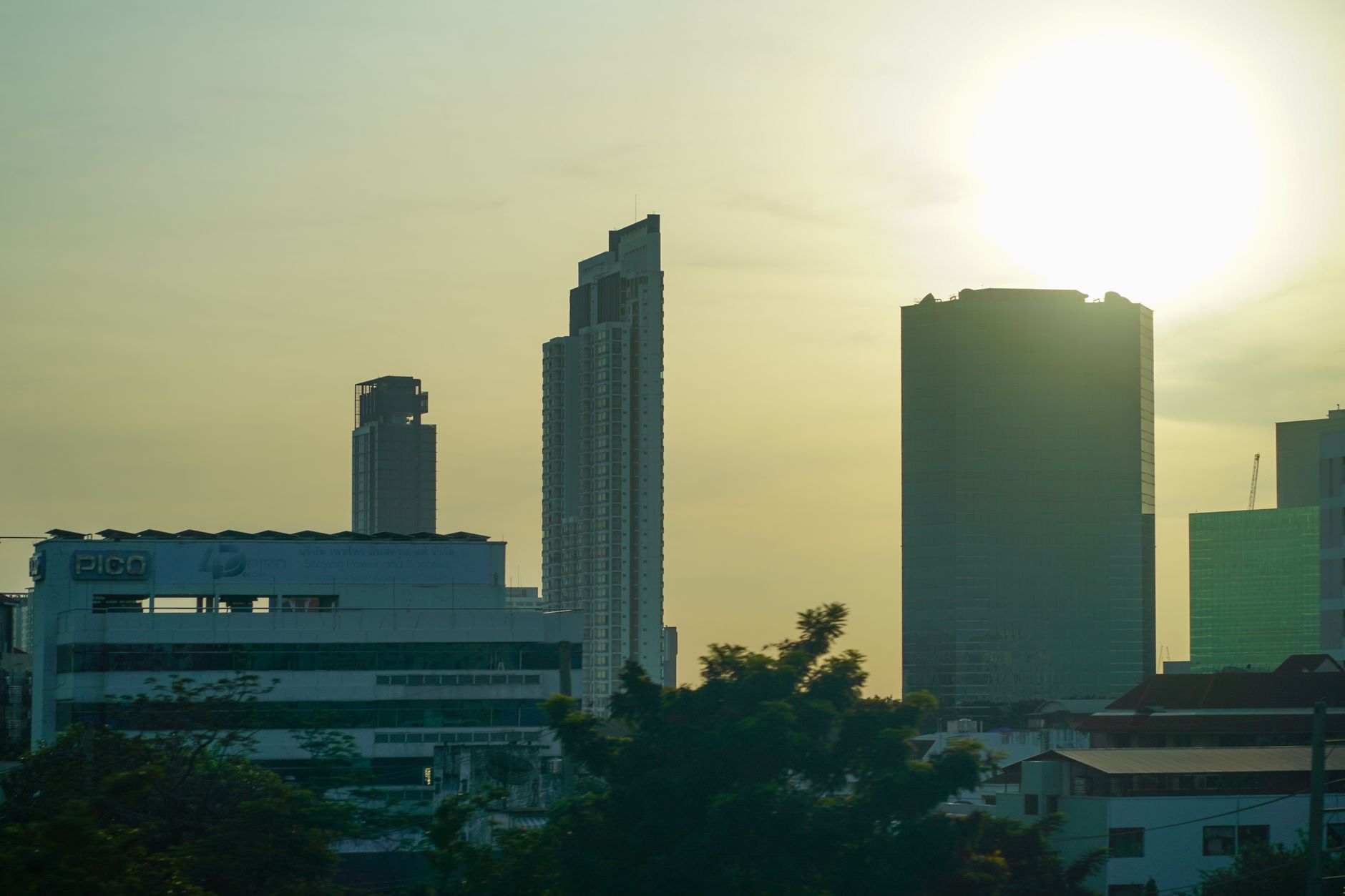
In the first half of 2026, Thailand's residential property market has split into two distinct cyclical phases. Bangkok is carrying more than 65,300 unsold condominium units with a combined estimated value of approximately 370 billion THB. At current absorption rates, clearing that inventory would take two to three years even if no developer launched a single new project. At the same time, Phuket recorded sales growth of over 45% year-on-year, while new launches for 2026 contracted to an estimated 6,000 to 8,000 units - roughly three times fewer than the 18,515 units brought to market in 2024.
Our analysts have been tracking both sides of this divergence since late 2024. The question for internationally mobile capital is no longer 'Thailand - yes or no', but rather 'which segment of the Thai market is holding firm, and which is entering a correction phase'. Below we break down the mechanics of this split, identify where value is found, and define a decision framework for three distinct investment scenarios.
Quick answer
- Bangkok holds 65,300 unsold condominiums valued at approximately 370 billion THB; inventory clearance at zero new supply would take two to three years (as of October 2026 data)
- Despite new Bangkok launches rising 6% year-on-year (14,377 units in Q1 through Q3 2026), demand is not keeping pace due to tightened mortgage criteria and reduced Chinese buyer activity
- Phuket recorded over 45% sales growth year-on-year in H1 2026; foreign buyers account for roughly two-thirds of transaction volume
- New Phuket launches shrank to an estimated 6,000 to 8,000 units in 2026, down from 18,515 units in 2024, reducing supply-side pressure materially
- Phuket splits into two layers: premium projects in Bang Tao, Cherng Talay, and Layan are moving steadily; lower-cost, high-volume condominiums from 2023 to 2025 launches are accumulating unsold stock
- Koh Samui remains a niche, lower-liquidity market with limited exposure to the oversupply cycle, given the constrained scale of new development there
Options and scenarios
Scenario A - Using Bangkok oversupply to negotiate better entry terms
When a market carries 65,300 unsold units, buyer leverage increases. Developers in Bangkok are offering price concessions, flexible payment schedules, and fit-out packages. Per industry-media data from October 2026, several developers delayed launches originally planned for late Q3, signalling uncertainty on the supply side.
This scenario is relevant for investors targeting long-term rental income in the capital, provided:
- The investment horizon is at least five years - sufficient time for inventory absorption and a return to price momentum
- The buyer accepts residual risk from further softening in Chinese demand, which historically drove the 3 to 7 million THB condominium segment
- The project sits near a BTS or MRT node, which per market analysis provides partial value protection during a downcycle
Risk consideration: the two-to-three-year absorption figure is a baseline scenario. Should the Bank of Thailand tighten lending criteria further, or should Chinese economic headwinds deepen, that window could extend.
Scenario B - Allocating to Phuket in the premium segment
Phuket in 2026 presents a fundamentally different profile. Sales are growing, supply is contracting, and the demand structure rests on foreign buyers - primarily from Russia, Europe, and the Middle East - purchasing with cash, entirely independent of local credit conditions.
Based on a market report published in October 2026, we monitor a clear two-tier structure on the island:
- Upper tier: villas and luxury condominiums along the Bang Tao, Layan, Surin, and Kamala corridor - sales here are accelerating and asking prices are firming. Per CBRE data, Bang Tao and Cherng Talay rank as the most sought-after locations on the island
- Lower tier: standard condominiums from the high-volume launch waves of 2023 to 2025, often in secondary locations - inventory is building here in a pattern that echoes Bangkok, though at a smaller scale
This scenario fits investors when:
- Budget allows entry above 8 to 10 million THB (approximately 950,000 to 1,200,000 EUR equivalent at late-2026 exchange rates, per market estimates)
- The objective is short-term rental income driven by tourism arrivals (Phuket International Airport throughput in 2025 exceeded pre-pandemic levels per Airports of Thailand data)
- The investor is comfortable with leasehold title or a company structure for land-title assets
Scenario C - Koh Samui as portfolio-level island diversification
Koh Samui operates on a different scale. Based on our estimates, annual new supply on the island does not exceed 800 to 1,200 units, which substantially limits oversupply risk. Locations such as Bophut, Maenam, and Chaweng Noi attract buyers seeking lower rental competition and higher seasonal nightly rates.
The trade-off: lower secondary-market liquidity means a longer exit timeline. We track average secondary-market sale periods on Koh Samui at 12 to 18 months, based on our estimates, compared with 6 to 10 months in Phuket's premium segment.
Comparison table
| Parameter | Bangkok (condominiums) | Phuket (premium segment) | Koh Samui (villas and apartments) |
|---|---|---|---|
| Unsold inventory (2026 position) | 65,300 units | Limited in premium tier; building in mass-market tier | Low, below 1,000 units per our estimates |
| New launches 2026 | 14,377 units (Q1-Q3), +6% YoY | 6,000 to 8,000 units (down from 18,515 in 2024) | 800 to 1,200 units per our estimates |
| Sales momentum YoY | Stagnation or decline | +45% YoY in H1 2026 | Stable, low single-digit growth |
| Foreign buyer share | Approx. 15 to 20% per market estimates | Approx. 66% (two-thirds) | Approx. 50 to 60% per our estimates |
| Inventory absorption timeline | 2 to 3 years (baseline) | Below 12 months in premium tier | Low supply minimises the issue |
| Typical entry threshold | 2 to 5 million THB | 8 to 15 million THB (premium) | 6 to 12 million THB |
| Primary risk | Oversupply, weak credit-driven demand | Segmentation risk in mass-market tier | Low secondary-market liquidity |
| Buyer negotiating power | High | Low in premium tier; high in mass-market tier | Moderate |
Risks and mistakes
Mistake 1 - Treating Thailand as a single, uniform market. The data are unambiguous: Bangkok and Phuket are in opposing cyclical phases. An investor relying on national averages loses the granular picture entirely. The 65,300-unit overhang in the capital does not mean Phuket has the same problem - but mass-market condominiums on the island are beginning to show similar symptoms.
Mistake 2 - Assuming Phuket's sales growth is uniform across all products. We monitor a clear divide: projects with genuine locational advantage (Bang Tao, Layan, direct beachfront) and strong design credentials are selling at an accelerating pace. Cheaper, repetitive condominiums from the 2023 to 2025 volume waves are accumulating inventory. Buying 'in Phuket' without analysing the micro-location and price segment carries the risk of entering a supply trap that resembles Bangkok's.
Mistake 3 - Ignoring demand structure differences. Bangkok's demand rests primarily on domestic buyers whose access to mortgages is decisive. The Bank of Thailand's loan-to-value tightening hits absorption directly. On Phuket, two-thirds of transactions involve foreign cash buyers - sensitivity to local interest rates is minimal, but exposure to foreign-ownership regulatory changes is rising and should be monitored.
Mistake 4 - Underestimating currency exposure. An investor purchasing a property for 10 million THB faces meaningful THB/home-currency exchange risk. A 5% baht appreciation raises the entry cost in equivalent home-currency terms by approximately 500,000 THB. We monitor exchange rates and recommend spreading currency transfers across time rather than converting in a single transaction.
Mistake 5 - Underestimating how long the Bangkok absorption cycle could run. The two-to-three-year baseline assumes no additional mass launches. In practice, developers are still releasing projects - 14,377 units in Q1 through Q3 2026 alone - which could extend the clearance period. On Phuket the opposite dynamic applies: new launches falling to 6,000 to 8,000 units in 2026 shortens absorption and supports prices at the premium end.
FAQ
How large is Bangkok's unsold condominium inventory in 2026?
Per industry data from October 2026, Bangkok holds over 65,300 unsold condominium units with a combined estimated value of approximately 370 billion THB. At current absorption rates and assuming no new launches, clearing that stock would take two to three years.
Why is Phuket outperforming Bangkok in 2026?
Three factors are driving the divergence. First, foreign buyers represent roughly two-thirds of Phuket transactions and purchase with cash, making the market structurally independent of Thai mortgage conditions. Second, new supply contracted to 6,000 to 8,000 units in 2026 from 18,515 in 2024, reducing supply-side pressure. Third, strong tourism arrivals sustain short-term rental income, supporting buyer confidence.
Is the entire Phuket market resilient to oversupply?
No. Our analysts monitor a clear segmentation. Premium projects in locations such as Bang Tao, Layan, and Kamala are selling well. Standard condominiums from the high-volume launches of 2023 to 2025, particularly in less central locations, are accumulating unsold inventory in a pattern that resembles the Bangkok situation.
Which Phuket locations are most in demand in 2026?
Per CBRE data cited in October 2026 analyses, Bang Tao and Cherng Talay rank as the most sought-after locations. In our transaction data sets we also observe strong activity in Layan, Surin, and Kamala, particularly in the villa and luxury condominium segment.
How long does it take to sell a property on Koh Samui's secondary market?
Based on our estimates, average secondary-market sale periods on Koh Samui run 12 to 18 months, compared with 6 to 10 months in Phuket's premium segment. Lower liquidity reflects a smaller active buyer pool and, for some international investors, lower name recognition of the island relative to Phuket.
How does Bangkok's oversupply affect buyer negotiating power?
It strengthens it considerably. With 65,300 unsold units, developers are offering price reductions, extended payment plans, and fit-out incentives. This negotiating window is most relevant for investors with a long horizon of at least five years who are prepared to wait out the absorption cycle.
Is Chinese demand for Thai condominiums recovering?
Not at the pace the market anticipated. Per October 2026 data, Chinese buyer activity remains subdued due to a slowdown in the Chinese economy, tighter controls on overseas capital transfers, and more rigorous verification of ownership structures. This is one of the primary factors sustaining Bangkok's elevated inventory level.
What is the minimum budget for Phuket's premium segment?
In our data sets, the typical entry threshold for premium condominiums and villas in prime Phuket locations starts at 8 to 10 million THB. Projects with direct beach proximity in Bang Tao or Layan can require budgets above 15 million THB. These figures are based on our market estimates as of late 2026.
Should investors wait for Bangkok prices to fall further before entering?
It depends on the sub-segment. Units in the 2 to 5 million THB range are likely to remain under the most sustained pressure, as this tier is most sensitive to mortgage availability. Projects above 10 million THB close to BTS or MRT stations may hold value better. We monitor quarterly data and recommend analysing specific projects rather than timing an undefined market bottom.
The core analytical conclusion from our monitoring is straightforward: Bangkok and Thailand's island markets should be evaluated as two distinct asset classes with different risk profiles in 2026. Bangkok offers a negotiating opportunity for patient capital with a long horizon, paired with acceptance of a prolonged absorption cycle. Phuket's premium tier combines contracting supply with growing foreign cash-buyer demand - a defensive profile with exposure to tourism-driven rental income. Koh Samui represents a diversification option for portfolios that accept lower liquidity in exchange for reduced competition from new supply.
Researching property in Phuket or Koh Samui? Get in touch - our analysts will prepare a data brief for your shortlisted location.