

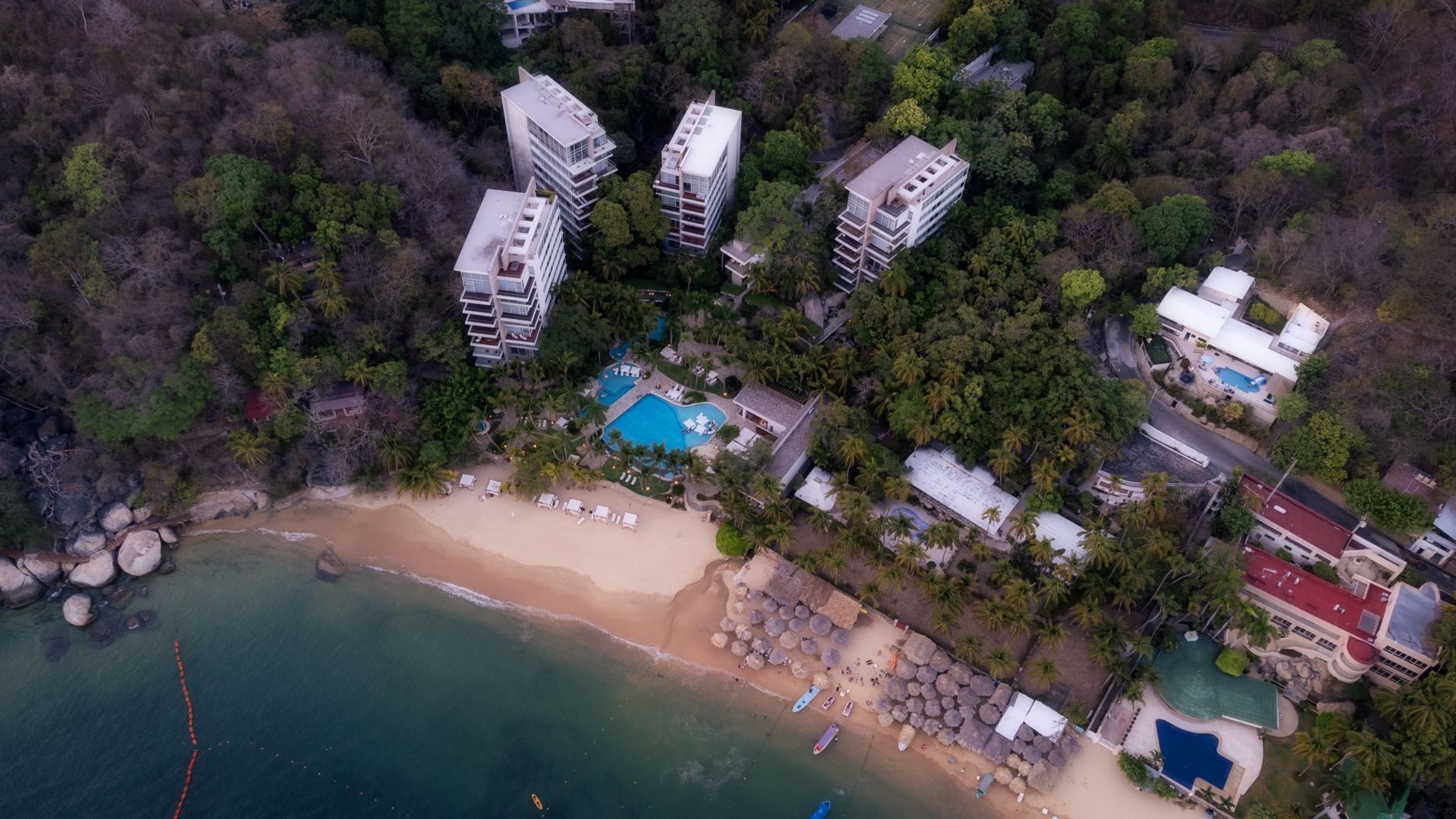
According to Thailand's Department of Lands (as of Q1 2026), foreign nationals may hold freehold title over up to 49% of the total residential floor area in any registered condominium project. On Koh Samui, this represents the only legally straightforward path to full property ownership for foreigners - one that does not require establishing a Thai company or relying on a leasehold structure. Our team has monitored this market for several years. We observe the island entering a phase of moderate supply growth, constrained by infrastructure bottlenecks that shape pricing and liquidity in ways that differ materially from Phuket.
In the vacation-rental segment, average condo prices on Koh Samui range from 75,000 to 130,000 THB per square metre as of 2026. This remains roughly 25-40% below comparable units in Bang Tao or Surin on Phuket. The analytical question is whether the lower entry price translates into stronger net yields, or whether it reflects deeper structural risk specific to the island.
Quick answer
- Foreign buyers can acquire a Koh Samui condo on freehold title, provided the unit falls within the 49% foreign quota of the registered project
- The minimum entry price in 2026 is approximately 2.5-3.5 million THB for a 30-40 sq m studio in Chaweng or Lamai
- Based on our estimates, gross rental yields from short-term lettings run at 5-8% annually, but operating costs on the island can absorb 35-45% of gross income
- Koh Samui Airport (IATA: USM) handled approximately 1.8 million passengers in 2025 and is operated exclusively by one airline, which keeps ticket prices elevated and constrains inbound tourist volumes
- All purchase funds must arrive via an international wire transfer into a Thai bank account; the resulting Foreign Exchange Transaction (FET) certificate (Tor Tor 3) is a mandatory document for Land Office registration
- Total transaction costs at purchase (transfer fee, taxes, legal fees) amount to roughly 3-6% of the property value, depending on negotiations with the developer
Options and scenarios
Scenario 1: Chaweng condo - short-term rental, high rotation
Chaweng is the tourism epicentre of Koh Samui. Our occupancy data for this area shows 65-75% in high season (December to April) and 35-50% in the low season. A 45 sq m unit in a recently completed project costs approximately 4.2 million THB. At an average nightly rate of 2,800 THB and an annual blended occupancy of 55%, gross rental income reaches roughly 562,000 THB. After deducting operating costs (property management at 25%, common area fees, utilities, maintenance, local taxes), net income sits at approximately 310,000-340,000 THB, producing a net yield of 7.4-8.1%. This is a competitive result, though it carries meaningful exposure to seasonal demand swings and single-airport dependency.
Scenario 2: Bophut / Fisherman's Village condo - higher segment, more stable tenancy
Bophut draws a wealthier tourist profile and a meaningful share of long-stay residents. Condo prices near Fisherman's Village run from 100,000 to 140,000 THB per sq m. A 50 sq m unit costs around 6.0 million THB. Occupancy is more balanced year-round (50-60% annually), with nightly rates reaching 3,500-4,200 THB. At 52% occupancy, gross income is approximately 680,000 THB. Applying a 40% operating cost ratio (reflecting the higher service standard in this segment), net income comes to around 408,000 THB, or 6.8% net annually. The yield is lower than Chaweng, but income volatility is reduced and resale prospects are stronger.
Scenario 3: Maenam or Lamai condo - lower entry price, longer investment horizon
Maenam and Lamai offer the island's lowest entry prices. A 35 sq m studio in Lamai can be acquired for approximately 2.8 million THB. Maenam attracts families and digital nomads seeking monthly rentals in the range of 25,000-40,000 THB per month. Annual gross income from monthly lettings in Maenam runs to approximately 300,000-360,000 THB. With lower operating costs than short-term rentals (we estimate 25-30%), net income reaches around 220,000-260,000 THB - equivalent to 6.9-8.1% net on a 3.2 million THB purchase price. The principal risk: resale liquidity in these districts is materially lower than in Chaweng or Bophut.
Full cost breakdown: 45 sq m condo in Chaweng
- Purchase price: 4,200,000 THB
- Transaction costs (5%): 210,000 THB
- Total capital deployed: 4,410,000 THB
- Gross rental income (2,800 THB x 201 occupied nights): 562,800 THB
- Property management fee (25%): -140,700 THB
- Common area fee (600 THB/sq m annually): -27,000 THB
- Utilities, internet, minor repairs: -35,000 THB
- Land and building tax (approx. 0.3% of assessed value): -12,600 THB
- Booking platforms and marketing: -15,000 THB
- Total operating costs: 230,300 THB
- Net annual income: 332,500 THB
- Net yield on total capital deployed: 7.5%
Condo versus villa: contrasting ownership models
International investors frequently weigh a condo against a villa on Koh Samui. The distinction is not merely one of price - it is primarily legal. A condo unit is the only vehicle through which a foreigner can hold freehold title. A villa requires either a leasehold on the land (typically structured as 30+30+30 years) or a Thai company structure with nominee shareholders. Our analysts treat the latter as carrying regulatory risk that is difficult to price accurately over a multi-decade horizon.
A three-bedroom villa in Bophut (200-250 sq m built area, 400-600 sq m plot) is priced between 12 and 25 million THB per market estimates. Premium rental income is higher - 8,000-18,000 THB per night - but operating costs (pool maintenance, garden, security, staff) consume 45-55% of gross revenue. Based on our estimates, net villa yields run at 4.5-6.5%, with a significantly higher entry threshold and lower resale liquidity than a condo unit.
Comparison table
| Parameter | Condo Chaweng 45 sq m | Condo Bophut 50 sq m | Condo Lamai 35 sq m | Villa Bophut 3-bed |
|---|---|---|---|---|
| Purchase price (THB) | 4,200,000 | 6,000,000 | 2,800,000 | 15,000,000 |
| Ownership type | Freehold (49% quota) | Freehold (49% quota) | Freehold (49% quota) | Leasehold 30+30+30 |
| Gross annual income (THB) | 562,000 | 680,000 | 330,000 | 1,600,000 |
| Operating cost ratio | 41% | 40% | 28% | 50% |
| Net annual income (THB) | 332,000 | 408,000 | 238,000 | 800,000 |
| Net annual yield | 7.5% | 6.8% | 8.1% | 5.1% |
| Resale liquidity | Medium | Good | Low | Low |
| Legal risk | Low | Low | Low | Moderate |
Risks and mistakes
- Purchasing outside the 49% quota: if a developer has already sold the maximum number of foreign-quota units, freehold registration is not possible. We verify the foreign quota balance at the Land Office before every transaction we review
- Missing the FET certificate (Tor Tor 3): purchase funds must arrive as an international wire transfer into a Thai bank account, with the purpose of the transfer clearly noted. Without the FET document confirming the inbound foreign currency transfer, the Land Office will not register title to a foreign buyer
- Overestimating occupancy: many developer marketing materials project 70-80% annual occupancy. Our 2025 data indicates realistic occupancy of 50-60% for professionally managed condos on Samui. Building projections on developer assumptions rather than market data is one of the most common errors we observe
- Single-airport dependency: any shift in Bangkok Airways' pricing policy, or regulatory changes affecting USM, directly affects tourist volumes and therefore rental demand across the island
- Hidden holding costs: sinking fund contributions (one-off, 500-1,500 THB per sq m at handover), insurance, and periodic refurbishment every 2-3 years (50,000-120,000 THB per cycle) are frequently omitted from initial yield calculations
- Currency risk: the THB/USD exchange rate has moved in a range equivalent to approximately a 5% swing year-on-year in 2024-2025. For a THB-denominated investment, a 5% adverse currency move can fully offset one year of net rental income when measured in a foreign home currency
- Construction delays: developer handover delays on Koh Samui averaged 4-8 months in 2025 per our observations, partly reflecting the logistical constraints of an island dependent on ferry transport for building materials
FAQ
Can a foreign national buy a condo in Koh Samui on freehold title?
Yes. A foreigner can acquire a condo unit on freehold title provided that unit falls within the 49% foreign ownership quota of a registered condominium project. The mandatory condition for Land Office registration is that purchase funds arrive via an international wire transfer into a Thai bank account, supported by a Foreign Exchange Transaction certificate (Tor Tor 3 / FET).
What is the minimum entry price for a condo on Koh Samui in 2026?
In Lamai and Maenam, a 30-35 sq m studio starts at approximately 2.5 million THB. Entry prices in Chaweng begin at around 3.0 million THB and in Bophut at approximately 4.5 million THB for units in recently launched projects, based on our 2026 data sets.
What net rental yield can a foreign investor realistically expect on Koh Samui?
Based on our estimates for 2026, net yields (after operating costs) range from approximately 5.5% to 8.1% annually, depending on location, unit standard and rental model. Short-term rentals in Chaweng carry higher gross potential but also higher management costs. Monthly rental models in Maenam produce more stable but slightly lower absolute income.
How does buying a condo differ legally from buying a villa on Koh Samui?
A condo unit is the only asset class through which a foreigner can hold outright freehold title in Thailand. A villa requires a leasehold land arrangement or a Thai company structure. The villa entry threshold is typically 3-5 times higher, operating costs absorb 45-55% of revenue, and resale liquidity is lower. Our analysts view the legal risk profile of villa ownership as materially higher than that of a freehold condo.
What are the main steps in the condo purchase process for a foreign buyer?
The process involves: verifying the foreign quota balance at the relevant Land Office, signing a reservation agreement with a holding deposit (typically 100,000-300,000 THB), wiring the remaining purchase sum from an overseas account to a Thai bank account, obtaining the FET certificate, executing the transfer agreement at the Land Office, and registering the Chanote (title deed) in the buyer's name.
Does Koh Samui Airport genuinely constrain the island's investment potential?
Yes, and the effect is measurable. USM handled approximately 1.8 million passengers in 2025, compared to over 10 million at Phuket International (HKT). The operational exclusivity of Bangkok Airways maintains ticket prices at roughly 2-3 times the level of equivalent Bangkok-Phuket routes, which structurally limits inbound tourist volumes and depresses rental occupancy relative to Phuket.
What transaction costs should a buyer budget for when purchasing a condo on Koh Samui?
Standard costs include the transfer fee (2% of the assessed value, often split 50/50 between buyer and developer by negotiation), the seller's withholding tax, title registration fees, and legal representation (typically 50,000-150,000 THB). Buyers should budget a total of 3-6% of the purchase price for transaction costs.
Is a Koh Samui condo a stronger investment than a Phuket condo?
Koh Samui offers a lower entry price and - in some locations - a higher net yield relative to capital deployed. Phuket provides greater resale liquidity, a significantly larger and more competitive air access market (low-cost carriers, direct international routes), and greater market depth. The better choice depends on the investor's risk profile and investment horizon. Our analysts treat these as complementary, not competing, markets.
How is rental income from a Thai property treated for tax purposes in the investor's home country?
Tax treatment depends on the investor's country of tax residence and any applicable double taxation agreement with Thailand. Thailand levies withholding tax on rental income - at a standard rate of 5% of gross income when paid to a corporate entity. Investors should obtain advice from a tax adviser with experience in cross-border income from Thai property, as interpretation of treaty provisions varies and is updated periodically.
Researching property in Phuket or Koh Samui? Get in touch - our analysts will prepare a data brief for your shortlisted location.