

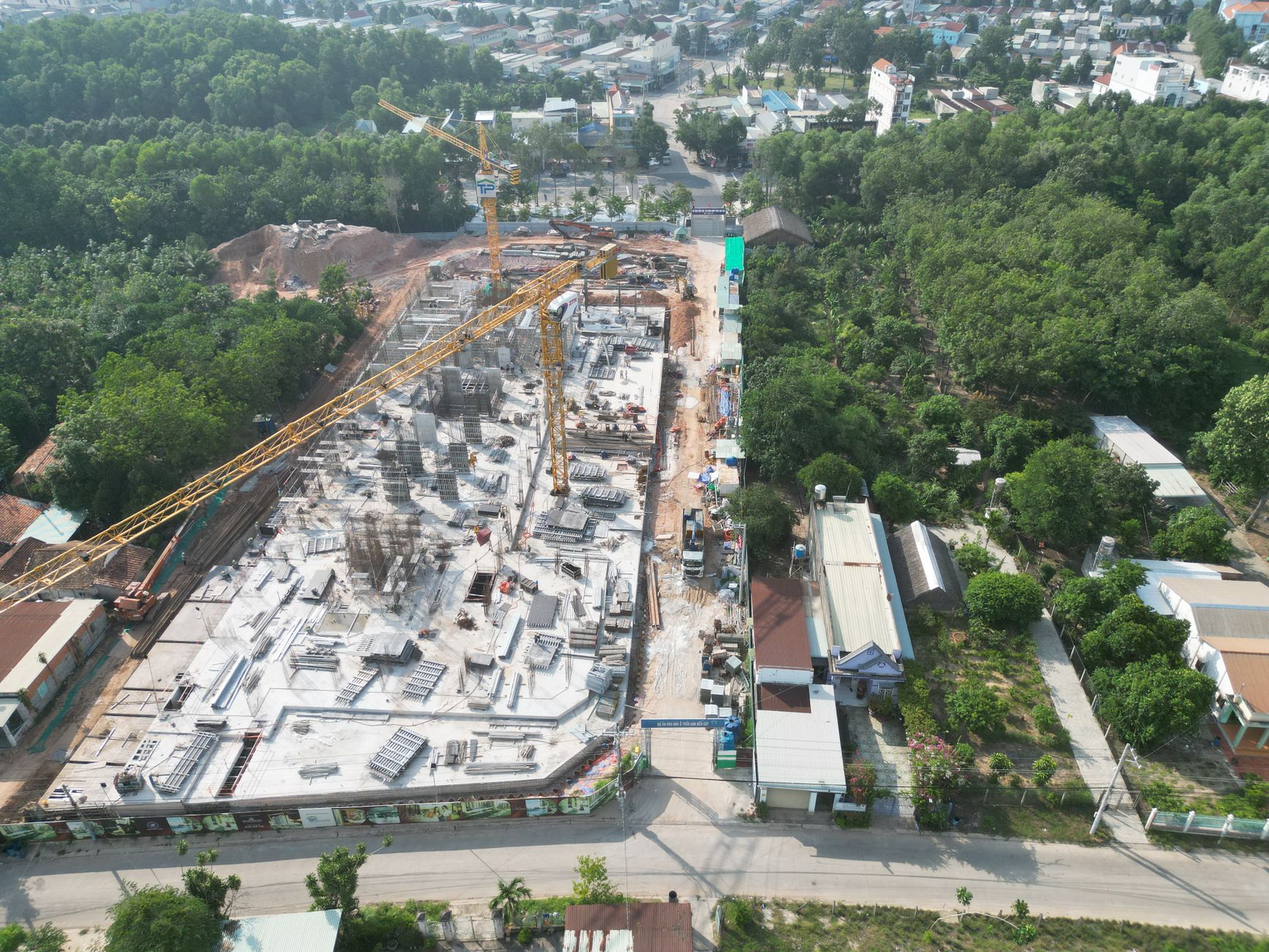
In Q1 2026, our analysts estimate that off-plan residential units in Phuket are priced at a 15% to 25% discount relative to comparable ready-to-move-in properties on the secondary market within the same districts. We track construction progress across Bang Tao, Layan, Kamala, Surin and Rawai, and the data confirms that this gap is not uniform. The earlier the project stage at the time of purchase, the wider the potential discount - and the greater the buyer's exposure to completion risk.
The central question for any investor is how the structure of a payment schedule reshapes the risk profile over time, and which contractual provisions genuinely protect committed funds. Below, we break down the mechanics of an off-plan transaction from reservation through to key handover.
Quick answer
- A standard off-plan payment schedule in Phuket spans 5 to 7 instalments over a construction period of 18 to 36 months
- The reservation deposit is typically 50,000 to 200,000 THB and is in most cases non-refundable after the contract-signing deadline
- At the point of signing the Sale and Purchase Agreement (SPA), buyers usually commit 25% to 30% of the purchase price
- By the time the structural frame is complete, cumulative buyer exposure reaches 40% to 50% of the contract value
- The final instalment (30% to 50% of the price) is due at technical handover and title transfer
- Based on our estimates, off-plan pricing in Bang Tao starts at approximately 85,000 THB per sq m in 2026, while comparable secondary-market units in the same area trade at 105,000 to 120,000 THB per sq m
- On Koh Samui (Bophut, Maenam), the off-plan discount is narrower at roughly 10% to 18%, reflecting the smaller pipeline of new-build supply
Options and scenarios
Three market-dominant payment schedule structures
Neither Phuket nor Koh Samui operates under a single mandated template. Based on our on-the-ground review of active developer offerings, we identify three structurally distinct variants.
Variant A - Classic schedule (most common in Bang Tao, Layan, Kamala)
- Reservation: 1% to 2% of price (50,000 to 200,000 THB)
- SPA signing within 30 days of reservation: 28% to 30%
- Foundation completion: 10%
- Structural frame complete: 10%
- MEP installations (electrical, plumbing): 10%
- Interior fit-out: 10%
- Handover and title transfer: 30% (inclusive of transfer fees and taxes)
Cumulative buyer exposure after stage 4 (structural frame): approximately 50% of contract value.
Variant B - Accelerated schedule (shorter build cycles of 12 to 18 months; seen in Surin and Karon)
- Reservation: 2%
- SPA signing: 38%
- Structural frame: 20%
- Handover and title transfer: 40%
Cumulative exposure at structural frame: 60%. Buyers carry higher front-loaded risk, offset by a shorter capital lock-up period.
Variant C - Light front-load (Koh Samui, Bophut and Maenam; also used by selected developers in Nai Harn)
- Reservation: 5%
- SPA signing: 15%
- Construction milestones (3 to 4 tranches of 10% each): 30% to 40%
- Handover: 40% to 50%
Cumulative pre-handover exposure: 50% to 60%, but distributed across more instalments, providing stronger oversight of construction progress.
The discount arithmetic - 2026 figures
Consider a concrete example for a 45 sq m unit in Bang Tao.
- Off-plan price at foundation stage: approximately 3,825,000 THB (85,000 THB per sq m)
- Comparable secondary-market unit: approximately 4,950,000 THB (110,000 THB per sq m)
- Nominal discount: 1,125,000 THB, equivalent to roughly 22.7%
The cost of tied-up capital must, however, be factored in. If a buyer commits 50% of the purchase price (approximately 1,912,500 THB) within the first 12 months of a 24-month build, the opportunity cost at an annualised rate of 5% is roughly 95,625 THB (approximately 10,500 USD at prevailing rates). Subtracting that cost, the effective discount narrows to around 19% to 20% of the unit's secondary-market value - a figure that still represents a meaningful acquisition advantage.
On Koh Samui, the equivalent calculation for 45 sq m in Bophut (off-plan approximately 75,000 THB per sq m, secondary market approximately 88,000 THB per sq m) yields a nominal discount of approximately 14.8%, falling to around 11% to 12% after adjusting for the opportunity cost of capital.
Comparison table
| Parameter | Variant A - Classic (Bang Tao) | Variant B - Accelerated (Surin/Karon) | Variant C - Light front-load (Bophut/Maenam) |
|---|---|---|---|
| Number of instalments | 7 | 4 | 5 to 6 |
| Committed at SPA signing | 30% to 32% | 40% | 20% |
| Exposure at structural frame | 50% | 60% | 35% to 40% |
| Final instalment (handover) | 30% | 40% | 40% to 50% |
| Typical build period | 24 to 36 months | 12 to 18 months | 18 to 30 months |
| Estimated off-plan discount | 18% to 25% | 15% to 20% | 10% to 18% |
| Buyer oversight of progress | Medium (multiple milestones) | Low (few instalments) | High (milestone-linked tranches) |
| Capital lock-up risk | Moderate | High at outset | Low to moderate |
Risks and mistakes
EIA approval delays
The Environmental Impact Assessment (EIA) report is a mandatory prerequisite before ground-breaking on most condominium projects in Phuket. In 2025 and into 2026, our team has observed EIA processing delays of 6 to 12 months, particularly in Layan and Surin where local authorities have tightened environmental scrutiny. A buyer who has already transferred 30% of the purchase price at SPA signing may find construction has not yet started, and no statutory timeline obliges the developer to refund the payment.
Contractual protection: The SPA should specify an EIA approval deadline - typically 6 months from signing - with an unconditional right of rescission and full refund of all sums paid if that deadline is missed.
Structural stage - cash-flow risk
At the structural frame milestone, the buyer's cumulative exposure reaches 40% to 60% of contract value. The primary risk at this stage is that the developer slows or suspends construction due to cash-flow constraints. We are currently monitoring several Phuket projects that suspended works for 3 to 5 months during the structural phase in 2025.
Contractual protection: Delay penalties should be expressed as a percentage or fixed amount per month of delay. The market reference rate is 0.5% to 1% of contract value per month. Equally important is a 'long-stop date' clause specifying a maximum completion date, beyond which the buyer has the right to terminate and recover all payments made.
Fit-out and technical handover
The most common disputes at handover involve discrepancies between the material specifications in the SPA and the actual finish standard delivered. Based on our observations, approximately 30% to 40% of Phuket handovers generate a snag list, with rectification taking an average of 4 to 8 weeks.
Contractual protection: The SPA should carry a detailed material specification annex (brands, models, grade). The buyer should have the contractual right to withhold the final instalment until the snag list is fully resolved.
No statutory payment protection
Thailand does not operate any government-mandated payment protection scheme for off-plan buyers. Funds transferred by the buyer go directly into the developer's operating account. This is a fundamental structural difference from most European markets.
The two substantive safeguards available to buyers are the developer's track record (completed projects, corporate financial structure, local market reputation) and the quality of the contractual terms. Our analysts recommend verifying at least three completed projects by the developer before signing, and confirming that the developer holds a registered Chanote title deed over the land and a valid construction permit.
Recurring mistakes we observe in practice
- Paying a reservation deposit before reading the full SPA
- Accepting a payment schedule with no long-stop date clause
- Failing to verify whether the developer owns the land outright or holds it under a leasehold or third-party arrangement
- Omitting transfer costs from the budget calculation - the transfer fee is typically 2% of the official appraisal value, often split 50/50 between buyer and developer, plus a one-off sinking fund contribution of 500 to 800 THB per sq m and an ongoing common area fee of 40 to 80 THB per sq m per month
- Locking in a THB-to-home-currency conversion at the reservation date without any hedging strategy - over a 24-month build period, exchange rate movement can materially affect the effective cost of each instalment
FAQ
What is the minimum reservation deposit for an off-plan unit in Phuket in 2026?
Based on our Q1 2026 market data, the minimum reservation fee in Phuket is 50,000 THB for smaller-scale projects. Premium developments in Bang Tao and Layan typically require 150,000 to 200,000 THB. In most cases, the deposit becomes non-refundable if the buyer does not sign the SPA within the agreed period (usually 14 to 30 days).
Can a buyer lose their entire payment if the developer does not complete the project?
Yes, that risk is real. Thailand has no statutory protection scheme for off-plan buyers' payments. The key safeguards are a well-drafted SPA with a long-stop date and a clear refund mechanism, combined with thorough due diligence on the developer's financial standing and project history.
How do we verify a developer's credibility before signing off-plan?
Our standard verification process covers: company registration records from the Department of Business Development (DBD), a review of at least three previously completed projects, confirmation of a registered Chanote title deed over the project land, a valid construction permit, and confirmation that the EIA has been approved for the specific project.
What taxes and fees does the buyer pay at handover for an off-plan unit?
At title transfer, the buyer typically pays a transfer fee of 2% of the official appraisal value (often split with the developer). Additional buyer-side costs include a one-time sinking fund contribution of approximately 500 to 800 THB per sq m and the first year's common area maintenance fee of 40 to 80 THB per sq m per month. These items should be included in the initial budget model.
What is the tax treatment in Thailand when reselling an off-plan unit at a profit?
The seller (not the buyer) is liable for either Specific Business Tax at 3.3% or Stamp Duty at 0.5%, depending on the holding period, plus a withholding tax calculated on the assessed gain. Buyers from jurisdictions that have a double-taxation agreement with Thailand - which covers a wide range of countries - should confirm the applicable treaty rules with a qualified tax adviser before transacting.
How long does a typical off-plan construction cycle take in Phuket?
A standard condominium project in Phuket in 2026 runs over 24 to 36 months: 3 to 6 months for permitting and EIA approval, 6 to 10 months for foundations and structural works, 6 to 10 months for installations and fit-out, and 2 to 4 months for technical inspections and title transfer.
How does the Koh Samui off-plan market differ from Phuket?
The Koh Samui pipeline is considerably smaller. Based on our estimates, the island has approximately 15 to 25 active off-plan projects (condominiums and villas combined) at any given time in 2026, compared with 80 to 120 on Phuket. The off-plan discount is lower (10% to 18%), but payment schedules in Bophut and Maenam tend to be more buyer-friendly, with higher final instalments (40% to 50%) reducing early capital exposure.
Can buyers negotiate the payment schedule with a developer?
In our experience, Phuket developers are open to schedule adjustments, particularly when a purchase is made at an early project stage or involves multiple units. The most commonly negotiated items are the size of the final instalment and the distribution of mid-construction milestone tranches.
What exchange-rate risk does an international buyer carry on an off-plan purchase?
With payments spread across a 24-month build, the buyer's effective cost in their home currency is sensitive to THB exchange rate movement. For a contract priced at 4,000,000 THB, a 5% shift in the THB rate against major currencies translates to a 200,000 THB difference in the total outlay - a figure that should be modelled into any investment case alongside the nominal discount.
Is off-plan in Bang Tao or Kamala suitable as a short-term rental investment?
Off-plan projects that include a managed rental pool programme in Bang Tao and Kamala typically offer a guaranteed gross yield of 5% to 7% per year for the first 3 to 5 years post-completion, per market estimates. After the guarantee period, returns depend on actual occupancy: peak season (November to April) occupancy rates reach 75% to 85%, while the low season typically runs at 35% to 50%. Buyers should model both scenarios, not just the guaranteed figure.
Researching property in Phuket or Koh Samui? Get in touch - our analysts will prepare a data brief for your shortlisted location.