

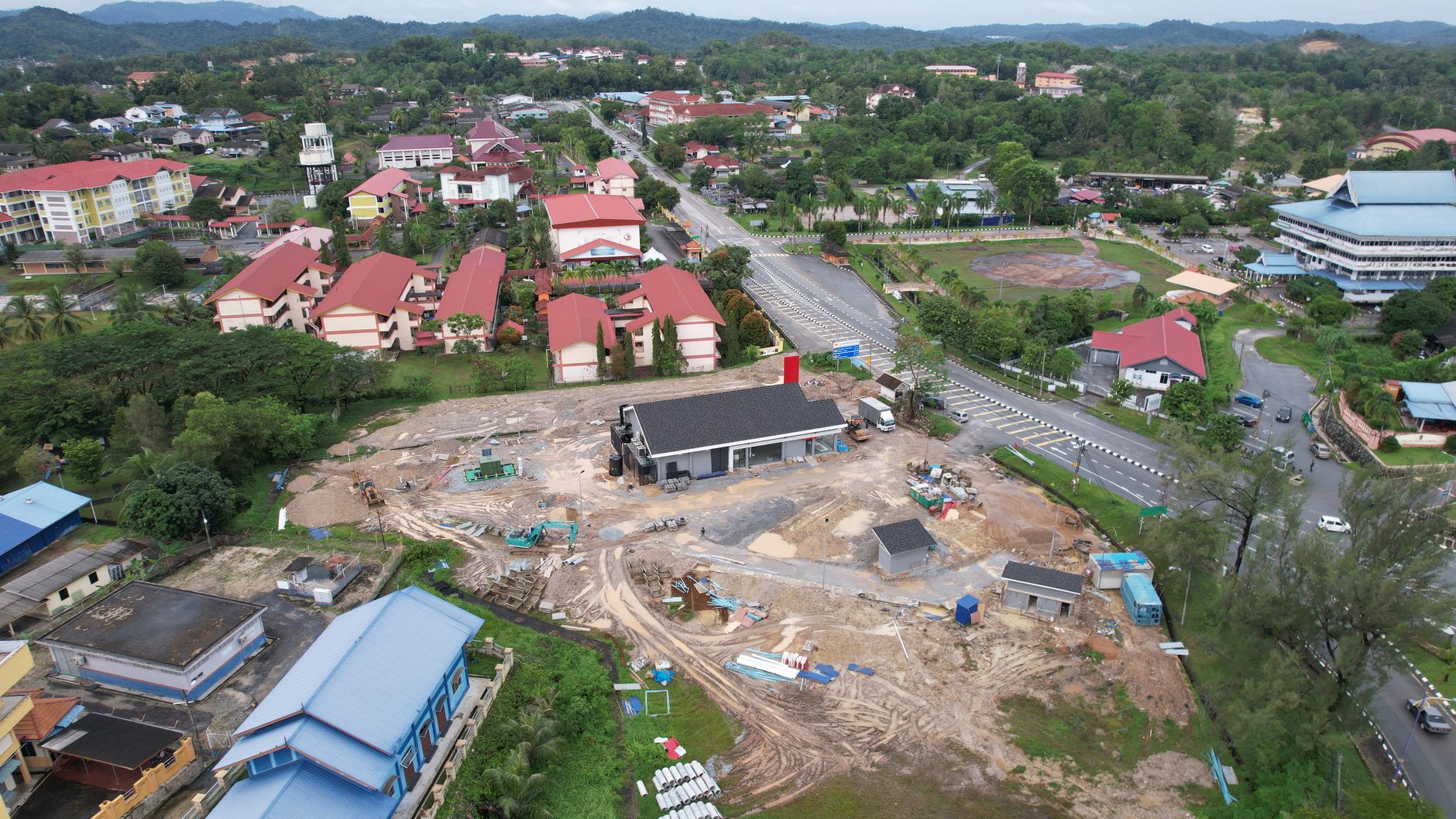
Based on our Q1 2026 market data, the average price discount for off-plan property in Phuket relative to comparable ready units on the secondary market runs from 15% to 25%, depending on the district and the construction phase at the time of purchase. On Koh Samui the discount range is similar, though total off-plan transaction volume is roughly three times lower than on Phuket. Our analysts monitor active construction sites in both locations; below we break down the mechanics of off-plan buying in detail.
A point that any internationally-based buyer must understand before committing funds: Thailand has no statutory payment-protection mechanism for foreign real estate purchasers. Instalments are paid directly into the developer's operating account. In practical terms, the only meaningful safeguards are the contract terms, the developer's track record of completed projects, and the structure of the payment schedule itself.
Quick answer
- A typical off-plan payment schedule on Phuket and Koh Samui involves 5 to 7 instalments spread across 18 to 30 months of construction
- The reservation deposit is usually 50,000-200,000 THB and is commonly non-refundable once the window for signing the main contract has closed (typically 7-30 days)
- Under the most common market schedule, the buyer's total exposure before handover reaches 70-80% of the purchase price
- In Bang Tao and Layan, our estimates place the off-plan discount at roughly 18-25% versus secondary-market prices for equivalent finished apartments
- On Koh Samui (Bophut, Maenam) the discount is comparable at 15-22%, but secondary-market liquidity is materially lower, which affects exit options
- Delays most frequently occur during the finishing phase and during the EIA (Environmental Impact Assessment) procedure; based on our data, the average slippage is 3-6 months beyond the developer's declared timeline
Options and scenarios
How payment schedule structures differ
In our 2024-2026 transaction data we identify three recurring schedule structures. They differ primarily in how much of the purchase price is transferred before construction reaches key milestones.
Schedule A - conservative (buyer-favourable): Reservation 5%, contract signing 15%, foundations complete 10%, structural frame complete 10%, finishing phase 10%, handover 50%. Total exposure before handover: 50%. This structure is relatively uncommon; we encounter it mainly among well-established developers with multiple completed projects in the premium segment around Layan and Surin.
Schedule B - standard (market-typical): Reservation 5%, contract signing 25%, foundations 10%, structural frame 15%, finishing 15%, handover 30%. Total exposure before handover: 70%. This is the dominant structure across Phuket projects in Bang Tao, Kamala, and Rawai.
Schedule C - aggressive (developer-favourable): Reservation 10%, contract signing 30%, foundations 15%, structural frame 15%, finishing 10%, handover 20%. Total exposure before handover: 80%. We encounter this structure most often with smaller developers on Koh Samui (Lamai, Chaweng) and in lower entry-price projects on both islands.
Discount mechanics - indicative figures as of 2026
In Bang Tao, a finished 35-45 sq m condominium apartment with pool access is priced at approximately 4.5-6.5 million THB on the secondary market as of Q1 2026, based on our estimates. An equivalent off-plan unit at the foundations stage in the same district is priced at roughly 3.5-5.0 million THB, implying a discount of around 20-23%.
In Bophut on Koh Samui, an off-plan villa with a private pool and 120-150 sq m of usable floor area carries an indicative asking price of 8-12 million THB, while a finished comparable on the secondary market transacts at 10-15 million THB. The implied discount is 15-20%, but buyers should factor in longer build times (frequently 24-30 months) and the thinner pool of comparable transactions available for benchmarking.
For buyers converting from non-THB currencies, exchange-rate timing is a material variable. Over the 12-month period from Q1 2025 to Q1 2026, the THB exchange rate against major currencies has fluctuated enough that on a 5 million THB purchase, the difference between converting at a weaker versus stronger rate can represent a meaningful cost variance - a consideration our analysts flag when reviewing individual purchase timelines.
Comparison table
| Parameter | Schedule A (conservative) | Schedule B (standard) | Schedule C (aggressive) |
|---|---|---|---|
| Reservation deposit | 5% | 5% | 10% |
| Payment at contract signing | 15% | 25% | 30% |
| Total paid before handover | 50% | 70% | 80% |
| Payment at handover | 50% | 30% | 20% |
| Typical construction period | 18-24 months | 18-24 months | 18-30 months |
| Buyer negotiating leverage at handover | High | Medium | Low |
| Where typically found | Layan, Surin (premium) | Bang Tao, Kamala, Rawai | Lamai, Chaweng, budget projects |
| Indicative discount vs. secondary market | 15-18% | 18-23% | 20-25% |
Risks and mistakes
Phase 1 - pre-construction (reservation and EIA)
The most serious risk at this stage is that the developer is collecting reservation deposits before receiving a valid building permit or completing the EIA process. We monitor cases of this practice particularly in coastal-zone projects in Nai Harn and Karon on Phuket. Based on our estimates, incomplete EIA procedures add an average of 4-8 months to the actual construction start date relative to the developer's marketing timeline.
Key contract terms to verify: the contract should include an explicit right to a full refund of the reservation deposit if the developer fails to obtain the necessary permits within a defined timeframe. Without this clause, the deposit is effectively non-refundable regardless of circumstance.
Phase 2 - foundations and structural construction
The primary risk here is project underfunding. Because buyer instalments are often the primary construction-financing mechanism, slow sales of remaining units in the project can directly slow construction progress. Our analysts verify on the ground whether the developer holds independent financial reserves or an institutional credit facility in addition to buyer payments.
Key contract terms to verify: a penalty clause for delays - the market standard on Phuket and Koh Samui is 0.01-0.05% of the contract value per day of delay beyond the agreed completion date. Contracts should specify whether the penalty accrues automatically or requires a formal written notice from the buyer to activate.
Phase 3 - finishing
This is the phase with the highest frequency of specification divergence. Substitution of specified finishing materials with lower-grade alternatives is a recurring issue. In our data sets covering Phuket projects, we note that approximately 30-40% of surveyed projects have at least one material specification change relative to the original marketing documentation.
Key contract terms to verify: a detailed specification annex listing brand, model, and colour for all key materials; an explicit right to pre-handover inspection; a defined snagging procedure with written deadlines for the developer to rectify identified defects.
Phase 4 - technical handover
Under Schedule C, where 80% of the purchase price has been transferred before handover, the buyer's negotiating position is structurally weak. The developer holds the majority of funds and has limited financial incentive to resolve defects quickly. Under Schedule A, where 50% is retained until handover, the buyer retains a real financial instrument to enforce quality commitments.
Key contract terms to verify: the right to withhold the final instalment pending resolution of snagging items; clearly defined grounds and financial terms for contract rescission; a structural warranty covering a minimum of 12 months post-handover.
Developer verification - the only reliable protection mechanism
In the absence of a statutory payment-protection system for foreign buyers in Thailand, developer due diligence is the central element of any off-plan purchase. Our analysts review: the number of completed projects, historical delivery timelines versus stated schedules, corporate structure (sourced from Thailand's Department of Business Development, DBD), debt levels, and ownership connections to other entities. A developer with a minimum of 3 fully completed projects on Phuket or Koh Samui, and a verifiable record of on-time delivery, represents materially lower counterparty risk than a developer delivering their first project.
FAQ
What is the standard reservation deposit for off-plan property on Phuket?
The market standard is 50,000-200,000 THB. In the premium villa segment around Layan or Surin, reservation amounts can reach 500,000 THB. The deposit is typically non-refundable once the window for signing the main purchase contract has expired, which is usually 7 to 30 days from the reservation date.
Are off-plan payments in Thailand protected by any third-party mechanism?
No. Thailand does not operate a statutory payment-protection scheme for foreign real estate buyers. Payments are transferred directly to the developer's account. The buyer's protection is limited to the contractual terms agreed in the sale and purchase agreement and the developer's own financial standing.
How large is the off-plan discount relative to finished property?
Based on our Q1 2026 estimates, the discount ranges from 15% to 25% depending on location and project phase. In Bang Tao and Layan on Phuket the range is approximately 18-23%; on Koh Samui in Bophut and Maenam it is approximately 15-22%.
What happens if the developer does not complete construction on time?
This depends entirely on the contract. A standard penalty clause provides for 0.01-0.05% of the contract value per day of delay. The critical question is whether the contract also includes a rescission right - allowing the buyer to exit and recover paid instalments - after a defined maximum delay period, typically 180 days.
How do we verify a developer's track record in Thailand?
Our analysts cross-reference data from Thailand's Department of Business Development (DBD), which provides registered capital, ownership structure, and corporate history. We additionally verify the number and delivery status of previously completed projects, review references from buyers of earlier developments, and conduct on-site construction progress checks for active projects.
What transfer and registration costs should a buyer budget for?
On top of the purchase price, buyers should budget for a sinking fund contribution (typically 400-800 THB per sq m), common-area management fees (40-80 THB per sq m per month in a condominium), and transfer fees at title registration (approximately 1-2% of the registered value on the buyer's side, with the remainder conventionally covered by the developer - the split is defined in the contract). If furniture and appliances are not included in the purchase price, fitting out a unit typically adds 200,000-600,000 THB.
How long does construction typically take on Phuket?
For a condominium apartment, our data indicate 18-24 months from the date of the building permit. For a villa, the structural build typically runs 12-18 months from foundations. In practice, we monitor an average actual delay of 3-6 months relative to the developer's published schedule.
Is a foreign buyer liable for tax in their home country on an off-plan purchase in Thailand?
The purchase itself does not typically generate a taxable event in most jurisdictions. Tax liability in the buyer's country of residence usually arises on disposal of the property at a gain, or on rental income received. In Thailand, the combined transfer and registration fees at the Land Department total approximately 6-7% of the transaction value, conventionally split between buyer and developer, with the exact allocation defined by contract.
Based on projects we monitor in Bang Tao, Kamala, Bophut, and Maenam, our analysts recommend prioritising a payment schedule close to Schedule A or B, with total pre-handover exposure capped at 70% of the purchase price. Developer track-record verification, precise penalty and rescission clauses, and regular on-site construction monitoring remain the three non-negotiable components of a sound off-plan purchase process.
Researching property in Phuket or Koh Samui? Get in touch - our analysts will prepare a data brief for your shortlisted location.