
Over the past 36 months of monitoring the Phuket and Koh Samui markets, our analysts have recorded more than 40 new condominium and villa projects per year targeting foreign buyers. At the same time, based on our estimates, at least 12-15% of projects launched between 2022 and 2024 were delivered more than six months late or materially changed their specification relative to original sales materials. For any buyer wiring funds in tranches from an overseas account into a Thai developer's THB account, that risk is real and quantifiable.
Our research team has developed a seven-point due diligence methodology that we apply to every project entering our datasets. We do not rely on marketing materials. We inspect construction sites on the ground, analyse sale-and-purchase agreements, and cross-check developer histories against public records held by Thailand's Department of Business Development (DBD) and the Land Department.
Below we set out the full structure of our assessment - from developer track record through to buyer-payment protection mechanisms. Each criterion carries defined warning thresholds that allow us to flag elevated-risk projects before any reservation agreement is signed.
Quick answer
- We assess 7 criteria: track record, construction financing structure, build quality, permits, payment schedule, contractual protections, and developer financial health
- Warning threshold 1: any prior project delivered more than 6 months late moves a developer into our elevated-risk category
- Warning threshold 2: payment schedules demanding more than 50% of the purchase price before structural completion (closed shell) are flagged as aggressive
- Thailand has no escrow-equivalent protection mechanism for foreign real estate buyers; buyer protection rests entirely on contract structure and developer credibility
- As of 2026, average construction timelines on Phuket run 18-24 months for pool villas and 24-36 months for condominiums
- Key document: an Environmental Impact Assessment (EIA) report is required for projects exceeding 79 units or buildings with a gross floor area above 2,000 sq m
Options and scenarios
Criterion 1: Developer track record
Our first step is always a review of completed project history. We examine the number of delivered developments, planned versus actual handover dates, and any recorded buyer disputes. Data comes from the DBD registry at dbd.go.th, buyer community forums, and physical visits to completed estates.
Warning threshold: a developer who has not yet delivered a single project on Phuket or Koh Samui, or whose most recent project ran more than 6 months late, is placed in our elevated-risk tier. That does not automatically disqualify a project, but it triggers mandatory scrutiny of financing sources.
Criterion 2: Construction financing structure
This is the criterion that international buyers most frequently overlook. A developer may fund construction from three sources: a bank loan, equity capital, or buyer deposits. The lowest-risk configuration is a confirmed loan from a Thai commercial bank (such as Bangkok Bank or Kasikorn Bank), because the lender conducts its own project due diligence and monitors construction progress independently.
When a developer finances construction exclusively from buyer payments and discloses no external funding line, risk rises substantially. A slowdown in sales can halt construction entirely. In our methodology, we ask directly about financing structure and treat a refusal to answer as a warning signal.
Criterion 3: Build quality of prior projects
Our analysts visit previously delivered projects by the same developer on Phuket and Koh Samui. We inspect technical condition after two to three years of occupation: waterproofing integrity, pool condition, common-area finishes, and stormwater drainage performance - a critical factor in a tropical climate. We speak with juristic-person managers and unit owners directly.
In our internal scoring system we use a scale of 1 to 5. A score below 3 indicates visible structural or finishing defects within fewer than three years of handover.
Criterion 4: Permit completeness
Every project requires a Construction Permit issued by the relevant local authority - either a Tambon Administrative Organization (TAO) or a municipal office. Larger projects additionally require an approved EIA report. We verify permit status with the issuing authority rather than relying on developer-provided copies.
Warning threshold: a developer actively selling units before a Construction Permit has been issued. In 2026 on Phuket, particularly in Thalang district - which encompasses Bang Tao, Layan, and Cherng Talay - we are observing projects that open reservations at the stage of a permit application, before any approval has been granted.
Criterion 5: Payment schedule structure
The standard Thai off-plan payment schedule comprises a reservation deposit (50,000-200,000 THB, approximately 1,400-5,700 USD at Q1 2026 exchange rates), a contract-signing payment (20-30% of the purchase price), and construction-linked milestone tranches.
We analyse what proportion of the price is collected before physical construction begins. Schedules demanding more than 50% of the price before closed-shell completion are treated as aggressive. The safer model is 30-40% collected through structural completion, with the balance due at handover.
Criterion 6: Contractual protections
Because Thailand provides no escrow-equivalent mechanism for foreign real estate buyers, buyer protection depends on the contract itself. In our review process we assess the following clauses:
- Late-delivery penalties (market standard: 0.01-0.1% of the purchase price per day for each day beyond the agreed completion date)
- Termination rights with full refund of payments made, triggered if delay exceeds 90-180 days
- Defect warranty (market standard: 12-24 months from handover)
- Precise specification of materials, finishes, and fixtures, written into the contract rather than referenced from a brochure
Absence of any of these clauses is a warning signal in our assessment. We advise strongly against signing contracts that contain no late-delivery penalty provision at all.
Criterion 7: Developer company financial health
Through the DBD registry we verify the registered share capital of the developer entity, its incorporation date, shareholder structure, and annual financial statements (publicly accessible for a fee of approximately 500 THB). A company incorporated just months before launching sales, with minimal registered capital (50,000-100,000 THB), is a clear warning signal.
In our methodology we give higher confidence to developers with registered capital above 10 million THB (approximately 280,000 USD per market estimates) and audited financial statements covering at least three years.
Comparison table
| Parameter | Low risk | Medium risk | High risk |
|---|---|---|---|
| Completed projects | 3 or more, delays under 3 months | 1-2 projects, delays of 3-6 months | No completed projects, or delays above 6 months |
| Construction financing | Confirmed bank loan with documentation | Mixed: bank debt and buyer deposits | Buyer deposits only, no disclosed external funding |
| Build quality (our 1-5 scale) | Score 4-5 after 2 years of occupation | Score 3 - minor finishing defects | Score below 3 - structural deficiencies |
| Permits at point of sale | Construction Permit and EIA both in place | Construction Permit in place, EIA in progress | Sales launched before Construction Permit issued |
| Payment collected before closed shell | Below 30% of purchase price | 30-50% of purchase price | Above 50% of purchase price |
| Late-delivery penalty clause | 0.05-0.1% per day with termination right | 0.01-0.05% per day, no termination right | No late-delivery penalty clause present |
| Registered share capital | Above 10 million THB, 3 years of statements | 2-10 million THB, 1-2 years of statements | Below 2 million THB, company under one year old |
Risks and mistakes
The most frequent errors we observe among buyers entering the Thai market:
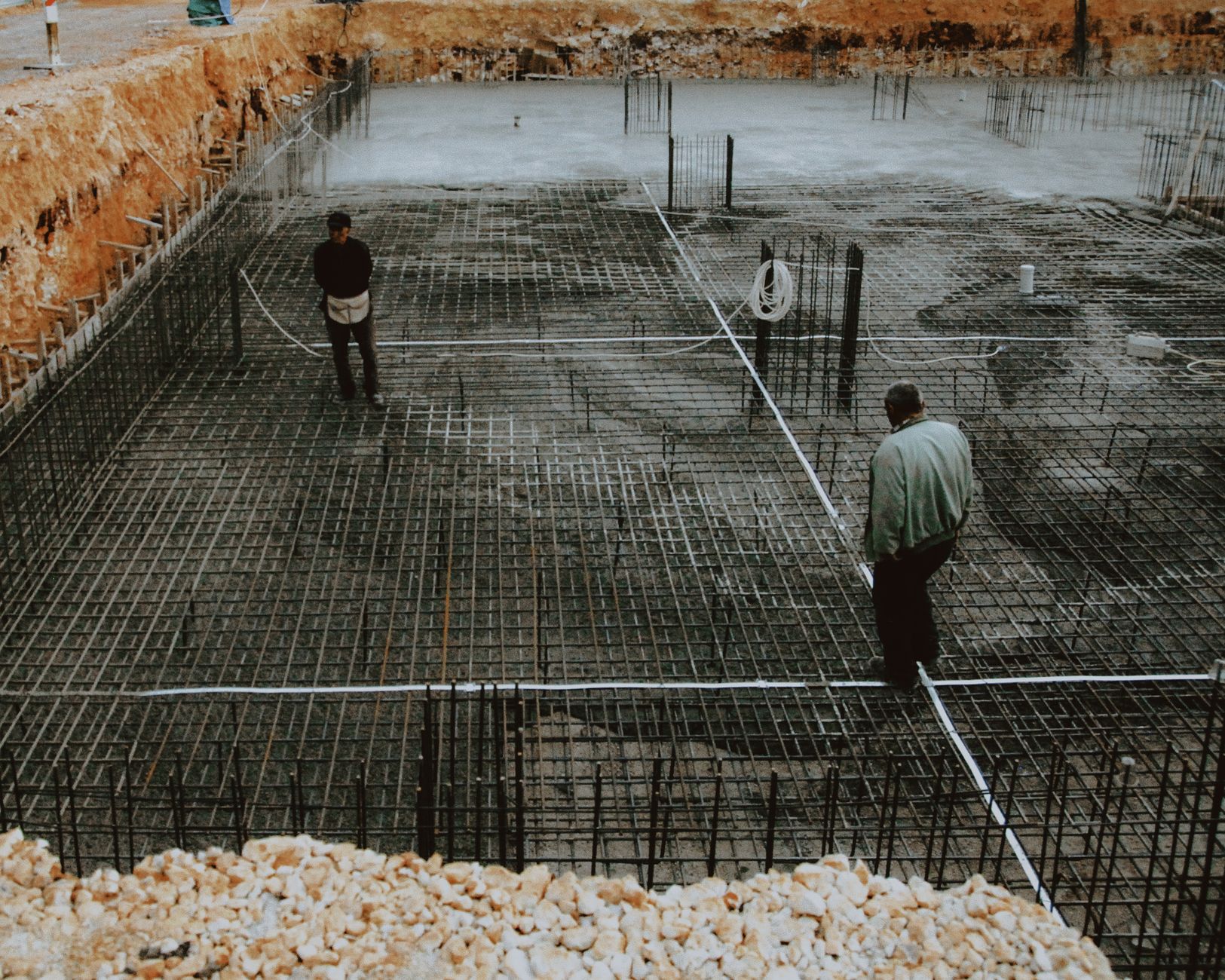
Relying on renders instead of a site visit. Three-dimensional visualisations and scale models do not confirm whether groundworks have started. On Phuket, particularly in the Kamala and Surin areas, we continue to encounter projects with polished marketing materials that have not yet received a Construction Permit.
Skipping land title verification. Before assessing the developer, we confirm whether the underlying plot holds a Chanote title (full ownership) or a Nor Sor 3 Gor title (a weaker form). Building on land without Chanote introduces a separate layer of legal risk that is independent of the developer's credibility.
Not engaging an independent lawyer to review the contract. In our data from Q1 2026, independent legal review of a sale-and-purchase agreement on Phuket or Koh Samui costs 15,000-40,000 THB (approximately 420-1,120 USD). Against a transaction value of 5-30 million THB for a pool villa, that is a negligible expense relative to the protection it provides.
Ignoring THB/USD exchange rate exposure. With payment schedules spread across 18-24 months, currency movement can shift the effective cost of a purchase by 5-15%. Our analysts monitor the THB rate and recommend buyers consider currency hedging for transactions above 3 million THB.
Assuming Thai law offers protections equivalent to a home jurisdiction. Thailand has no statutory new-homes protection fund or equivalent guarantee scheme. Buyer protection depends entirely on the quality of the individual contract and the credibility of the developer.
FAQ
How can we verify how many projects a Phuket developer has actually completed?
In our practice, we cross-reference the DBD registry at dbd.go.th with physical visits to completed estates and conversations with juristic-person managers. We also request a formal reference list from the developer, including project addresses, and verify each entry on the ground.
Does Thailand offer any form of payment protection for foreign real estate buyers?
Thailand does not operate an escrow or equivalent protection mechanism for foreign off-plan buyers. Buyer payment protection rests on a construction-linked payment schedule, contractual late-delivery penalties, and clearly defined termination rights. This is precisely why independent contract analysis is essential before committing funds.
What does independent legal review of a developer contract cost in Thailand?
Based on our Q1 2026 data, an independent law firm on Phuket or Koh Samui charges 15,000-40,000 THB (approximately 420-1,120 USD) for a full review. The scope typically covers the sale-and-purchase agreement, land title verification, and permit status confirmation.
What payment schedule structure do we consider safe for off-plan purchases?
In our assessment, a safe schedule involves a reservation deposit of 50,000-200,000 THB, followed by 20-30% at contract signing, with further tranches tied to verifiable construction milestones. Total payments collected before closed-shell structural completion should not exceed 30-40% of the purchase price.
How do we verify the financial health of a Thai developer company?
Financial statements for Thai-registered companies are available through the DBD registry for a fee of approximately 500 THB. We analyse registered share capital, incorporation date, shareholder structure, and audited results for the past three years. Companies with capital below 2 million THB and an operating history of under one year are treated as elevated risk.
How does developer assessment differ between Phuket and Koh Samui?
Koh Samui is a smaller, more villa-focused market with a lower number of active developers, which makes reference checking more straightforward. However, in districts such as Maenam and Bophut we more frequently encounter smaller companies with limited registered capital, which requires closer financial analysis. On Phuket, the condominium segment in Thalang district (Bang Tao, Layan, Cherng Talay) shows the highest concentration of pre-permit sales activity in our current datasets.
What permits should a developer hold before launching sales?
At minimum, a valid Construction Permit issued by the competent local authority. For condominium projects above 79 units, or buildings with gross floor area above 2,000 sq m, an approved EIA report is also required. Sales activity that precedes either of these documents is a warning signal in our methodology.
Can a buyer independently verify land title at the Land Department?
Foreign buyers can in principle request a Chanote verification at the local Land Department office. In practice, we recommend delegating this to a qualified Thai lawyer, as the process involves reading Thai-language documents, checking for registered encumbrances or mortgages, and confirming that plot boundaries match the approved site plan.
Our seven-criterion methodology is designed to be applied in full. No single criterion delivers a complete risk picture in isolation. A developer with a strong track record but an aggressive payment schedule and no bank financing can represent just as significant a risk as a company with no completion history. We treat this checklist as the analytical minimum before any transaction in the Thai residential market.
Researching property in Phuket or Koh Samui? Get in touch - our analysts will prepare a data brief for your shortlisted location.