

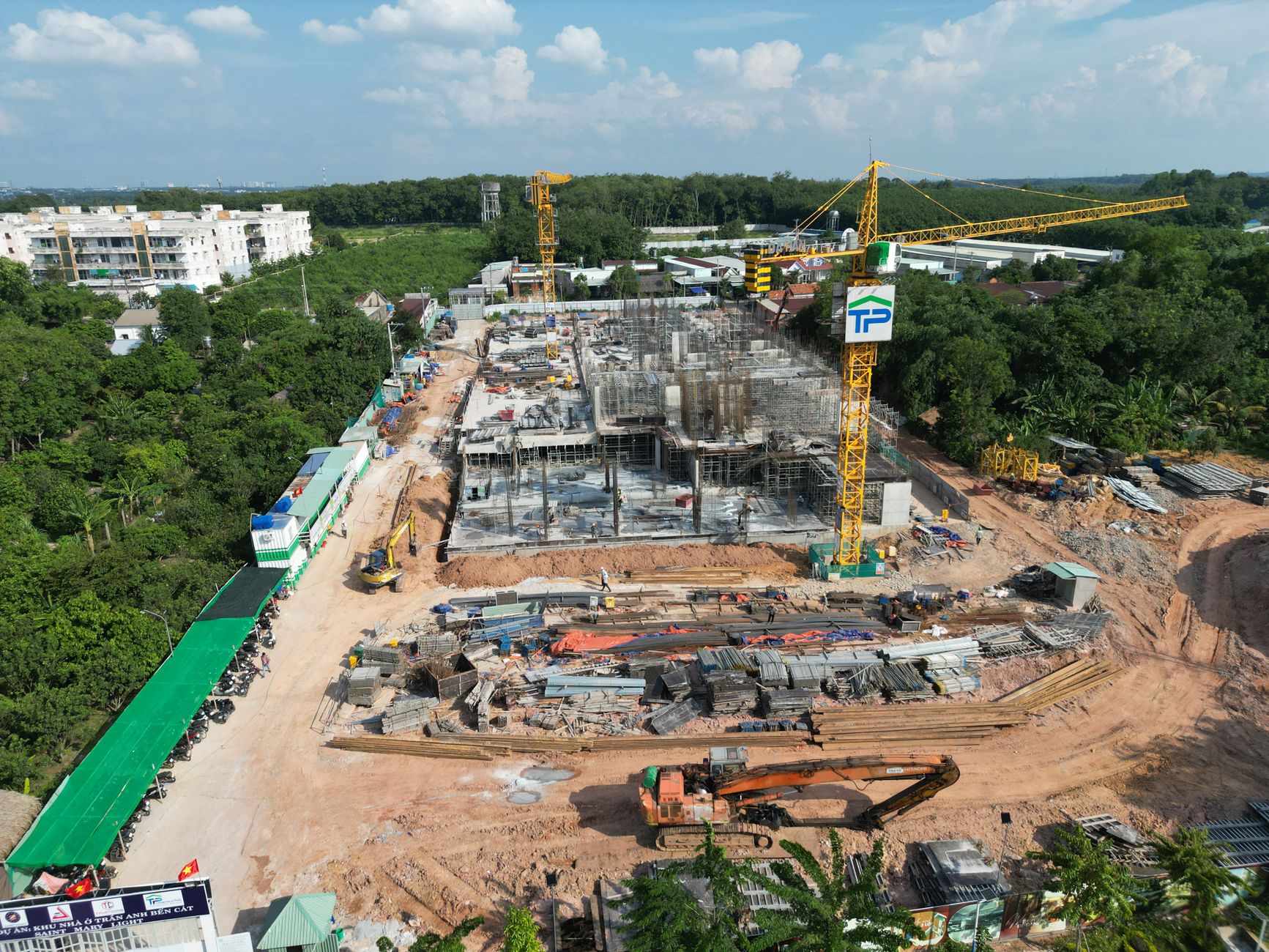
Over the past 18 months, our analysts have been tracking more than 140 residential projects in active construction across Phuket. Based on our estimates, at least 12% of those projects show delays exceeding six months relative to the developer's stated handover schedule. For any buyer considering an off-plan commitment, that figure has one clear implication: verifying the developer before signing is the single most important step in the entire acquisition process.
Our team applies a seven-step due diligence procedure developed across several dozen transactions observed in both the Phuket and Koh Samui markets. Below we set out the full methodology, including the measurable warning thresholds we use in 2026.
One principle we emphasise consistently: capital protection in Thailand rests on contract structure, a payment schedule tied to verified construction milestones, and the developer's financial credibility. Those are the real safeguards.
Quick answer
- Track record: we verify the number of completed projects, delivery timelines and build quality inspected on the ground. A warning threshold is any slip exceeding six months on more than one project
- Financing structure: projects backed by a bank construction loan indicate that an independent lender has already audited the developer. An absence of disclosed bank financing is treated as a risk factor in our data sets
- Permits: we confirm a complete permit file - Environmental Impact Assessment (EIA), construction permit (Ror. 1) and alignment with the local land-use plan
- Payment schedule: in a sound model, cumulative payments before shell completion do not exceed 30-40% of the purchase price. Demands above 50% within the first six months are a clear warning signal
- Penalty clauses: we review delay-penalty provisions. The market standard is 0.01-0.05% of contract value per day of delay
- Financial standing and litigation history: we cross-reference company data in the Department of Business Development (DBD) registry, check for active disputes, and review feedback from earlier buyers
- Land title: we confirm the Chanote title at the relevant Land Office and check for encumbrances or mortgages registered against the plot
Options and scenarios
Scenario A - developer with a documented track record
The developer has delivered at least three projects over the past five years, each on schedule or with a delay of no more than three months. A construction loan from a Thai commercial bank is in place. The company appears in the DBD registry with registered capital above 50 million THB (as of 2026, roughly USD 1.4 million at approximately 35.5 THB per USD). In our classification, developers meeting these criteria fall into the low-risk group. Projects from this tier are most commonly found in Bang Tao, Layan and Kamala.
Scenario B - mid-sized developer with one or two completed projects
The company has delivered one or two developments without significant delays, but has no bank construction loan on the current project and is financed entirely from buyer payments. Registered capital sits in the 10-50 million THB range. In this scenario, our analysts monitor construction progress every four to six weeks and recommend a payment schedule tied strictly to verifiable construction milestones. We encounter this profile frequently in Rawai and Nai Harn on Phuket, and in Bophut and Maenam on Koh Samui.
Scenario C - new entity with no construction history
The developer has no completed projects, and the company was registered less than two years ago with no bank financing in place. This scenario carries the highest risk. Based on our estimates, approximately 60% of delayed projects on Phuket between 2023 and 2025 came from developers without a confirmed delivery record. That does not mean automatic disqualification, but it requires deeper analysis: we verify the ultimate beneficial owners of the entity, review their prior business activities and examine the capital structure carefully.
Comparison table
| Parameter | Tier A Developer | Tier B Developer | Tier C Developer |
|---|---|---|---|
| Completed projects | 3 or more | 1-2 | 0 |
| Historical delays | Up to 3 months | Up to 6 months | No data available |
| Construction financing | Bank construction loan | Mixed or buyer payments | Buyer payments only |
| Registered capital (THB) | Above 50 million | 10-50 million | Below 10 million |
| Payments to shell stage | 25-35% of price | 30-40% of price | Often above 50% of price |
| Delay penalties in contract | Yes, standard clauses | Negotiable | Often absent or nominal |
| Risk level (our assessment) | Low | Moderate | High |
| Our recommendation | Standard procedure | Enhanced monitoring | Deep audit or pass |
Risks and mistakes
Mistake 1: trusting visualisations instead of documents. Our analysts regularly encounter projects with polished marketing materials that do not yet have an issued construction permit. Before any payment, we obtain a physical copy of the Ror. 1 permit directly from the relevant municipality (Tessaban or Or. Bor. Tor.).
Mistake 2: skipping land title verification. The developer may not own the land but may only hold a long-term lease over it. We review the Chanote title at the Land Office and confirm that the plot carries no registered mortgages or easements.
Mistake 3: overlooking the EIA. For projects above 80 residential units, or those located in environmental protection zones, an approved EIA report is a legal requirement. A missing or unapproved EIA means the project can be halted at any stage of construction.
Mistake 4: large upfront payment with no tie to construction progress. A sound payment schedule looks like this: a booking fee of 50,000-200,000 THB to reserve the unit, then 20-30% at contract signing, with subsequent tranches released only upon confirmed completion of defined construction milestones.
Mistake 5: ignoring refund clauses. We verify that the contract includes a defined procedure for the return of payments in the event of a material delay (typically defined as more than 12 months) or a developer default. The absence of such a clause is a serious red flag.
Currency exposure. Buyers transacting in THB while planning in a home currency face additional risk. The THB/USD rate moved between approximately 33 and 36 THB per USD during 2024-2025. Over an 18-24 month construction period, a 5-10% exchange rate shift materially affects the total cost in home-currency terms. Our analysts flag this in every off-plan briefing we prepare.
FAQ
How do we verify a developer's track record in Phuket before buying?
We start with the Thai DBD registry (datawarehouse.dbd.go.th), which shows financial data, registered capital and incorporation date. We then verify past projects on the ground: visiting completed developments, speaking with building managers and assessing build quality after two to three years of occupation.
Is there a payment protection mechanism for foreign buyers in Thailand comparable to escrow?
No. There is no escrow mechanism for foreign real estate buyers in Thailand in the conventional sense. Capital protection rests on contract structure, a payment schedule linked to construction milestones, and the developer's verified financial strength.
What is a safe off-plan payment schedule in Phuket in 2026?
Based on our data sets, we consider it sound when the cumulative amount paid before shell completion does not exceed 30-40% of the purchase price. A typical structure starts with a booking fee of 50,000-200,000 THB, followed by tranches tied to specific construction stages.
What permits should a developer hold before construction begins?
The key documents are: the Chanote land title, the Ror. 1 construction permit, an approved EIA report (required for projects above 80 units or in protected zones), and documented compliance with the local land-use plan.
Why is financing a build solely from buyer payments a risk factor?
When no bank has extended a construction loan, no independent lender has audited the project or the developer's finances. If sales slow down, the developer may lack the liquidity to complete construction. Based on our estimates, approximately 35-40% of villa-segment projects currently active on Phuket in 2026 rely entirely on buyer-payment financing.
How can construction progress be monitored remotely?
We recommend monthly photographic site reports, many of which developers now provide through online portals. Every four to six weeks, we compare the declared progress against real site conditions through an independent on-the-ground check and log any discrepancies.
What level of construction delay is considered normal in the Thai market?
A slip of up to three months falls within the market norm, driven by monsoon-season disruptions and supply-chain lead times. A delay of three to six months warrants a formal explanation from the developer. Any delay exceeding six months is classified as a serious warning signal in our monitoring framework.
Does developer due diligence differ between Koh Samui and Phuket?
The procedure is essentially the same, but the Koh Samui market is smaller and less transparent. Active developers are fewer, and many projects in Bophut, Lamai and Chaweng are delivered by local companies with shorter histories. On Koh Samui, our team places additional weight on land title verification, because a proportion of plots there carry weaker title forms than a full Chanote.
How can buyers manage currency risk on a multi-tranche off-plan purchase?
For purchases spread across 18-24 months, converting funds in tranches and taking advantage of favourable exchange rate windows is one approach our analysts highlight in market briefs. Some buyers also use forward contracts offered by specialist currency exchange platforms to lock in a rate for future tranches.
What registered capital level is a meaningful benchmark for a Thai developer?
In our classification, registered capital above 50 million THB is associated with Tier A developers. The 10-50 million THB range corresponds to mid-tier developers carrying moderate risk. Below 10 million THB, the absence of financial cushion is a factor that increases the due diligence intensity we apply.
Researching property in Phuket or Koh Samui? Get in touch - our analysts will prepare a data brief for your shortlisted location.