

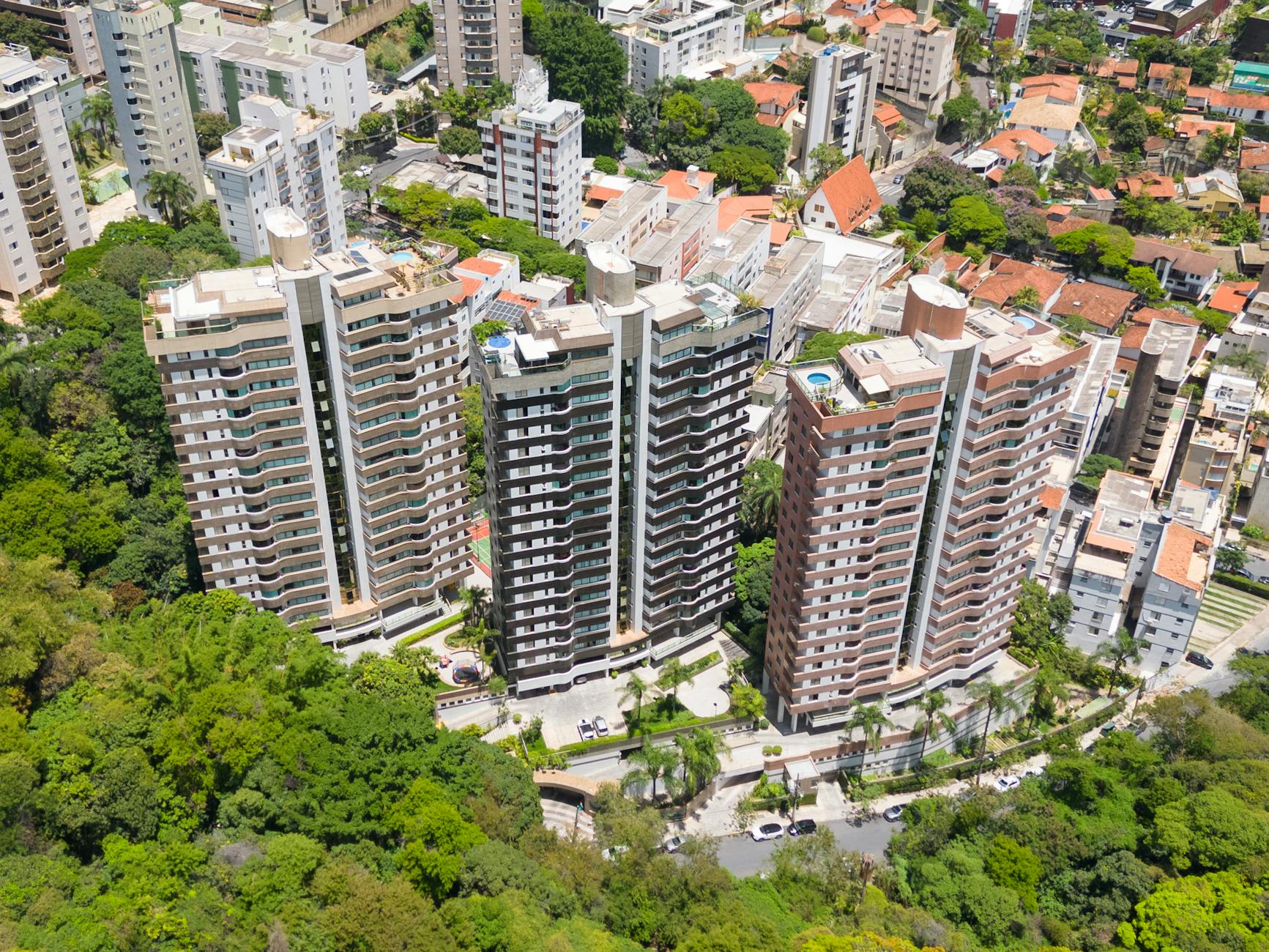
Average listing exposure on the Phuket secondary market for condominiums priced below 200,000 USD runs, based on our observations, between 4 and 8 months as of Q1 2026. In the premium villa segment above 500,000 USD, that window extends to 12-18 months, and discounts from the asking price routinely reach 10-15%. For any investor planning an exit from a Phuket or Koh Samui position, these figures are the starting point for every return calculation.
Our analysts have monitored the secondary market across both islands for several years and keep encountering the same pattern: sellers discover the true liquidity of their asset only after listing it. The gap between expected and actual transaction price remains one of the least understood elements of investing in Thai residential property.
Quick answer
- Freehold condo below 200,000 USD (Bang Tao, Kamala, Karon) - highest liquidity, listing exposure 4-8 months, typical discount 5-8% from asking price
- Premium condo 200,000-500,000 USD (Surin, Layan) - exposure 6-12 months, discount 8-12%
- Villa in leasehold or Thai company structure above 500,000 USD - lowest liquidity, exposure 12-24 months, discount 10-18%
- Total transaction costs on exit absorb roughly 4-7% of the deal value (taxes, fees, agent commission)
- Off-plan contract resale before handover is a separate path with margins of 10-25%, but it is constrained by developer assignment clauses
- Optimal listing timing is November through March (peak tourist season), ideally when the Thai baht is weak relative to USD or EUR
Options and scenarios
Freehold condominium segment (foreign quota title)
A buyer who acquires a condominium under foreign freehold title holds ownership recorded directly in their name. This is the only segment where a non-Thai national can hold outright title to the unit. Liquidity here is comparatively high because a secondary buyer can also acquire the unit in their own name, without setting up a legal structure.
In districts such as Bang Tao, Kamala and Karon on Phuket, and Bophut and Chaweng on Koh Samui, units priced between 3 and 7 million THB (approximately 85,000-200,000 USD at Q1 2026 rates of roughly 35 THB/USD) tend to find a buyer within a manageable timeframe. Based on our estimates, the median time from listing to closing in this segment is around 6 months.
A critical variable is the foreign quota status of the specific building. If the 49% foreign-ownership ceiling is already fully subscribed, an incoming foreign buyer must either wait for a unit to become available or purchase under leasehold terms, both of which reduce buyer demand and therefore compress achievable prices.
Villas held in leasehold or Thai company structures
Villas represent the least liquid segment on the secondary market. Because non-Thai nationals cannot hold land title directly, ownership is typically structured as a 30-year leasehold (with a contractual extension option) or through a Thai-registered company. Both arrangements generate legal scrutiny among prospective secondary buyers.
We verify on the ground across districts including Rawai, Nai Harn and Layan on Phuket and Maenam and Lamai on Koh Samui. Villas priced above 15 million THB (approximately 430,000 USD) carry listing exposure that regularly reaches 12-24 months. Based on our observations, the average price discount at transaction close in this segment sits at 12-18% below the original asking figure.
A compounding risk arises when the leasehold was registered several years before the resale. The remaining lease term has contracted, which mathematically reduces the asset's value to the next buyer and narrows the pool of interested parties further.
Off-plan contract assignment before handover
Some investors approach off-plan purchases as a short-cycle strategy: they pay 30-40% of the purchase price across instalment milestones during construction, then assign the contract to a new buyer before keys are handed over. Under favourable conditions, the margin on the amount invested can reach 15-25%.
We monitor the constraints on this path closely. A significant number of Phuket developers now include anti-assignment clauses or charge an assignment fee of 1-3% of the contract value. Some agreements prohibit resale outright until construction is complete. Before signing any off-plan contract, the provisions governing transfer fees and consent to assignment require careful review by a qualified local lawyer.
Holding-period arithmetic: a worked example
Below is an indicative return calculation for a condominium in Bang Tao purchased at 5,000,000 THB (approximately 143,000 USD) with a net annual rental yield of 5% after property management fees, maintenance costs and income tax.
Assumptions:
- Purchase price: 5,000,000 THB
- Net annual rental income: 250,000 THB (5%)
- Acquisition costs (transfer fee, sinking fund, legal fees): 150,000 THB (3%)
- Annual capital appreciation: 3% (segment average for Phuket condominiums 2019-2025, per CBRE Thailand and Bank of Thailand data)
- Exit costs: specific business tax 3.3% if sold within 5 years of acquisition, or stamp duty 0.5% after 5 years, plus withholding tax 1% and agent commission 3-5%
3-year horizon:
- Cumulative net rental income: 750,000 THB
- Estimated sale value at 3% per year appreciation: 5,464,000 THB
- Market discount applied (-7%): transaction price 5,082,000 THB
- Exit costs (SBT 3.3% + withholding tax 1% + agent 4%): approximately 422,000 THB
- Net outcome: 5,082,000 + 750,000 - 5,000,000 - 150,000 - 422,000 = 260,000 THB
- Annualised return: approximately 1.7%
5-year horizon:
- Cumulative net rental income: 1,250,000 THB
- Estimated sale value: 5,796,000 THB
- Market discount applied (-5%): transaction price 5,506,000 THB
- Exit costs (stamp duty 0.5% + withholding tax 1% + agent 4%): approximately 303,000 THB
- Net outcome: 5,506,000 + 1,250,000 - 5,000,000 - 150,000 - 303,000 = 1,303,000 THB
- Annualised return: approximately 5.2%
10-year horizon:
- Cumulative net rental income: 2,500,000 THB
- Estimated sale value: 6,720,000 THB
- Market discount applied (-3%): transaction price 6,518,000 THB
- Exit costs (stamp duty 0.5% + withholding tax 1% + agent 3%): approximately 294,000 THB
- Net outcome: 6,518,000 + 2,500,000 - 5,000,000 - 150,000 - 294,000 = 3,574,000 THB
- Annualised return: approximately 7.1%
The conclusion from this modelling is clear: a holding period of less than 5 years produces a marginal annualised return once transaction costs and market discount are properly accounted for. The specific business tax of 3.3%, which applies when the property is sold within 5 years of acquisition, is a material drag on short-horizon exits.
Comparison table
| Parameter | Freehold condo below 200k USD | Premium condo 200k-500k USD | Villa leasehold/company 500k+ USD |
|---|---|---|---|
| Listing exposure | 4-8 months | 6-12 months | 12-24 months |
| Typical discount to asking | 5-8% | 8-12% | 10-18% |
| Total exit costs | 4-6% | 5-7% | 5-8% |
| Buyer pool | Wide (freehold title) | Moderate | Narrow (legal structure required) |
| Recommended holding horizon | 5-7 years | 7-10 years | 10+ years |
| Structural risk | Low (foreign quota ceiling) | Moderate | High (leasehold/company) |
| Key Phuket districts | Bang Tao, Kamala, Karon | Surin, Layan | Rawai, Nai Harn, Layan |
| Key Koh Samui districts | Bophut, Chaweng | Chaweng Noi | Maenam, Lamai |
Risks and mistakes
Mistake 1: Pricing the exit from listing data rather than transaction data. We compare listing prices against recorded transaction prices consistently and observe a gap of 10-15% in most segments. Property portals reflect seller expectations, not market values. Using portal prices to estimate exit proceeds leads to systematically overstated return projections.
Mistake 2: Discounting the cost of time. Every month a property sits on the market has a real cost - either foregone rental income (if the unit is vacant during the listing period) or ongoing carrying costs. At annual management and common area maintenance fees of 40,000-80,000 THB, an 18-month listing window adds 60,000-120,000 THB in unrecovered expenses.
Mistake 3: Ignoring currency exposure. Investors converting proceeds to USD or EUR are exposed to THB exchange rate movements during the holding period. The historical volatility of THB against major currencies over 2020-2025 was in the range of 15-20% based on Bank of Thailand data. A 10% strengthening of the investor's home currency against THB during the holding period directly reduces the real return by approximately the same magnitude.
Mistake 4: Selling a villa without resolving the company structure first. When a property is held through a Thai company, the secondary buyer must either acquire shares in that company or negotiate a new leasehold agreement. Legal due diligence and a company audit are typically paid for by the seller and cost 50,000-150,000 THB depending on complexity.
Mistake 5: Overlooking home-country tax obligations. Capital gains from the sale of property located abroad are generally taxable in the investor's country of residence. Buyers should obtain specific tax advice in their country before completing an exit transaction, as the interaction between Thai withholding tax and home-country capital gains tax depends on the applicable double-taxation treaty.
Timing: when the market favours the seller
The most effective window for listing is September through October, so that the property is visible and being actively shown during peak season (November through March) when the largest concentration of prospective buyers from Europe, Russia and China is physically present on the islands. Based on our observations, transactions closed in peak season achieve discounts that are 2-4 percentage points lower than those finalised during the wet season (May through October).
A weak Thai baht relative to the USD or EUR benefits sellers, because foreign buyers perceive THB-denominated prices as more attractive on a converted basis. In 2025 the baht traded at around 36 THB/USD, a level that contributed to an uptick in foreign-buyer transaction volumes per Bank of Thailand data.
Supply cycles also matter. A high volume of new projects reaching handover in a given year increases competition for secondary-market listings. In 2026 we are tracking multiple condominium projects in the final delivery phase in Bang Tao and Kamala, which may extend exposure times for resale units in those specific districts.
FAQ
How long does it realistically take to sell a condo in Phuket in 2026?
Based on our observations, a condominium priced below 200,000 USD in established districts such as Bang Tao, Kamala or Karon typically transacts within 4-8 months of listing. Realistic pricing is the single most important variable. Overpricing by 10% above market value can double the exposure period.
What are the total costs of selling property in Thailand?
Sellers should budget approximately 4-7% of the transaction value in total exit costs. The main components are: specific business tax at 3.3% (if the property has been held for less than 5 years) or stamp duty at 0.5% (after 5 years), withholding tax at 1% of the assessed value or on a progressive scale depending on the transaction structure, and agent commission at 3-5%.
Is selling a Phuket condo after 3 years financially worthwhile?
In our modelling, a 3-year exit generates an annualised return of roughly 1-2% after all costs. The primary drag is the specific business tax at 3.3% combined with the market discount at close. A 5-year or longer holding horizon significantly improves the outcome, as the SBT is replaced by the much lower 0.5% stamp duty.
How does off-plan contract assignment work on Phuket?
Assigning an off-plan contract before handover is possible in some cases but depends entirely on the developer's terms. A number of Phuket developers include anti-assignment provisions or charge an assignment fee of 1-3% of the contract value. Where assignment is permitted and market conditions are favourable, margins of 15-25% on the amount invested are achievable but are not guaranteed.
Are Phuket villas a liquid investment on the secondary market?
Villas held in leasehold or through a Thai company structure are the least liquid segment we track. Listing exposure regularly reaches 12-24 months, and discounts of 10-18% from the asking price are common at close. We recommend a minimum 10-year holding horizon for this asset class.
Does the Thai baht exchange rate affect the profitability of an exit?
Yes, materially. Investors who convert proceeds to USD, EUR or another home currency are exposed to THB movements over the holding period. Historical THB volatility against major currencies over 2020-2025 was in the range of 15-20% based on Bank of Thailand data. A weak baht at the time of purchase combined with a strong baht at exit improves returns in the investor's base currency; the reverse configuration can offset a significant portion of property-level gains.
How does secondary-market liquidity differ between Phuket and Koh Samui?
Phuket has a substantially deeper secondary market than Koh Samui. Based on our estimates, foreign-buyer condominium transaction volumes on Phuket run approximately 4-5 times higher than on Koh Samui as of 2026. On Koh Samui, listing exposure tends to be 30-50% longer across all segments, and the buyer pool for freehold condominiums is more limited given the smaller total supply.
When is the best time of year to list a property for sale on Phuket?
We recommend listing in September or October so the property is actively visible during the peak tourist season running from November through March. Transactions closed in season achieve measurably lower discounts - approximately 2-4 percentage points less than those completed during the wet season.
What is the minimum recommended holding period for a Phuket condo investment?
Based on our return modelling, a minimum of 5 years is required to achieve a meaningful total return after accounting for acquisition costs, exit costs, market discount and the specific business tax that applies on sales within the first 5 years. A 7-year horizon or longer produces a more comfortable outcome across varying market conditions.
What structural risks should a seller of a Thai company villa address before listing?
When the asset is held in a Thai company, prospective buyers will require a full legal review of the company structure, share registry and land title. This due diligence process is typically funded by the seller and costs between 50,000 and 150,000 THB depending on complexity. Sellers should initiate this process before listing to avoid delays that extend exposure time.
Researching property in Phuket or Koh Samui? Get in touch - our analysts will prepare a data brief for your shortlisted location.