
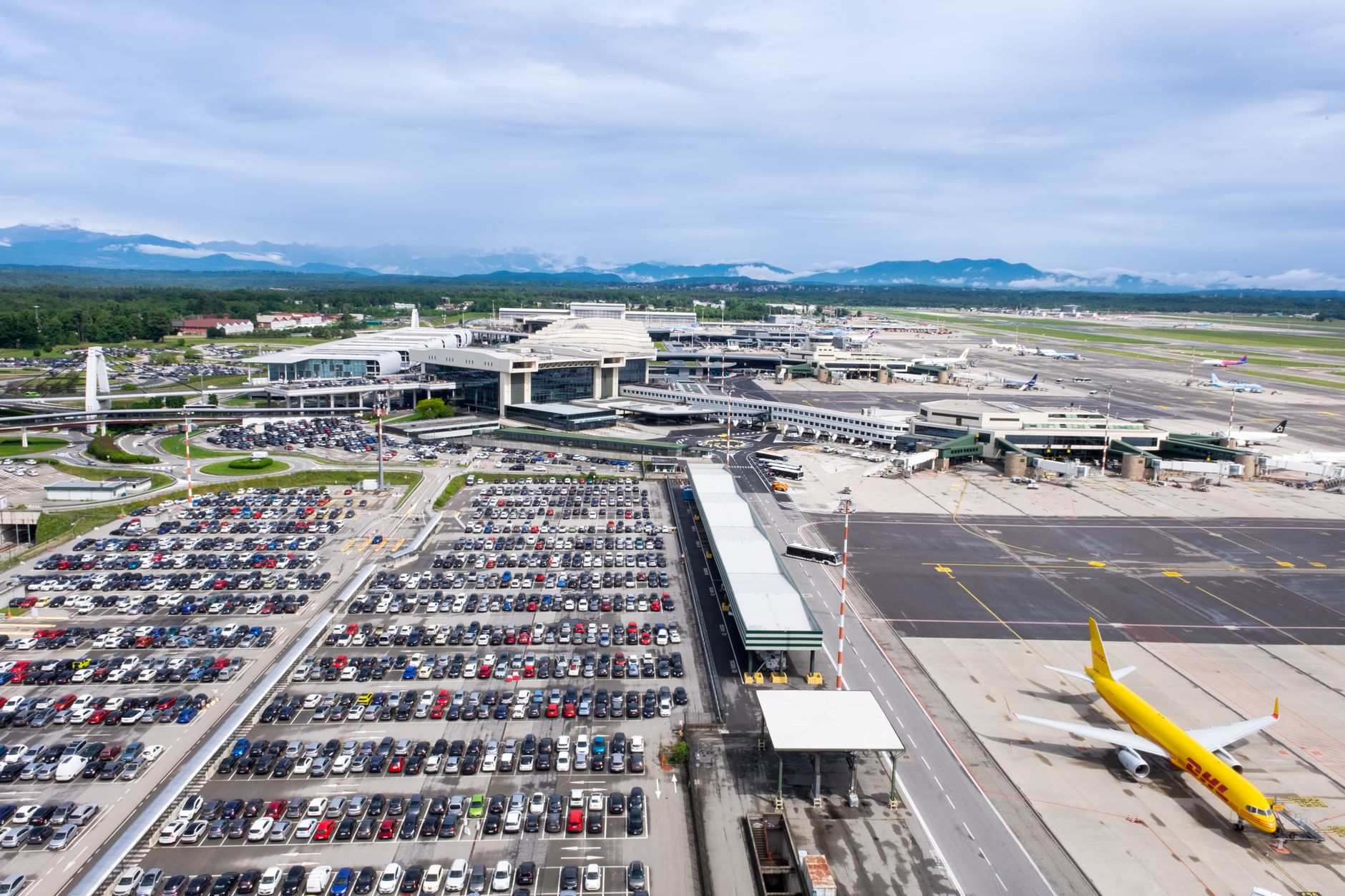
Koh Samui Airport (USM) handled approximately 2.1 million passengers in 2024, according to Airports of Thailand (AoT) data - a 14% year-on-year increase, though still below pre-pandemic capacity. As of 2026, the island's sole airport operator is mid-way through a terminal modernisation programme, while the Thai government continues to evaluate a proposal for a second airport on the island. For any investor considering residential property on Koh Samui, these two parallel processes carry direct implications for valuations in districts such as Bophut, Maenam, and Chaweng.
Our analysts have monitored conditions on the ground for three years. What follows separates confirmed, funded projects from speculative concepts, and provides our estimates of how each scenario transmits into per-square-metre pricing.
Quick answer
- USM has one runway (1,829 m) and one terminal, limiting operations to narrow-body aircraft such as the ATR 72 and A320
- The airport operator has committed approximately 800 million THB (roughly 23 million USD at Q1 2026 rates) to terminal modernisation, with completion targeted for end-2027
- The government's second-airport concept (Lipa Noi, west coast) remains at feasibility-study stage - no approved budget, no tender schedule
- Land prices within 3 km of the existing airport (Bophut area) rose by an estimated 18-22% between 2023 and 2025, based on our datasets
- A useful historical parallel: the HKT expansion in Phuket between 2012 and 2016 drove property price growth of 35-45% over the subsequent decade in Mai Khao and Nai Yang
- There are no direct international long-haul flights into USM; the standard routing is via Bangkok (BKK/DMK), with the Bangkok-to-Samui leg taking roughly one hour
Options and scenarios
Scenario A: USM terminal modernisation (base case)
This is the only scenario with confirmed and funded activity. The airport operator is rebuilding the passenger terminal, expanding check-in, gate, and departure areas. Published operator projections indicate that annual capacity will rise from approximately 2.5 million to 3.5 million passengers once works are complete. The runway itself remains unchanged at 1,829 m, which continues to exclude wide-body aircraft.
For the property market, the implication is a moderate demand uplift. We estimate a 10-15% increase in daily slot capacity by 2028, improving island accessibility without fundamentally altering the visitor profile. In our assessment, Bophut - the district immediately adjacent to the airport - should see price appreciation of roughly 5-8% per year above its existing trend as a direct result of improved connectivity.
Scenario B: second airport at Lipa Noi (optimistic case)
The idea of a second airport entered public discussion in 2023. The proposed Lipa Noi site on the west coast would require a runway of at least 2,500 m to handle wide-body international services. Cost estimates cited in Thai media range from 15 to 25 billion THB (approximately 430-710 million USD). As of 2026, the feasibility study has not been published and no government decision to budget the project has been made. A realistic opening horizon, if a go-ahead is issued within the next 12 months, would be 2033-2035 at the earliest.
If a second airport is eventually built, the western shoreline - Lipa Noi and Taling Ngam - would likely undergo a transformation similar to what we observed on northern Phuket after the HKT runway extension. In that scenario, land values could increase by 40-60% over the decade following a construction start.
Scenario C: no significant change (downside case)
In this scenario, the USM modernisation faces delays and the second airport remains a concept. The private monopoly on airport operations - unique among major Thai island destinations - keeps airfare structurally elevated (Bangkok-to-Samui one-way fares average 3,500-5,500 THB, roughly two to three times the equivalent Phuket fare). Limited airline competition constrains tourist volume growth, and property prices advance more slowly - our estimate is 3-5% per year, driven primarily by domestic demand and the upper-luxury segment.
Comparison table
| Parameter | Scenario A: USM upgrade | Scenario B: second airport | Scenario C: status quo |
|---|---|---|---|
| Status (2026) | Approved, under construction | Feasibility study only | No new decisions |
| Estimated budget | approx. 800 million THB | 15-25 billion THB | Not applicable |
| Completion horizon | End-2027 | 2033-2035 at earliest | Not applicable |
| Annual capacity | Up to 3.5 million passengers | 5-8 million passengers (estimate) | approx. 2.5 million passengers |
| Price impact - Bophut | +5-8% per year | +8-12% per year | +3-5% per year |
| Price impact - Lipa Noi | Neutral | +40-60% over decade | +2-4% per year |
| Price impact - Maenam | +3-5% per year | +10-15% per year | +3-4% per year |
| Delay risk | Low | Very high | Not applicable |
Risks and mistakes
Pricing in unbuilt infrastructure. The most common error we observe among international buyers is valuing a Koh Samui asset as though the second airport already exists. Our analysts track tender announcements and on-the-ground construction progress: as of this publication, there is not a single issued tender related to any new airport at Lipa Noi. A reasonable speculative premium for future infrastructure is 10-15% at most - not the 40-60% that reflects a fully delivered scenario.
Private airport monopoly. Koh Samui is one of the very few cases globally where an airport operates under private concession rather than state ownership (the concession is due to expire in the coming decade). With no competing carrier access, the structural cost of reaching the island remains significantly higher than for Phuket. For buyers targeting short-term rental income, this is a meaningful demand constraint that should be factored into yield projections.
Currency exposure. The THB-to-USD rate has shown approximately 8-10% volatility over the past five years. Buyers converting from other currencies should model realistic exchange-rate scenarios into their total acquisition cost rather than locking in a single spot rate.
Legal framework for foreign ownership. Foreign nationals cannot hold freehold title to land in Thailand. The two standard paths on Koh Samui are condominium ownership (within the 49% foreign-quota limit per building) and leasehold villa arrangements (typically structured as 30-year initial term with one or two renewal options). Our team monitors legislative developments, but as of 2026 the regulations remain unchanged.
Flood and climate risk on the west coast. The Lipa Noi area - relevant in Scenario B - is more exposed to southwest monsoon weather than the east coast. We verify historical flood records for each location we analyse before drawing price-transmission conclusions.
FAQ
Is Koh Samui Airport being expanded in 2026?
Partially, yes. The airport operator is upgrading the passenger terminal under a budget of approximately 800 million THB. The runway is not being extended. Works are scheduled for completion by end-2027.
Will a second airport be built on Koh Samui?
As of 2026, the Lipa Noi second-airport proposal is at feasibility-study stage with no approved budget and no tender timeline. If a government decision is made within the next year, the earliest realistic opening would be 2033-2035.
How does airport development affect property prices on Koh Samui?
In our estimates, the confirmed terminal upgrade adds approximately 5-8% annual price growth in Bophut above the baseline trend. A second airport, if built, could push Lipa Noi and Taling Ngam land values up by 40-60% over the following decade - but that scenario is not yet approved.
How does Koh Samui compare with Phuket for an investor focused on rental yield?
Phuket Airport (HKT) handles over 18 million passengers per year, accommodates wide-body aircraft, and benefits from multi-carrier competition keeping fares accessible. For investors targeting short-term rental volume, Phuket offers a larger tourist base. Koh Samui delivers lower occupancy volume but a higher average nightly rate, which can balance yields in the right property category.
Which Koh Samui districts benefit most from infrastructure improvements?
Under the base-case scenario, Bophut and Chaweng gain most from the upgraded terminal. Under the second-airport scenario, Lipa Noi and Taling Ngam would be the primary beneficiaries. Maenam sees moderate gains in both scenarios.
Can a foreign buyer purchase property near Koh Samui Airport?
Yes, within the legal framework available to foreign nationals: condominium units (subject to the 49% foreign-quota rule per building) or leasehold villas on land held under long-term lease. Freehold land title is not available to foreign buyers under current Thai law.
What is the Bangkok-to-Samui airfare, and why does it matter for investors?
One-way fares on the Bangkok-to-Samui route average 3,500-5,500 THB, reflecting the private-operator monopoly at USM. This is roughly two to three times the comparable Bangkok-to-Phuket fare. Higher access costs reduce the addressable tourist pool and, by extension, can cap rental demand growth - a factor our analysts weight explicitly in yield modelling for Koh Samui assets.
How does Koh Samui's overall infrastructure compare with Phuket in 2026?
Phuket has three internationally accredited hospitals, more than ten international schools, two marinas, and an airport processing over 18 million passengers annually. Koh Samui has one international hospital, two international schools, and an airport at 2.5 million passengers. The infrastructure gap is material for buyers whose investment thesis depends on year-round, high-volume visitor flows.
Our team's overall assessment for 2026: the only confirmed scenario is the USM terminal upgrade. Investors should build their underwriting around Scenario A and treat any second airport as an option that may or may not materialise within an 8-10 year horizon. Acquiring property in Lipa Noi purely on the basis of an unbuilt airport is a high-risk strategy that requires strong portfolio diversification to be defensible.
Researching property in Phuket or Koh Samui? Get in touch - our analysts will prepare a data brief for your shortlisted location.