
As of Q1 2026, our analysts are tracking at least 7 active infrastructure projects on Koh Samui with a combined estimated value exceeding 12 billion THB (approximately 345 million USD). We monitor construction progress on the ground and follow tender announcements from the Department of Highways (DOH) and the Civil Aviation Authority of Thailand (CAAT). Below is a factual assessment of each project: its current status, delivery horizon, and measurable impact on property prices in specific districts.
For decades, Koh Samui's development outpaced its infrastructure. The island covers just 228 sq km yet processes more than 3 million passengers per year through Samui Airport (USM), based on CAAT data for 2025. The sole ring road (Route 4169/4170) stretches roughly 52 km and during peak season generates congestion exceeding 45 minutes on the Chaweng-Nathon corridor. These parameters matter directly to property investors: infrastructure quality drives both short-term rental yields and long-term capital appreciation potential.
Quick answer
- Samui Airport (USM) expansion - CAAT-approved terminal upgrade targeting 4.5 million passengers per year; target completion: end of 2028
- Southern bypass (Lamai to Nathon) - DOH tender for a 14 km section announced in Q3 2025; budget approximately 3.2 billion THB; planned completion: 2029
- International-standard private hospital in Bophut - construction started in 2025, opening planned for 2027/2028, approximately 120 beds
- IB-curriculum international school in Maenam - design phase underway; permits expected in 2026; earliest teaching start: 2028
- Nathon Marina - feasibility study stage (EIA submitted, as of Q1 2026); estimated budget 2.5 billion THB
- PWA water network expansion, Maenam to Bangrak - works ongoing; estimated completion Q3 2026
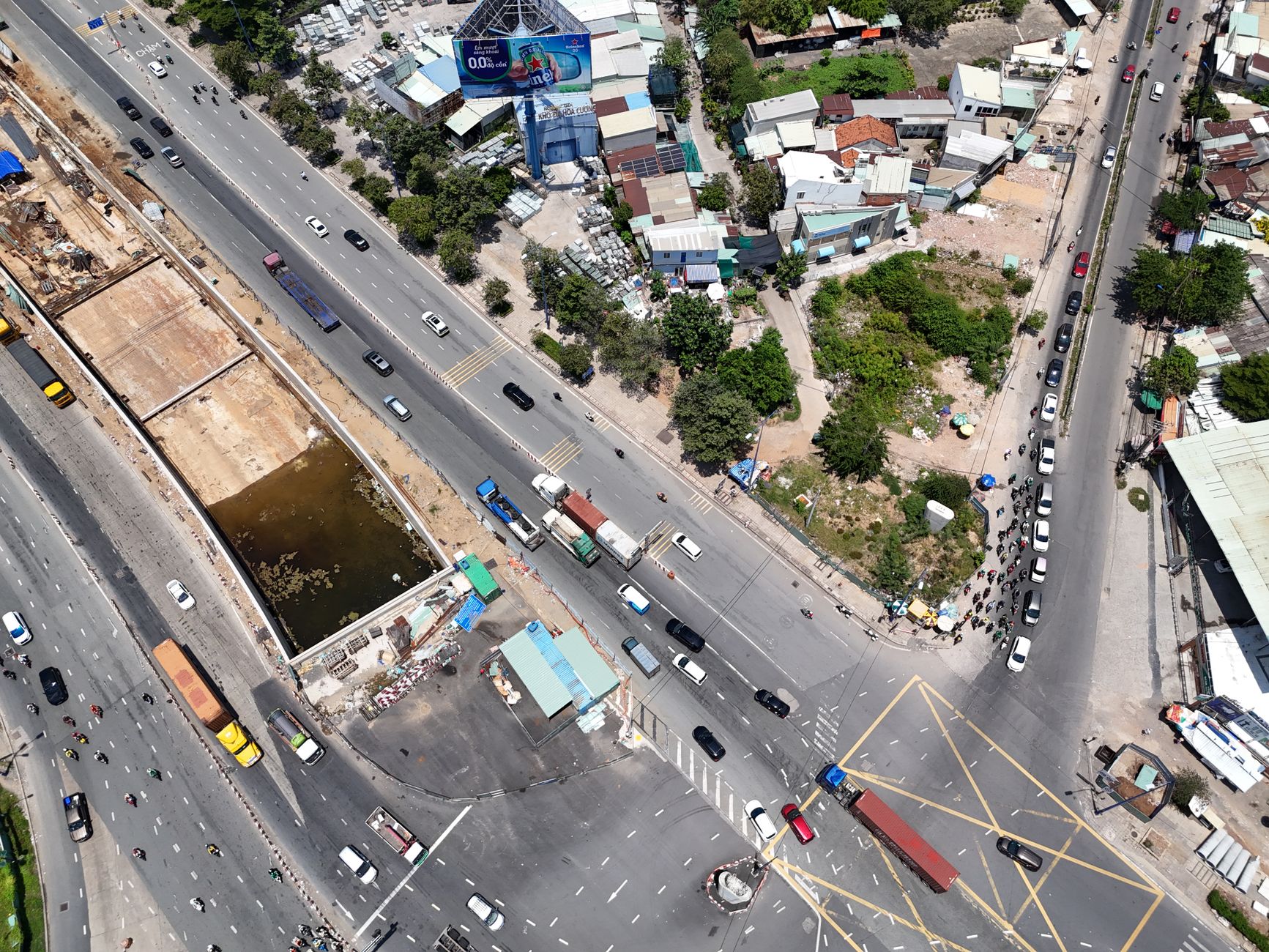
- Route 4169 upgrade - widening to 4 lanes on the Chaweng-Bangrak section (6.8 km); budget 850 million THB; works in progress
Options and scenarios
Base scenario: approved projects delivered with moderate delay
In this scenario, we assume projects with signed contracts (southern bypass, airport expansion, Bophut hospital) are completed with no more than 12 months of slippage. Based on our estimates, land prices within 3 km of new road junctions may rise by 15-25% over 3-4 years from the road opening date. A useful historical reference: after the Chaweng Noi tunnel opened in 2019, plots in its immediate vicinity appreciated approximately 22% within 30 months, per our monitoring data.
Districts in the strongest impact zone under this scenario: Lamai (southern bypass), Bophut (hospital, airport proximity), Bangrak (Route 4169 upgrade).
Optimistic scenario: full delivery including the marina
If the Nathon Marina EIA receives approval and construction begins before end-2027, Nathon could shift from a ferry port town to a dedicated yachting hub. For comparison, we track the Royal Phuket Marina on Phuket, which lifted median condominium prices within a 2 km radius by approximately 30% over five years from its opening (2015-2020, per our data sets). A comparable effect on Koh Samui is plausible, though demand volumes are smaller.
Pessimistic scenario: delays and stalled projects
Infrastructure announced but not delivered is a recurring pattern on Thai islands. The Phuket Light Rail Transit project has been publicly discussed since 2017; as of 2026 it remains in the tender phase. On Koh Samui, the Nathon Marina and the Maenam IB school are still conceptual. In our valuations, we apply 0-5% price premium for projects at this stage until a construction contract is signed.
Comparison table
| Project | Status (Q1 2026) | Estimated Budget | Target Delivery | Districts in Impact Zone | Estimated Price Impact per sqm |
|---|---|---|---|---|---|
| Samui Airport (USM) expansion | Approved, tender stage | 4-5 billion THB | 2028 | Bophut, Bangrak, Maenam | +10-15% (3 years) |
| Southern bypass (Lamai-Nathon) | Tender announced | 3.2 billion THB | 2029 | Lamai, Nathon, Hua Thanon | +15-25% (3-4 years) |
| Bophut private hospital | Under construction | 1.2 billion THB (private) | 2027/2028 | Bophut, Bangrak | +5-10% (2 years) |
| Maenam IB school | Design phase | Data not available | No earlier than 2028 | Maenam, Bangpo | +5-8% (post-opening) |
| Nathon Marina | EIA feasibility study | 2.5 billion THB | 2030 (if approved) | Nathon, Lipa Noi | +20-30% (5 years, conditional) |
| PWA water network, Maenam | Works ongoing | 380 million THB | Q3 2026 | Maenam, Bangrak | +3-5% (indirect) |
| Route 4169 upgrade | Works in progress | 850 million THB | 2027 | Chaweng, Bangrak, Plai Laem | +8-12% (2 years) |
Risks and mistakes
Paying a premium for a promise. The most common error we observe among international investors is pricing in a project that has no signed construction contract yet. The Nathon Marina is a compelling concept, but an EIA process on a Thai island routinely takes 2-4 years. Our analytical approach: factor in only projects that are under construction or have a signed contract when justifying a price premium.
Compulsory land acquisition along road corridors. The southern bypass route may require partial state acquisition of plots adjacent to the planned alignment. We verify the exact road corridor on the ground before any location recommendation.
Monsoon-related construction delays. Koh Samui has a different rainfall pattern from Phuket: the heaviest rains fall in November and December, which regularly delays earthworks by 2-3 months per season. This adds to baseline delivery risk on all seven projects.
Currency exposure. Over a 3-4 year infrastructure horizon, THB fluctuations against major currencies can reach 8-15% in either direction. We recommend running a currency-sensitivity analysis as part of any return calculation.
Limited market liquidity. Koh Samui is a substantially smaller market than Phuket. Based on our estimates, annual condominium transaction volume on the island does not exceed 400-500 units, meaning exit timelines are longer and buyer pools thinner.
FAQ
Which Koh Samui infrastructure projects have signed contracts as of 2026?
As of Q1 2026, projects with active construction or signed contracts include the Route 4169 widening (Chaweng to Bangrak section), the PWA water network expansion in Maenam-Bangrak, and the private hospital in Bophut. The southern bypass is at the DOH tender stage. The airport expansion has CAAT approval but no construction contract yet.
How does infrastructure development affect Koh Samui property prices?
Historically, opening a new road or public facility on the island has pushed land prices within 2-3 km up by 15-25% over 3-4 years. Hospitals and schools carry a smaller but more stable effect of around 5-10%. Marinas generate the highest premiums, but only after actual opening.
Is the Nathon Marina a reliable investment catalyst?
Not at this stage. As of 2026, the project is at feasibility study level with an EIA submitted but not yet approved. There is no signed construction contract. We track its progress but apply no marina premium to Nathon property valuations until that changes.
Which Koh Samui districts stand to gain most from the current infrastructure pipeline?
Based on our analysis: Lamai (southern bypass), Bophut (hospital and airport proximity), Bangrak (Route 4169 upgrade), and Maenam (water network upgrade, potential IB school). Nathon has the highest upside potential, but it remains conditional on the marina approval.
How do Koh Samui and Phuket infrastructure budgets compare?
Phuket operates at a substantially larger scale: the Light Rail Transit project alone is estimated at around 40 billion THB. Koh Samui's combined pipeline stands at 12-15 billion THB. Adjusted for land area (228 sq km versus 576 sq km for Phuket), the capital investment intensity per square kilometre is broadly comparable.
Can foreign buyers purchase property near the planned bypass on Koh Samui?
Yes, in two principal forms: condominium freehold (foreigners may hold up to 49% of a building's total area) or leasehold for 30 years with a renewal option. Before any purchase near the bypass corridor, we recommend verifying the exact road alignment to rule out partial compulsory acquisition of the plot.
What is the average price per square metre on Koh Samui in 2026?
Based on our current data sets, the median condominium price in popular districts - Bophut, Chaweng, Maenam - sits at 75,000-120,000 THB per sqm (approximately 2,050-3,270 USD per sqm at 2026 exchange rates). Sea-view villas occupy the 150,000-250,000 THB per sqm range.
How long does the journey from Western Europe to Koh Samui take in 2026?
There are no direct flights from Western Europe. The fastest routing runs through Bangkok (approximately 10-12 hours from major European hubs), then a domestic connection to Samui Airport (approximately 1 hour 10 minutes). Total door-to-door travel time is typically 14-18 hours depending on connection.
Koh Samui is entering a phase of accelerated infrastructure build-out, but the transmission mechanism from project completion to property price movement typically runs 2-4 years and depends heavily on actual delivery. Our analytical recommendation: concentrate on districts served by projects with signed contracts - Bophut, Bangrak, Lamai - and treat conceptual projects such as the Nathon Marina and the Maenam IB school as upside options, not as values already embedded in today's asking prices.
Researching property in Phuket or Koh Samui? Get in touch - our analysts will prepare a data brief for your shortlisted location.