
Koh Samui enters 2026 carrying the densest infrastructure investment pipeline the island has seen in a decade. Our analysts are tracking seven key projects on the ground, with a combined estimated value exceeding 18 billion THB (approximately 530 million USD at Q1 2026 exchange rates). Each project reshapes the island's connectivity and, by extension, redefines which zones are likely to record the strongest property price growth over the next three years.
One pattern stands out clearly in our data sets: infrastructure spending on Koh Samui is not evenly distributed. Investment is concentrated along a northeast-to-northwest corridor running from Bophut through Maenam to Nathon, while the southeastern side of the island - particularly Lamai and Hua Thanon - is receiving far less attention. That spatial asymmetry is already producing measurable divergence in per-square-metre price trends, which we examine in detail below.
Quick answer
- Samui Airport (USM) completed a terminal expansion in 2025 that added roughly 30% more check-in floor area, lifting estimated annual capacity from approximately 1.8 million to 2.4 million passengers
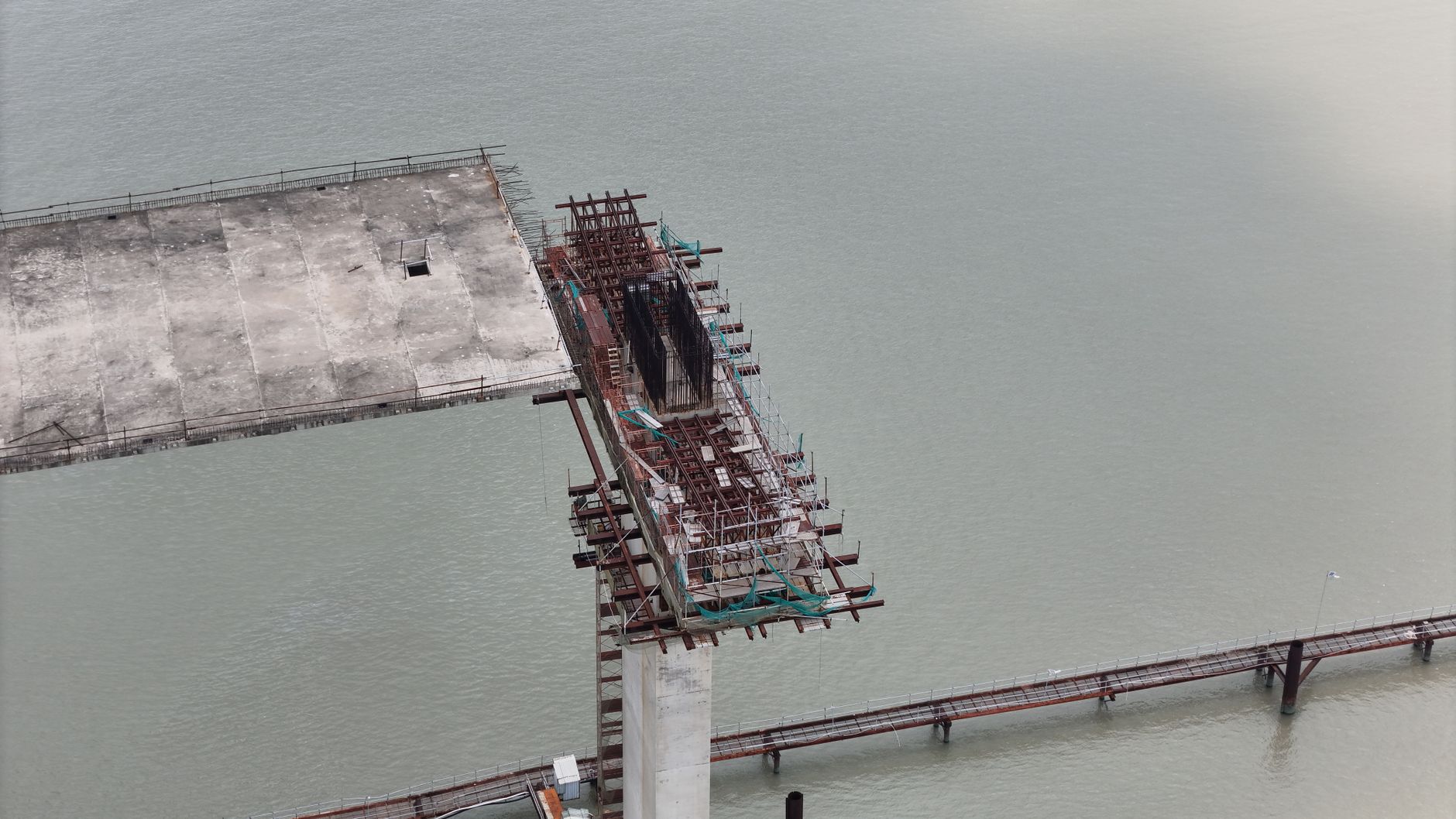
- The northern ring road (Maenam to Nathon, approximately 12 km) is under construction, with a scheduled completion of end-2027 and provincial funding from Surat Thani
- A JCI-standard private hospital in Bophut (approximately 120 beds) received its construction permit in Q3 2025, with opening targeted for 2027
- Two new international schools (IB and British curricula) announced enrolment for the 2026/2027 academic year in the Maenam area
- The Nathon marina (approximately 180 berths) remains at the Environmental Impact Assessment stage and has not yet received a construction permit
- Land prices within 2 km of the planned northern ring road corridor rose by an estimated 12-18% year-on-year in 2025, based on our analysis of Land Office transaction data
- Average condominium prices in Bophut reached approximately 85,000-110,000 THB per sq m as of Q1 2026, representing a roughly 14% increase versus Q1 2024
Options and scenarios
Scenario A: On-schedule delivery (estimated probability approximately 30%)
In this scenario, the northern ring road opens by end-2027, the Nathon marina clears its EIA by mid-2026, and the Bophut hospital opens as planned. The price transmission mechanism is well-documented. Our analysts draw on historical Phuket data: when the Kathu-Patong tunnel opened in 2020, residential property within a 3 km radius appreciated by 15-22% over the subsequent 24 months. On Koh Samui, where developable land supply is considerably more constrained, the proportional impact could be stronger. Based on our estimates, prices in Maenam and the western part of Bophut could rise by 20-30% through end-2028 under this scenario.
Scenario B: Partial delays (estimated probability approximately 50%)
This is the more realistic baseline in our modelling. It assumes the ring road slips by 12-18 months (consistent with the precedent set by route 4169 on the Chaweng-Lamai stretch, which ran approximately two years behind schedule) and that the marina stalls at the EIA stage. The hospital and schools open with minor delays. Price appreciation in the affected zones reaches approximately 10-15% over a three-year horizon. We orient our working recommendations toward this scenario.
Scenario C: Key projects stalled (estimated probability approximately 20%)
Budget reprioritisation or unresolved EIA objections could block both the ring road and marina for an extended period. Koh Samui's own history offers a cautionary precedent: a fixed-link bridge connecting the island to the mainland at Donsak was discussed for well over a decade and never advanced to the construction phase. Under this scenario, prices in the northern corridor stabilise, and investors who priced in the full infrastructure premium at acquisition may experience stagnation or a correction of 5-8%.
Comparison table
| Parameter | Bophut (northeast) | Maenam (north) | Nathon (west) | Lamai (southeast) |
|---|---|---|---|---|
| Avg. condo price THB/sq m (Q1 2026) | 85,000-110,000 | 65,000-85,000 | 45,000-65,000 | 55,000-75,000 |
| Year-on-year price change (estimate) | +14% | +18% | +10% | +6% |
| Infrastructure projects within 5 km | 4 (hospital, schools, airport, roads) | 3 (ring road, schools, roads) | 2 (conceptual marina, ring road) | 1 (route 4170 upgrade) |
| Drive time to USM airport | 10 min | 15 min | 30 min | 25 min |
| Infrastructure delay risk | Low | Medium | High (marina at EIA stage) | Medium |
| Price growth potential to 2028 - Scenario B | +10-12% | +12-15% | +8-10% (conditional) | +5-8% |
| Freehold condo availability for foreigners | Good, multiple projects | Growing, new launches | Limited | Moderate |
Risks and mistakes
Pricing in promises rather than concrete. This is the most common analytical error we observe among foreign investors considering Koh Samui. The Nathon marina sounds compelling, but as of 2026 it exists only as an EIA submission. Applying a marina premium to a land purchase at this stage is speculation, not investment analysis. In our internal valuation models, any project that has not received a construction permit carries a weight of zero in the price-impact component.
Underestimating geological and drainage constraints. Koh Samui covers approximately 228 sq km, much of it steep interior hillside. Stormwater drainage has been a persistent operational issue. Infrastructure projects on sloped terrain generate higher foundation and access-road costs that are not always reflected transparently in developer asking prices.
Single-operator airport dependency. USM is privately owned and operated, which structurally limits route competition and keeps airfares to and from the island at two to three times the equivalent Phuket fare. The terminal expansion increases throughput, but the absence of low-cost carrier slots restricts the tourist rental catchment relative to Phuket. Investors should factor this into rental yield projections and exit liquidity assumptions.
Absence of detailed land-use zoning. Koh Samui does not have a comprehensive, parcel-level zoning plan comparable to those found in jurisdictions with mature planning systems. Construction permit decisions at the Tambon (sub-district) level can be unpredictable. We monitor procurement announcements and administrative decisions as closely as we can, but investors should build in a 6-12 month procedural buffer for any development requiring local permits.
Currency exposure for USD- and EUR-based investors. The Thai baht has shown moderate volatility against major currencies over the past two years. On a transaction of 5 million THB, even a 5% shift in the exchange rate translates to a meaningful variance in the effective purchase cost when measured in the investor's home currency. We consistently find that buyers underestimate multi-year currency exposure and rarely apply any form of hedging strategy when structuring staged payments.
FAQ
Which infrastructure projects on Koh Samui have the largest measurable impact on property prices in 2026?
Three projects carry the greatest verifiable weight in our models: the USM airport terminal expansion (capacity now estimated at 2.4 million passengers annually), the northern ring road (Maenam to Nathon, 12 km), and the Bophut private hospital. Based on our estimates, residential property within 3-5 km of these projects is recording year-on-year price increases of 12-18%.
Has the Nathon marina on Koh Samui been approved?
No. As of 2026, the project is at the Environmental Impact Assessment stage. It proposes approximately 180 berths but has not received a construction permit. We advise against treating this project as a confirmed price driver when making a purchase decision.
Which district of Koh Samui shows the highest price growth potential?
Maenam is recording the highest year-on-year price momentum in our data sets, at approximately +18% as of Q1 2026. The drivers are proximity to the planned ring road alignment, two new international school openings, and a relatively lower starting price base (65,000-85,000 THB per sq m for condominiums) compared with Bophut.
What are current condominium prices per square metre on Koh Samui in 2026?
Prices range from approximately 45,000 THB per sq m in Nathon to approximately 110,000 THB per sq m in Bophut, based on Q1 2026 transaction data we monitor. Leasehold villa pricing starts at around 120,000 THB per sq m in Lamai and exceeds 200,000 THB per sq m for beachfront positions in Bophut.
How does Koh Samui's infrastructure pipeline compare with Phuket's?
Phuket is at least a decade ahead on infrastructure maturity. It has an international airport with direct long-haul routes, multiple JCI-accredited hospitals, more than ten international schools, and a well-developed road network. Koh Samui is actively closing the gap, which creates higher percentage upside in property prices - but also higher operational risk for investors during the transition period.
Will the northern ring road on Koh Samui be delivered on schedule?
The official target is end-2027. However, based on the island's road-construction track record - the Chaweng to Lamai section of route 4169 ran approximately two years behind schedule - our baseline assumption is delivery in the first half of 2029.
What are the main legal risks for foreign buyers purchasing property near new infrastructure zones?
The principal risks are zoning unpredictability at the Tambon level, the absence of granular land-use plans, and the possibility that a neighbouring plot receives a permit for a use that degrades the investment's value. We recommend commissioning a title-deed search and a local legal review before any exchange of contracts, with particular attention to Chanote (full title) versus lower-grade title documents.
How should international investors think about currency risk on a Koh Samui purchase?
The Thai baht has fluctuated within a meaningful range against USD and EUR over the past two years. On a 5 million THB acquisition, exchange-rate movement alone can produce a variance of several thousand dollars in effective cost when measured in the buyer's home currency. Structuring staged payments across multiple tranches over 12-24 months can reduce point-in-time exposure, though this depends on the developer's payment schedule.
Our base scenario - assigned a probability of approximately 50% - projects partial infrastructure delivery on Koh Samui through 2028-2029, with price appreciation of 10-15% in the primary impact zones. Maenam and Bophut offer the most balanced combination of upside potential and execution risk in our current assessment. Nathon is worth monitoring, but only if the marina clears its EIA and receives a construction permit - neither of which is confirmed as of 2026. The working principle our analysts apply: buy what is being built, not what is being announced.
Researching property in Phuket or Koh Samui? Get in touch - our analysts will prepare a data brief for your shortlisted location.