

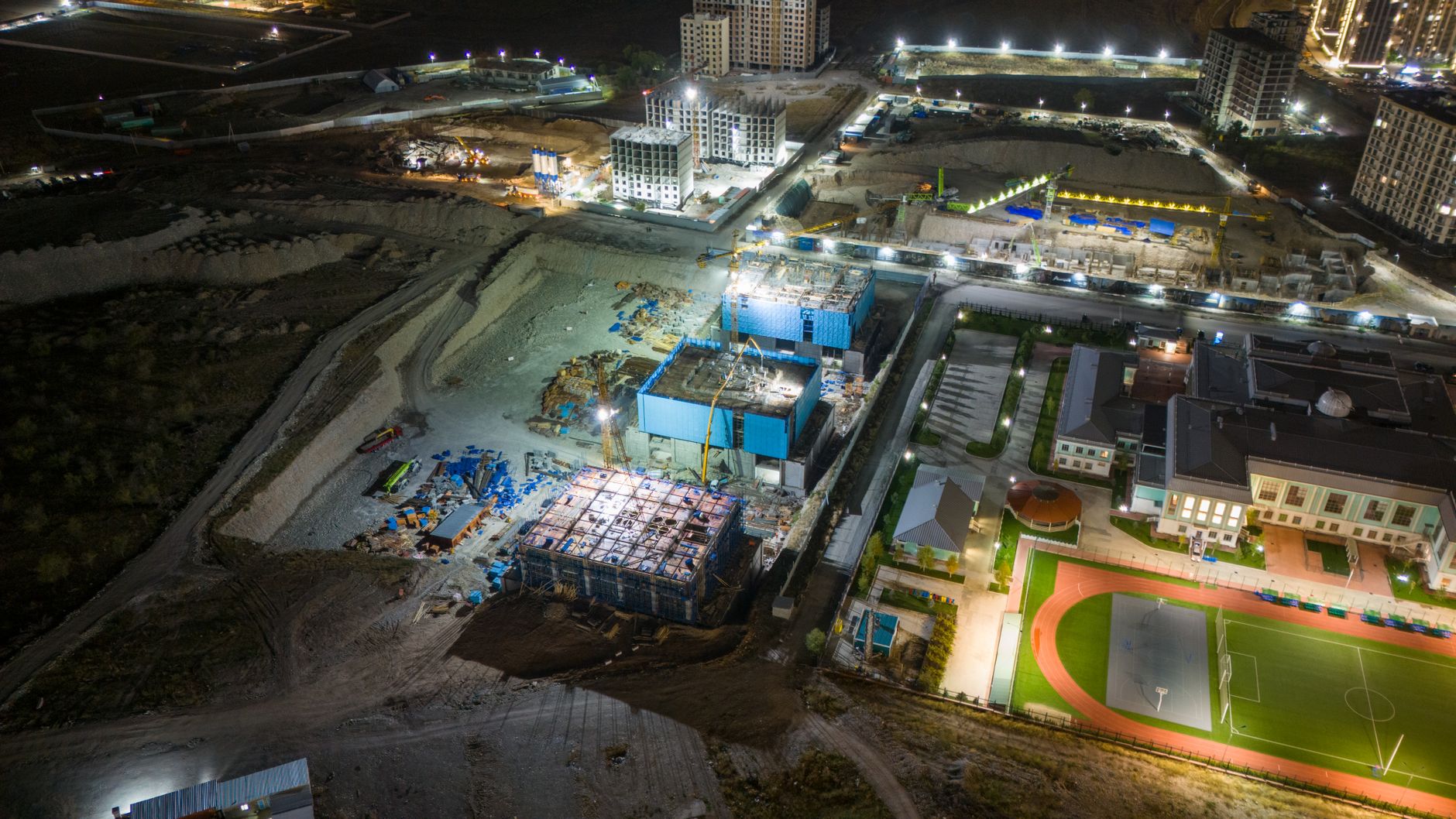
In Q1 2026, our analysts estimate that off-plan residential units in Phuket are priced at a 15-25% discount relative to comparable secondary-market properties, with the exact figure varying by district and project phase. That headline discount is real, but it must be weighed against construction risk that compounds with each successive payment instalment. The further a buyer is from key-handover, the greater the capital exposure.
Our team has tracked construction progress across Phuket and Koh Samui for several years. This article breaks down the off-plan purchase mechanism stage by stage, from reservation deposit through to key handover. We anchor every figure to current data (Q1 2026 where available), flag the clauses that provide genuine contractual protection, and identify the common mistakes that erode the discount buyers thought they were capturing.
Quick answer
- A typical Phuket off-plan payment schedule runs 5-7 instalments spread across 18-36 months of construction
- The reservation deposit is usually 50,000-200,000 THB and is non-refundable in the majority of contracts we have reviewed
- Cumulative buyer exposure before handover reaches 70-80% of the purchase price; the balance is due at key transfer
- Off-plan discounts in Bang Tao and Layan currently run at approximately 18-25% versus secondary-market pricing (Q1 2026 data)
- On Koh Samui (Bophut, Maenam), the discount is narrower at 12-18%, reflecting smaller project scale and lower construction pipeline
- Contractual penalties for developer delays rarely exceed 0.01-0.05% of the purchase price per day - negotiating a termination threshold is therefore more important than the penalty rate itself
Options and scenarios
Scenario A: entry at pre-construction stage
The buyer commits before the building permit is issued or during groundworks. Combined reservation and first instalment typically total 20-30% of the price. The discount is at its widest - in Layan, our data shows prices running 22-25% below comparable completed units within a 2 km radius. Risk is also at its peak at this stage. The project may fail to obtain or retain its Environmental Impact Assessment (EIA) approval, the master plan may be revised, or the developer may delay the construction start by six to twelve months. Contracts at this stage must include a clause guaranteeing a full refund if the required permits are not secured.
Scenario B: entry during the construction phase
The buyer enters once foundations are complete and the structural frame is rising. By this point, 40-50% of the purchase price has typically been paid by earlier buyers in the project. The discount narrows to roughly 15-18% in Bang Tao and Kamala, but the buyer can observe physical progress and make an initial quality assessment. At this stage, we monitor whether the developer is hitting the contractual construction milestones. The main residual risks are finishing delays and specification substitutions.
Scenario C: secondary-market (resale) purchase
No construction risk, no discount. The buyer pays market price but can negotiate directly - our data for Rawai and Nai Harn in 2026 shows negotiated discounts of 3-7% below asking price in the current market. The buyer has full visibility of what they are purchasing, from finish quality to the view from the balcony.
Currency-risk scenario
For buyers operating in non-THB currencies, the multi-instalment schedule creates meaningful exchange-rate exposure. As an illustration: a buyer who transferred the first instalment in January 2025 and pays the final instalment in March 2026 under a five-million-THB contract could see the effective cost shift by 3-4% purely due to exchange-rate movement between those two dates, depending on the currency pair. Retail-level currency hedging is available but carries its own cost. In practice, the majority of buyers in our data set accept this exposure as unhedged.
Comparison table
| Parameter | Scenario A: pre-construction | Scenario B: under construction | Scenario C: secondary market |
|---|---|---|---|
| Discount vs secondary market | 20-25% | 15-18% | 0% (none) |
| Capital paid before handover | 70-80% of price | 50-70% of price | 100% at transaction |
| Time to handover | 24-36 months | 12-18 months | Immediate |
| Construction risk | High | Medium | None |
| Developer insolvency risk | High | Medium | Minimal |
| Price negotiability | Low (catalogue price) | Medium | High (3-7%) |
| Quality verification | None (renders only) | Partial (structural stage) | Full (physical inspection) |
| Typical Phuket districts | Layan, Surin | Bang Tao, Kamala | Rawai, Nai Harn, Karon |
| Typical Koh Samui districts | Maenam | Bophut | Lamai, Chaweng |
Typical off-plan payment schedule in Phuket - stage by stage
The following breakdown reflects the averaged payment structure we observe in Phuket developer contracts in 2026. Individual projects will vary.
Stage 1: Reservation - payment of 50,000-200,000 THB, typically non-refundable. Reserves the unit for 14-30 days pending SPA signature.
Stage 2: Sales and Purchase Agreement (SPA) signing - payment of 25-35% of the price (minus the reservation deposit). At this point the buyer has transferred a substantial sum with no physical asset as collateral. The SPA must include a precise construction timeline with dated milestones.
Stage 3: Foundation completion - payment of 10-15% of the price. The developer should provide a foundation inspection report at this stage.
Stage 4: Structural frame complete - payment of 10-15% of the price. The building has walls, floor slabs and a roof. This is the appropriate moment to commission an independent technical inspection.
Stage 5: MEP and finishing - payment of 10-15% of the price, covering electrical, plumbing, air conditioning installation and interior finishes.
Stage 6: Handover and key transfer - payment of 20-30% of the price. This final instalment is the buyer's only meaningful negotiating lever. At handover, we verify that the delivered unit matches the specification in the SPA.
Cumulative pre-handover exposure: 70-80% of price. In the event of developer insolvency or project abandonment, a buyer of a five-million-THB unit will have paid out 3.5-4 million THB before obtaining any title.
Risks and mistakes
Risk 1: EIA approval failure or permit withdrawal
Projects exceeding 80 units, or those located in environmentally sensitive zones in Phuket, require a valid EIA report. Our team has documented cases in which developers began pre-sales before obtaining this document. If EIA approval is denied or revoked, the project can be halted indefinitely. The contractual safeguard is a clause guaranteeing 100% refund of all payments if the required environmental and construction permits are not obtained within a defined timeframe.
Risk 2: construction delays
Phuket's monsoon season (May through October) routinely slows construction activity. Based on our tracking of projects delivered in 2024 and 2025, the average delay against the originally stated handover date is 4-8 months. Standard contractual penalties of 0.01% of the purchase price per day are negligible in practice - on a five-million-THB unit, that is only 500 THB per day. We recommend negotiating either a higher penalty rate or, more usefully, a right of termination with full refund if the delay exceeds an agreed threshold (for example, 180 days).
Risk 3: material specification substitutions
Developers sometimes replace specified finishes with lower-grade alternatives during construction. Developer contracts frequently omit the brand, model and grade of materials. The protective measure is a specification annex attached to the SPA, listing materials precisely, with a clause requiring written buyer consent for any substitution.
Risk 4: developer financial condition
Thailand does not operate a mandatory completion-guarantee scheme or buyer-deposit protection fund for foreign purchasers in off-plan transactions. Payments go directly to the developer. The sole practical safeguard is the developer's own credibility and financial standing. Our verification process covers: the developer's portfolio of completed projects, corporate structure via the Department of Business Development (DBD) register, any mortgage encumbrances on the land parcel at the Land Office, and feedback from previous buyers in earlier phases.
Risk 5: title registration - freehold vs leasehold
Foreign nationals may hold a condominium unit on a freehold (chanote) basis only within the building's 49% foreign ownership quota. If that quota is already allocated, the buyer's option is leasehold, structured as a 30-year term with renewal provisions. We monitor projects in which developers market a leasehold structure as a 'freehold equivalent' - the two are legally distinct, and the distinction matters significantly for resale and estate planning.
Common mistakes buyers make
- Skipping developer verification before paying the reservation deposit
- Signing an English-language SPA without a thorough review of key clauses - particularly termination, refund and delay provisions
- Accepting a payment schedule in which more than 80% is due before the structural frame is complete
- Overlooking ancillary costs: sinking fund (one-off, typically 500-800 THB/sqm), transfer fee (approximately 2% of assessed value, often split with the developer), annual common-area management fee (40-80 THB/sqm per month), and applicable Specific Business Tax or stamp duty
- Ignoring exchange-rate risk when projecting total acquisition cost or rental yield in the home currency
The real discount: a worked example
The following is based on indicative market data for Bang Tao, Phuket, as of Q1 2026.
- Off-plan price for a 35 sqm one-bedroom unit: 4,200,000 THB (approx. 120,000 THB/sqm)
- Secondary-market price for a comparable unit: 5,200,000 THB (approx. 148,500 THB/sqm)
- Nominal discount: 1,000,000 THB (19.2%)
However, the off-plan buyer locks up capital for approximately 24 months. Applying an opportunity cost of roughly 5.5% per annum (the approximate yield on investment-grade bonds in several developed markets as of 2026) to the pre-handover payments (70% of 4,200,000 THB, or approximately 2,940,000 THB) produces an opportunity cost of the order of 320,000-340,000 THB over two years.
After deducting opportunity cost, the effective discount falls to approximately 13-14% - still material, but meaningfully lower than the headline 19%. Exchange-rate movement and ancillary costs reduce it further. Buyers who run only the nominal comparison routinely overestimate the real benefit of the off-plan entry price.
FAQ
Are off-plan properties in Phuket genuinely cheaper than completed units?
Yes. Based on our Q1 2026 data, the off-plan discount ranges from 15% to 25% depending on district and project phase. The widest discounts are in Layan and Surin (20-25%); the narrowest are in Rawai (12-15%). Once opportunity cost and ancillary fees are factored in, the effective discount is typically 5-8 percentage points lower than the headline figure.
How much do I pay before receiving the keys on an off-plan purchase?
Typically 70-80% of the total purchase price across 5-7 instalments over 18-36 months. The final instalment of 20-30% is due at technical handover and title transfer.
Is there any buyer-deposit protection for off-plan purchases in Thailand?
No. There is no mandatory deposit-protection scheme or completion guarantee for foreign buyers in Thai off-plan transactions. Payments go directly to the developer. Contractual protections - such as refund clauses tied to permit milestones and delay thresholds - are the primary risk-management tool available to buyers.
What penalties apply if the developer is late delivering the project?
Standard contracts specify 0.01-0.05% of the property value per day of delay. On a five-million-THB unit this amounts to just 500-2,500 THB per day - a figure that rarely incentivises developer behaviour. We recommend negotiating a right of termination with a full refund of all payments if delay exceeds a defined threshold, such as 180 days.
Can a foreign national buy a Phuket off-plan condominium on a freehold basis?
Yes, provided the building's 49% foreign freehold quota has not been exhausted. Buyers should verify the current quota allocation for the specific project before paying the reservation deposit, not after.
What additional costs should I budget for beyond the purchase price?
The main items are: sinking fund (one-off, 500-800 THB/sqm), transfer fee (approximately 2% of the assessed value, often shared equally with the developer), annual common-area management fee (40-80 THB/sqm per month), and Specific Business Tax or stamp duty depending on the holding period and seller type.
How do we verify a developer's credibility in Phuket?
Our standard process covers four checks: the developer's track record of completed and delivered projects; corporate registration and ownership structure via the DBD register; any mortgage or encumbrance on the land parcel at the relevant Land Office; and on-the-ground feedback from buyers in the developer's previous phases.
Is the off-plan market on Koh Samui worth considering?
The Koh Samui off-plan market is considerably smaller in volume than Phuket's. Discounts in Bophut and Maenam run at approximately 12-18% based on our estimates. Projects tend to be boutique in scale (10-30 units), which limits secondary-market liquidity but often means a more direct relationship with the developer during the construction period.
How significant is exchange-rate risk across a multi-instalment payment schedule?
For buyers funding the purchase in a currency other than Thai Baht, a 24-month instalment schedule creates exposure that our analysts estimate could shift the effective total cost by 3-8% in either direction depending on the currency pair and market conditions during the payment period. Most buyers in our data set carry this risk unhedged.
What happens if I need to exit the contract before handover?
This depends entirely on the contract terms. The reservation deposit is almost always non-refundable. If the buyer terminates without a contractual right to do so, developers typically retain 10-30% of payments already made. If the developer is in breach (for example, delay beyond the agreed threshold), the contract should entitle the buyer to a full refund - but only if that clause was negotiated and included in the SPA.
Researching property in Phuket or Koh Samui? Get in touch - our analysts will prepare a data brief for your shortlisted location.