

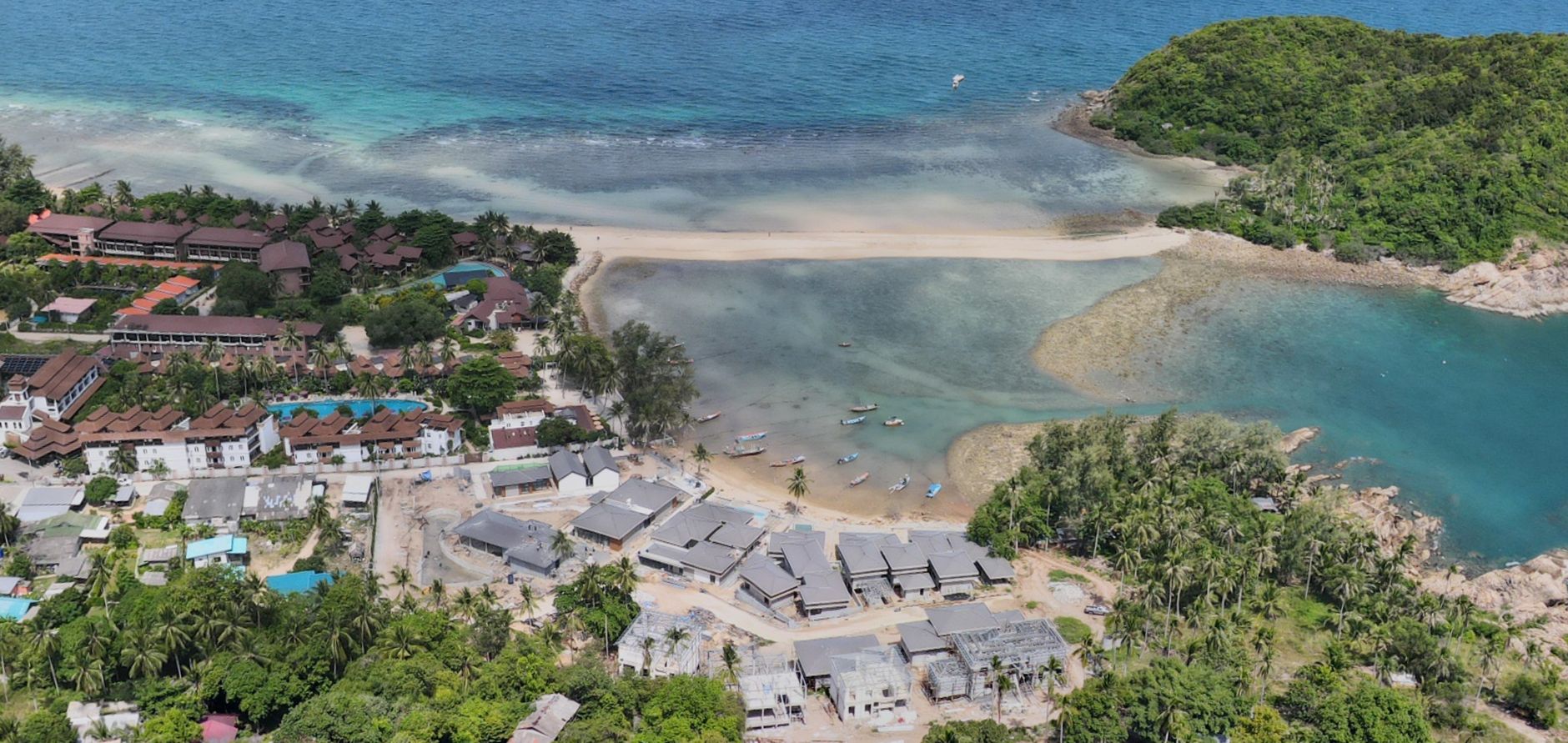
The Phuket residential property market reached a total estimated value of 705 billion THB across 90,597 units in supply and recorded sales as of September 2026, making the province the most expensive regional market in Thailand by aggregate value. The average unit price sits at roughly 12.8 million THB - more than four times the 3 million THB threshold toward which domestic buyer demand is gravitating nationally. Based on industry data published in September 2026, this divergence is not a temporary anomaly. Our analysts have tracked it as a structural feature of the market for several years.
At the national level, conditions are moving in the opposite direction. 56% of prospective buyers in Thailand report no intention to purchase residential property within the next five years. Banks have tightened mortgage underwriting, and rejection rates are rising most sharply in lower-income segments. Demand is shifting toward units priced below 3 million THB and toward the secondary market. Phuket, by contrast, operates under a fundamentally different set of rules - and understanding that duality is essential for any internationally-based investor evaluating an entry.
Quick answer
- 705 billion THB - total estimated value of the Phuket residential market as of September 2026, the highest of any regional province in Thailand
- 90,597 units in supply and recorded sales; approximately 76,582 sold (absorption rate of roughly 85%)
- 52% of units are resort condominiums and villas, yet they account for an estimated 80% of total market value (resort condos: approx. 339.2 billion THB; villas: approx. 221.7 billion THB)
- Average unit price of 12.8 million THB reflects a premium segment driven by foreign buyers from Russia, China, and Europe
- National domestic market under structural pressure: 56% of Thai buyers have no purchase plans within five years; mortgage access is tightening
- Domestic demand is concentrating below 3 million THB and in resale stock - a segment entirely separate from Phuket's resort tier
Options and scenarios
Scenario 1: Foreign premium demand holds
In our quarterly data sets, the principal buyers active on Phuket are foreign nationals seeking both rental yield and long-term residence. Per industry data from September 2026, demand originates primarily from Russia, China, and several European markets. If passenger throughput at Phuket International Airport holds above the estimated 9 million arrivals per year, the premium segment should retain upward momentum. Under this base case, we estimate resort condo prices in districts such as Bang Tao, Layan, and Kamala could appreciate at 5-8% annually through 2027.
For an internationally-based investor, that implies stable portfolio valuation but also rising entry costs. Currency exposure also matters: the THB exchange rate against major European currencies introduces an additional layer of return variability that our analysts track on a rolling basis.
Scenario 2: Foreign demand corrects
The risk of demand concentration in a narrow buyer cohort is real. If visa regulations, geopolitical shifts, or economic deceleration constrain the flow of Russian and Chinese purchasers, Phuket's domestic market cannot absorb the gap - the price differential is structurally incompatible. With a pipeline of 806 projects carrying available units as of September 2026, a demand shortfall could generate supply pressure sufficient to push prices down 10-15% over 12-18 months, particularly in districts with the heaviest concentration of resort condo launches - notably Thalang, which alone accounts for 411 active development projects.
Scenario 3: Diversification into Koh Samui
We monitor the Koh Samui market as a parallel reference point. In our comparative data sets, average villa prices in Bophut and Maenam run 20-35% below comparable properties in Phuket's premium zones. Koh Samui carries a smaller developer pipeline, which limits oversupply risk but also reduces market liquidity. For an investor seeking a lower entry threshold and reduced competition from institutional foreign capital, Samui offers a meaningfully different risk profile - though the trade-off is lower transaction volume and fewer comparable sales benchmarks.
Comparison table
| Parameter | Phuket - resort premium | Thai domestic market | Koh Samui - villa segment |
|---|---|---|---|
| Average unit price | 12.8 million THB | Below 3 million THB (demand cluster) | 8-10 million THB (per our estimates) |
| Primary buyer | Foreign nationals (Russia, China, Europe) | Thai domestic buyers | Mixed: Europeans and Thais |
| Absorption rate | Approx. 85% | Declining; inventory rising | 70-80% (per market estimates) |
| Credit / mortgage access | Minimal (cash purchases dominant) | Tightening; rejection rates rising | Minimal for foreign nationals |
| Development pipeline | 806 projects with available units | Large; secondary market growing | Limited; fewer large-scale developers |
| Oversupply risk | Moderate to elevated (Thalang district) | High in low-price segments | Low |
| 2027 price outlook | +5-8% (base case, per our estimates) | Stagnation or mild correction | +3-5% (per our estimates) |
Risks and mistakes
Buyer concentration risk. The Phuket market depends on a narrow cohort of foreign purchasers. Shifts in visa policy, geopolitical dynamics, or cross-border capital restrictions could reduce demand sharply. Based on our monitoring, Russian and Chinese buyers collectively account for a dominant share of foreign transactions. Losing either group would constitute a material demand shock with no ready domestic replacement.
Extrapolating national trends onto Phuket. A common analytical error among internationally-based investors is reading headlines about Thailand's slowing property market and assuming Phuket is subject to the same dynamics. Our data sets show these are two distinct ecosystems: the sub-3-million-THB domestic segment and the 10-million-plus resort premium tier respond to entirely different demand drivers and have minimal structural overlap.
Pipeline supply risk. Thalang district alone hosts 411 development projects. If sales velocity slows while project completions proceed on schedule, localised oversupply in areas such as Bang Tao and Cherng Talay could compress rental rates and extend vacancy periods. We flag this as the most immediate near-term risk in our 2026 monitoring framework.
Currency risk. Any purchase denominated in THB carries exchange-rate exposure when returns are measured in a foreign currency. Based on our records, the THB has moved by approximately 8-10% against major European currencies over the past 24 months - a range that can materially alter effective yield when converted. Investors should model currency scenarios explicitly rather than treating exchange rates as a fixed assumption.
Understating holding costs. Villas and resort condominiums in Phuket typically incur annual holding costs of 2-5% of asset value, covering common-area fees, rental management, and insurance. In our experience, investors purchasing remotely frequently omit these costs from their return calculations, producing yield estimates that are optimistic relative to actual net performance.
FAQ
Why is the Phuket market expanding when Thai domestic demand is contracting?
Phuket operates as a foreign-demand-driven resort market rather than a mortgage-dependent domestic one. The average unit price of 12.8 million THB is more than four times the price band where Thai domestic buyers are concentrated. The two segments respond to different supply-demand mechanics and should be analysed separately.
What is the total value of the Phuket property market in 2026?
Based on industry data as of September 2026, the total estimated value of the Phuket residential market is approximately 705 billion THB across 90,597 units. Resort condominiums and villas make up 52% of units but account for around 80% of total market value.
Who are the primary buyers of property on Phuket?
Foreign nationals from Russia, China, and several European markets dominate the resort premium segment. An increasing share are seeking long-term residence rather than pure rental yield plays. Thai domestic buyers represent a minority in the premium tier.
Is oversupply a credible risk on Phuket?
Yes, particularly in Thalang district, where our monitoring covers 411 active development projects. The current absorption rate of around 85% is healthy, but new completions could generate localised price and rental pressure in Bang Tao and Cherng Talay if demand softens over the next several quarters.
How does the Thai baht exchange rate affect investment returns?
The THB has moved by roughly 8-10% against major European currencies over the past two years. For investors measuring returns in a home currency, that range of movement can shift effective yield meaningfully. Our analysts recommend building currency scenario analysis into any return model rather than using a single fixed rate.
Is Koh Samui a lower-cost alternative to Phuket?
In our comparative data sets, average villa prices in Bophut and Maenam on Koh Samui are 20-35% below comparable Phuket properties. The smaller developer pipeline limits oversupply risk, but it also means lower market liquidity and fewer resale benchmarks. It is a different risk-return profile, not a uniformly cheaper version of the same market.
Does 56% of the Thai population really have no plans to buy property?
Per industry data from September 2026, 56% of prospective domestic buyers in Thailand report no purchase intention within a five-year horizon. The cited drivers are income instability, tightening mortgage criteria, and erosion of affordability relative to current price levels.
What is the current absorption rate on Phuket?
Approximately 85%: roughly 76,582 of 90,597 tracked units have been sold based on September 2026 data. The metric is currently healthy, but our analysts will flag any deterioration if new pipeline completions outpace demand in coming quarters.
Which Phuket districts carry the highest development concentration?
Thalang leads with 411 development projects and approximately 24,994 resort condo units. It encompasses well-known sub-markets including Bang Tao, Layan, and Cherng Talay. High project density translates into stronger infrastructure but also more competitive supply and greater sensitivity to demand variability.
Can foreign buyers obtain mortgages for property in Thailand?
In practice, mortgage financing from Thai banks is rarely available to foreign nationals purchasing residential property. Transactions in the resort premium segment are almost entirely cash-based. Investors should plan capital accordingly and not factor in local leverage when modelling acquisition costs.
The structural gap between Phuket's premium resort market and Thailand's domestic mass-market segment is not a cyclical anomaly. It reflects a durable difference in demand origin, price level, and financing structure. In our quarterly briefings, we recommend that internationally-based investors treat Phuket as an export-oriented market dependent on foreign capital flows - not as part of the domestic Thai residential cycle. The key variables we are tracking toward 2027 are: inbound passenger volumes at Phuket International Airport, completion timelines across the Thalang pipeline, and any regulatory changes affecting foreign property ownership.
Researching property in Phuket or Koh Samui? Get in touch - our analysts will prepare a data brief for your shortlisted location.