
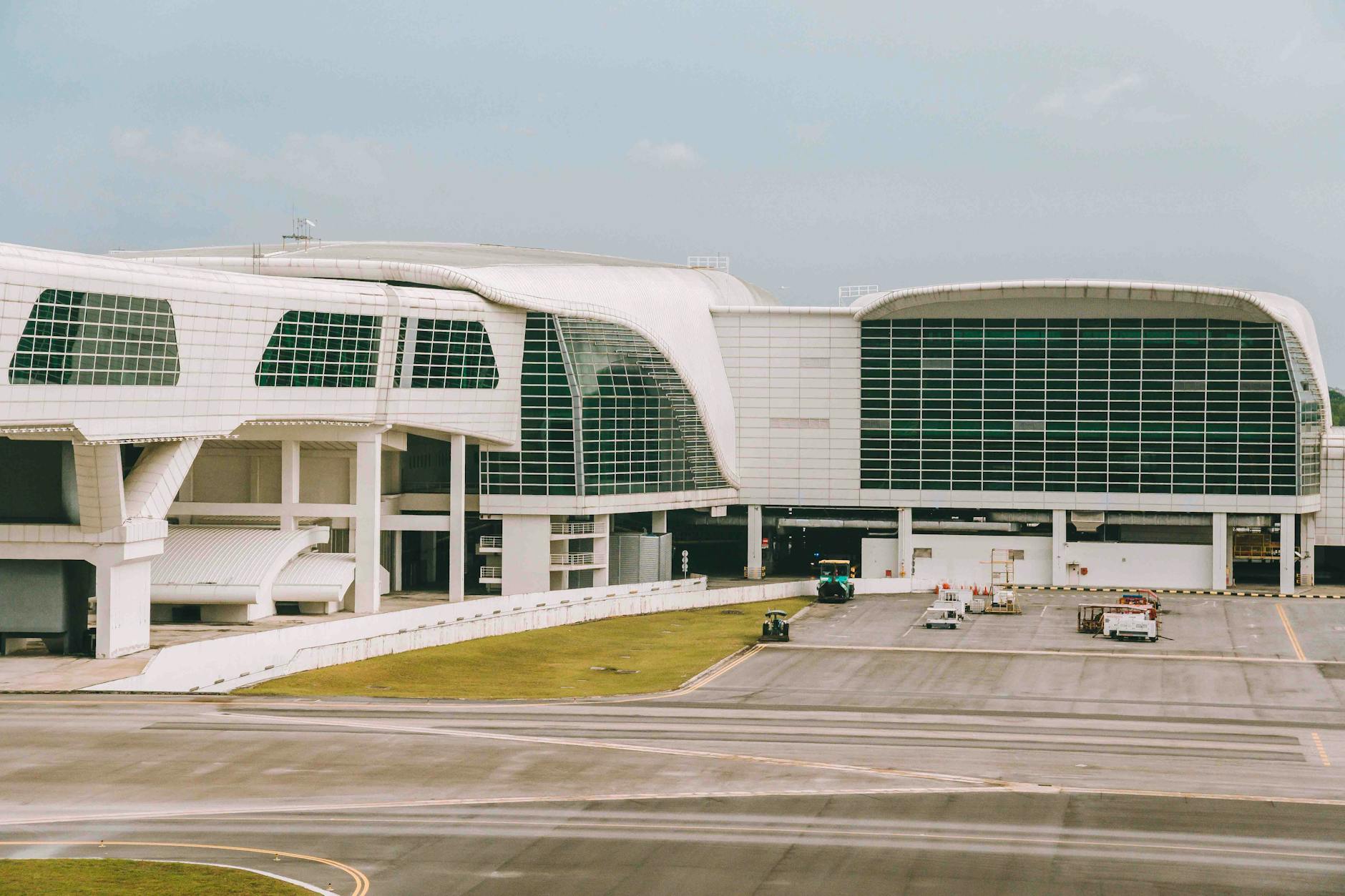
Phuket International Airport (HKT) handled over 18 million passengers in 2024, well above the international terminal's nominal capacity of roughly 12.5 million per year. That congestion gap is the primary reason the Thai government approved a multi-phase expansion programme stretching to 2032-2035. Our analysts monitor construction progress on the ground and track how each investment phase is feeding into property valuations across specific island districts.
The expansion is not a single project. It is a package of infrastructure investments at different stages of readiness - some with signed contracts and visible site activity, others still at feasibility or environmental review stage. Below we break each component down.
Quick answer
- Phase 1 (international terminal expansion): budget approximately 5.7 billion THB, targeted completion 2027, raising capacity to 18 million passengers per year; as of Q1 2026 construction is roughly 45-50% complete
- Phase 2 (new runway and second terminal): estimated budget 55-60 billion THB; as of 2026 the Environmental Impact Assessment (EIA) is approved but no main construction contract has been signed; earliest start 2028, indicative completion 2032-2035
- Funding comes primarily from Airports of Thailand (AOT), a Bangkok Stock Exchange-listed entity, supplemented by state budget for Phase 2
- Historically, the 2016 opening of the domestic terminal pushed land prices within 10 km up by 15-25% over three years, per market estimates
- Districts in the direct Phase 2 influence zone: Nai Yang, Sak Yai, Mai Khao and the transport corridor toward Bang Tao and Layan
- The parallel Kathu-Patong tunnel road (approximately 60% complete as of 2026) will cut airport-to-west-coast travel time by roughly 20-25 minutes once open in 2028
Options and scenarios
Baseline scenario - Phase 1 delivered on schedule (2027)
In this scenario the expanded international terminal begins handling passengers in the second half of 2027. Capacity rises to around 18 million per year, easing the current check-in and immigration bottleneck. Our on-the-ground checks in Q1 2026 confirm construction progress consistent with a 2027 delivery. For the property market this means a gradual repricing of tourism throughput expectations. Based on our estimates, condominium prices in Mai Khao and Nai Yang could rise 8-12% over 2026-2028: the operational improvement arrives without the additional noise profile that a second runway would introduce.
Optimistic scenario - Phase 2 accelerated
If the tender for the second runway is awarded by end-2027 (AOT has signalled this as a target), construction could begin in 2028 and conclude around 2032. Total capacity would climb to 25-30 million passengers per year. Under this scenario Bang Tao and Layan, positioned along the planned road corridor linking the airport to the west coast, would gain a credible 'premium-accessible' designation. We verify on the ground that land parcels within 3-5 km of the planned access route are already appreciating at 5-8% year-on-year in asking price terms.
Pessimistic scenario - Phase 2 delayed
Thai infrastructure projects carry a documented delay risk. For reference, the Bangkok Yellow Line light rail was originally targeted for 2020 and opened in 2023. If Phase 2 slips to 2035 or beyond, investors who acquired land in Mai Khao specifically to capture a 'runway expansion premium' face a materially longer capital tie-up than modelled. In our data sets we flag such locations under 'elevated timeline risk'.
Comparison table
| Parameter | Phase 1 (terminal) | Phase 2 (runway) | Kathu-Patong Tunnel |
|---|---|---|---|
| Budget | approx. 5.7 billion THB | approx. 55-60 billion THB | approx. 15-18 billion THB |
| Funding source | AOT (own budget) | AOT + state budget | Department of Highways |
| Status as of 2026 | Under construction, approx. 45-50% | EIA approved, pre-tender | Under construction, approx. 60% |
| Target completion | 2027 | 2032-2035 | 2028 |
| Target capacity | 18 million pax/year | 25-30 million pax/year | 15,000 vehicles/day |
| Districts in influence zone | Nai Yang, Mai Khao | Mai Khao, Bang Tao, Layan | Kathu, Patong, Kamala |
| Estimated 3-year price impact | +8-12% | +15-25% (if delivered) | +10-18% |
Risks and mistakes
Pricing in a promise, not concrete. The most common misstep we observe among foreign buyers in Phuket is treating an approved EIA or a feasibility study as a delivery guarantee. As of 2026, Phase 2 has no signed construction contract. Until a main contractor is under agreement, the project scope, timeline, and even physical footprint remain subject to change.
Noise exposure. A second runway will redraw the noise contour map across northern Phuket. Properties in Mai Khao and Nai Yang may gain access value but lose acoustic comfort. We track updated noise restriction zone plans published by Thailand's Civil Aviation Authority of Thailand (CAAT) and factor them into our location assessments.
Currency risk. As of Q1 2026 the USD/THB rate affects all foreign-currency buyers, and THB fluctuations of 5% on a 5-10 million THB condominium purchase (typical in Bang Tao or Layan) represent a material variance in effective cost. We do not model infrastructure appreciation gains without accounting for exchange-rate sensitivity.
Foreign ownership structure. Infrastructure appreciation is real, but it does not alter the legal framework. A foreign national cannot hold freehold land title in Thailand. The available structures are a condominium unit within the foreign quota (up to 49% of total floor area per building) or a leasehold of up to 30 years. Price appreciation accrues within these structures, but the underlying legal form does not change.
Speculative pricing in Mai Khao. We observe that asking prices for land in Mai Khao rose by over 30% between 2023 and 2025, in part driven by Phase 2 expectations. If the runway project is delayed or descoped, a price correction in this sub-market is a realistic outcome, not just a tail risk.
FAQ
When will Phuket Airport expansion be completed?
Phase 1 (expansion of the existing international terminal) targets completion in 2027. Phase 2 (second runway and new terminal building) has an indicative completion window of 2032-2035, but as of 2026 no main construction contract has been signed, making that range subject to revision.
What is the total budget for Phuket Airport expansion?
The combined estimated budget across both phases is approximately 60-66 billion THB. Funding is drawn primarily from Airports of Thailand (AOT) and, for Phase 2, supplemented by the state budget. AOT is a publicly listed company on the Stock Exchange of Thailand.
Which Phuket districts benefit most from the airport expansion?
Direct beneficiaries: Nai Yang, Mai Khao, and Sak Yai. Indirect beneficiaries via improved road access: Bang Tao, Layan, and Cherng Talay. The Kathu-Patong tunnel will additionally strengthen the position of Kamala and Patong relative to the airport.
Will the second runway increase noise levels near Phuket Airport?
Yes. A second runway will alter the noise contour zones across northern Phuket. CAAT is preparing updated land-use restriction zones. Our analysts recommend verifying the precise distance from the planned runway centreline before committing to a purchase in the Mai Khao or Nai Yang area.
How has previous airport infrastructure affected Phuket property prices?
Based on market estimates, the 2016 opening of the domestic terminal lifted land prices within a 10 km radius by 15-25% over three years. We use this as a reference data point when modelling Phase 1 and Phase 2 effects, while noting that market conditions in 2026 differ from those in 2013-2016.
Are there plans to expand Koh Samui Airport?
Koh Samui Airport (USM) is privately operated by Bangkok Airways and has a runway of approximately 2,100 metres. As of 2026 there are no publicly approved expansion plans for USM. We monitor reports of a potential new regional airport near Surat Thani on the mainland, which could alter ferry and transfer dynamics for Samui - but this remains at an early feasibility stage.
Is buying property near Phuket Airport a sound investment strategy?
The answer depends on the investment objective. For short-term rental operations, proximity to the airport is a genuine operational advantage. For personal use, our analysts suggest maintaining at least 5-7 km distance from the runway centreline to limit noise exposure. In both cases the priority check is whether the property falls outside CAAT's planned restriction zones.
How does the Kathu-Patong tunnel affect property in Kamala and Patong?
Once complete (targeted 2028), the tunnel reduces travel time between the airport and the Patong-Kamala stretch by an estimated 20-25 minutes. Our data sets show asking prices in Kamala have already begun to reflect this anticipated access improvement, with year-on-year increases of approximately 6-10% in select segments through 2025.
Researching property in Phuket or Koh Samui? Get in touch - our analysts will prepare a data brief for your shortlisted location.