

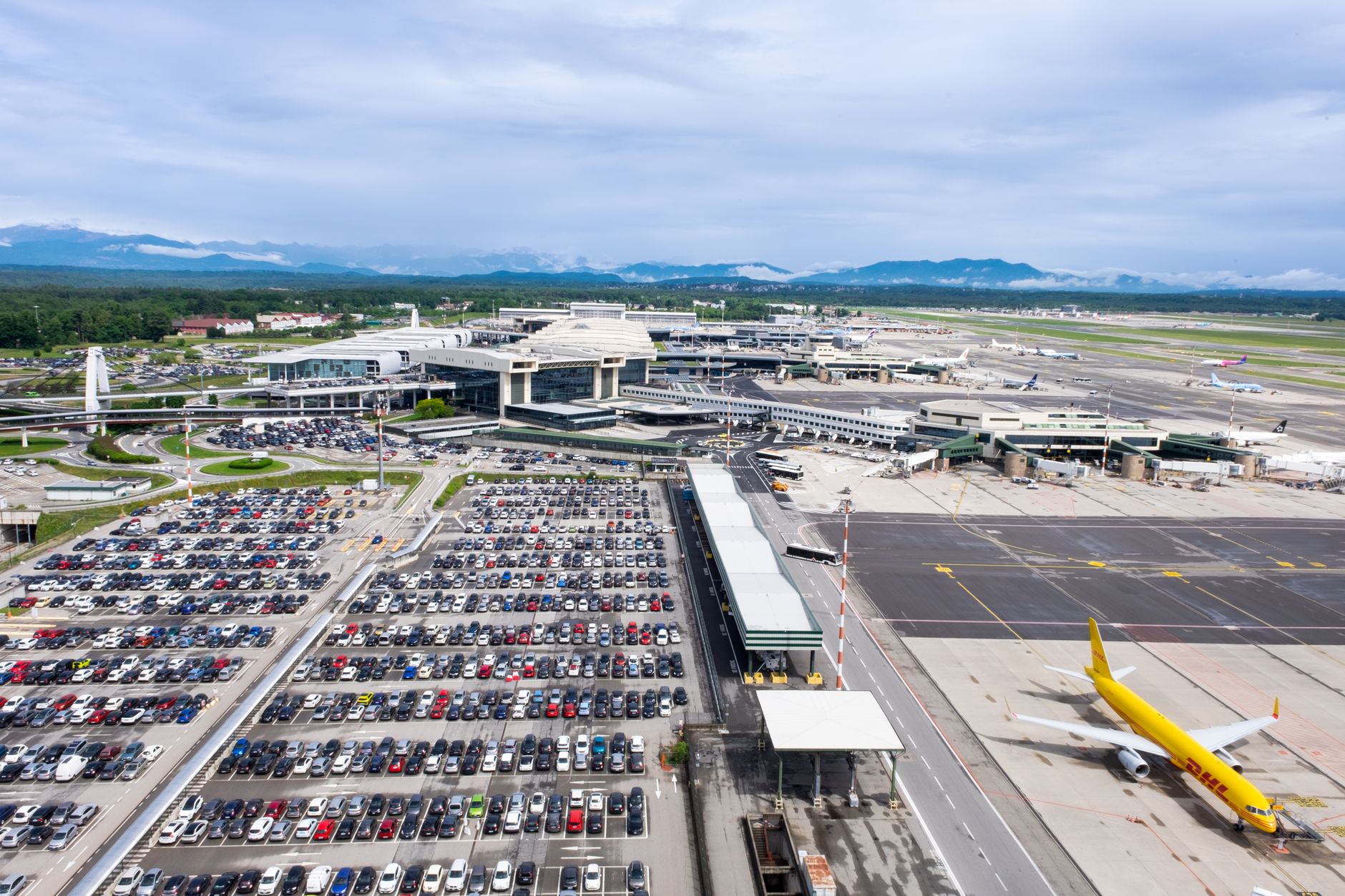
Phuket International Airport (HKT) handled more than 18 million passengers in 2024, a figure that already exceeds its nominal design capacity of roughly 12.5 million per year. As of 2026, a multi-phase expansion programme is underway with the stated goal of raising annual throughput to 25 million passengers before the end of the decade. For anyone evaluating residential or investment property on Phuket, the construction timeline is one of the most consequential infrastructure variables in current valuations.
Our analysts have monitored progress on the ground since 2023. What follows is our current assessment of project status, phasing, funding, and the measurable price effects we are recording across specific island districts.
Quick answer
- Developer and funding: Airports of Thailand (AOT), a state-controlled listed company. Total expansion budget is estimated at 55-60 billion THB (roughly 1.55-1.70 billion USD at Q1 2026 exchange rates)
- Phase 1 (active): upgrade of the existing international terminal and expansion of aircraft apron capacity - scheduled completion 2027-2028
- Phase 2 (concept stage): construction of a new passenger terminal (Terminal 2) on the western side of the runway - horizon 2029-2032, currently still undergoing environmental impact assessment (EIA)
- Target capacity: from approximately 12.5 million to 25 million passengers per year once both phases are complete
- Land price effect: based on our estimates, districts within 15 km of the airport (Nai Yang, Mai Khao, Bang Tao, Layan) recorded 8-14% year-on-year land price growth over 2024-2025, partly discounting the anticipated expansion
- Access from Europe: there are no non-stop services from most European hubs, but one-stop itineraries to HKT typically run 12-14 hours; a higher-capacity airport may attract additional low-cost carrier routes in the medium term
Options and scenarios
Baseline scenario - expansion on AOT's published schedule
In this scenario Phase 1 is delivered by end-2028 and Phase 2 receives full EIA clearance in 2027, with completion by 2031-2032. Capacity grows incrementally. Northern Phuket districts - Mai Khao, Nai Yang, and Sirinat - gain premium status through proximity to the new terminal infrastructure. Based on our estimates, condominium prices within 5 km of the airport could rise an additional 10-18% above the general market trend over the 2026-2030 window.
Bang Tao and Layan, positioned 10-15 km to the south, benefit indirectly: faster check-in throughput and higher flight frequencies make these districts more attractive to short-term rental tenants, supporting yield stability.
Delayed scenario - Phase 2 pushed back by 2-3 years
Large AOT infrastructure projects in Thailand have historically run 18-36 months late. Our on-the-ground checks confirm that the EIA process for Phase 2 is still in an early stage as of 2026. If Terminal 2 opens only in 2034-2035, the price effect in northern districts will be spread over a much longer horizon. Buyers purchasing today at prices that already price in full expansion may face 3-5 years of value stagnation before the anticipated uplift materialises.
Pessimistic scenario - partial delivery
In the event of budget constraints or policy shifts (including AOT restructuring), Phase 2 could be scaled back or deferred indefinitely. Under this path, HKT operates at roughly 15-17 million passengers annually after Phase 1 alone - a genuine improvement, but not one that resolves seasonal congestion during the December-March peak. The price impact on more distant districts such as Rawai, Nai Harn, and Karon would be minimal.
Comparison table
| Parameter | Baseline (AOT schedule) | Delayed scenario | Pessimistic scenario |
|---|---|---|---|
| Phase 1 completion | 2027-2028 | 2028-2029 | 2029-2030 |
| Phase 2 completion | 2031-2032 | 2034-2035 | Not delivered |
| Target annual capacity | 25 million pax | 25 million pax | 15-17 million pax |
| Price uplift, northern districts (2026-2030) | +10-18% above trend | +5-8% above trend | 0-3% above trend |
| Price uplift, Bang Tao / Layan (2026-2030) | +6-12% above trend | +3-6% above trend | +1-3% above trend |
| Price uplift, south (Rawai / Nai Harn) (2026-2030) | +2-5% above trend | +1-3% above trend | 0-2% above trend |
| Investor risk level | Moderate | Elevated | High (overpayment risk) |
Risks and mistakes
Buying the promise, not the concrete. This is a recurring pattern in Asian emerging markets. We track AOT tender announcements and can confirm that as of Q1 2026, no general construction contracts for Phase 2 have been signed. Buyers paying Mai Khao prices that assume full airport expansion by 2030 are accepting delay risk without any compensating discount in the purchase price.
Noise exposure. Districts immediately adjacent to the airport (Nai Yang, Mai Khao) gain on accessibility but lose on acoustic comfort. A rise in daily operations from roughly 200 to a potential 300-plus flights will increase noise levels noticeably. Based on our market observations, this reduces the price premium for properties within 2-3 km of the runway by approximately 5-10% relative to comparable assets located 5-10 km away.
Road infrastructure lag. Airport expansion without upgrading Route 402 - the island's only north-south arterial road - limits the effective benefit of extra capacity. Our on-the-ground checks show that both the Patong tunnel and the Kathu-Patong Expressway remain at feasibility study stage as of 2026. The absence of parallel road investment is a factor we apply as a negative adjustment to valuations in southern districts.
Currency exposure. The Thai baht moved in a range of roughly 0.028-0.031 USD per THB during 2023-2025. A 5% appreciation of the baht against an investor's home currency raises the effective cost of acquisition by an equivalent amount. We recommend building a 8-12% currency buffer into any budget calculation.
Koh Samui contrast. Samui Airport (USM) is privately owned by Bangkok Airways, which limits price competition and constrains traffic growth. There are no expansion plans for USM on a scale comparable to HKT. As a result, the infrastructure-to-price-growth transmission mechanism on Koh Samui is considerably weaker. Districts such as Bophut and Maenam on Samui are appreciating primarily due to constrained land supply, not new transport infrastructure.
FAQ
When is the Phuket airport expansion scheduled to finish?
According to AOT's published schedule, Phase 1 (existing terminal upgrade) should be complete by 2027-2028. Phase 2 (Terminal 2) targets 2029-2032, but as of 2026 no general construction contracts have been signed. Based on our estimates, a realistic full-completion date is 2032-2035.
What is the total budget for the HKT expansion?
The full project budget is estimated at 55-60 billion THB (approximately 1.55-1.70 billion USD at current rates). Funding comes from AOT (Airports of Thailand), which is a government-controlled listed company.
What will Phuket airport's capacity be after expansion?
The target is 25 million passengers per year, compared with the current nominal design capacity of roughly 12.5 million and actual traffic that already exceeded 18 million in 2024.
Which Phuket districts will benefit most from the airport expansion?
Based on our data, the strongest price effect is concentrated in northern districts: Mai Khao, Nai Yang, and Sirinat (within 5 km of the airport). Bang Tao and Layan (10-15 km south) benefit indirectly. Southern districts such as Rawai, Nai Harn, and Karon are expected to see only marginal impact.
Will Phuket airport expansion affect Koh Samui property prices?
Not directly. Samui Airport (USM) is privately operated and has no comparable expansion programme. Higher HKT capacity may marginally increase tourist flow to Samui via connecting flights (HKT to USM takes roughly 50 minutes), but we assess this effect as minor in terms of land price movement.
Is it worth buying property close to Phuket airport?
Locations within 5-10 km offer strong transport convenience, but they carry noise risk and are directly exposed to expansion delays. In our comparative assessments, the best balance of growth potential and manageable risk currently sits in districts 8-15 km from the airport: Bang Tao, Layan, and Cherng Talay.
How does THB currency movement affect investment returns?
The baht fluctuated within a roughly 8-10% range against major currencies during 2023-2025. A 5% baht appreciation raises the effective acquisition cost by an equivalent proportion for foreign buyers. We recommend including a 8-12% currency buffer in budget projections.
Will the Patong tunnel improve airport access?
The Kathu-Patong tunnel project remains at feasibility study stage as of 2026. If built, it would cut travel time from Patong to the airport from roughly 45-50 minutes to around 25-30 minutes. Our on-the-ground checks show no construction has started, and no firm delivery date has been confirmed.
What is the Phase 2 EIA status as of 2026?
The environmental impact assessment for Phase 2 (Terminal 2) is still in its early stages as of Q1 2026. EIA approval is a prerequisite for contract signing and construction commencement. Until clearance is granted, the Phase 2 timeline remains subject to meaningful uncertainty.
Does increased HKT capacity affect short-term rental yields in Bang Tao?
Based on our estimates, higher flight frequency and improved check-in throughput tend to extend the effective high season and reduce the depth of low-season occupancy drops. For Bang Tao and Layan condominiums, we associate the baseline expansion scenario with a 1-2 percentage point improvement in average annual occupancy rates over the 2027-2030 period, other factors held constant.
In our analytical view, the Phuket airport expansion is the single most consequential infrastructure variable shaping island-wide property valuations over the 2026-2032 horizon. We recommend that investors verify the current phase of delivery independently before committing capital, and that they incorporate the delayed scenario into their base-case projections rather than treating the AOT schedule as fixed. Among the districts we track, Bang Tao and Layan currently offer the most balanced exposure: meaningful upside from infrastructure improvement with limited acoustic risk and no direct dependency on Phase 2 delivery.
Researching property in Phuket or Koh Samui? Get in touch - our analysts will prepare a data brief for your shortlisted location.