

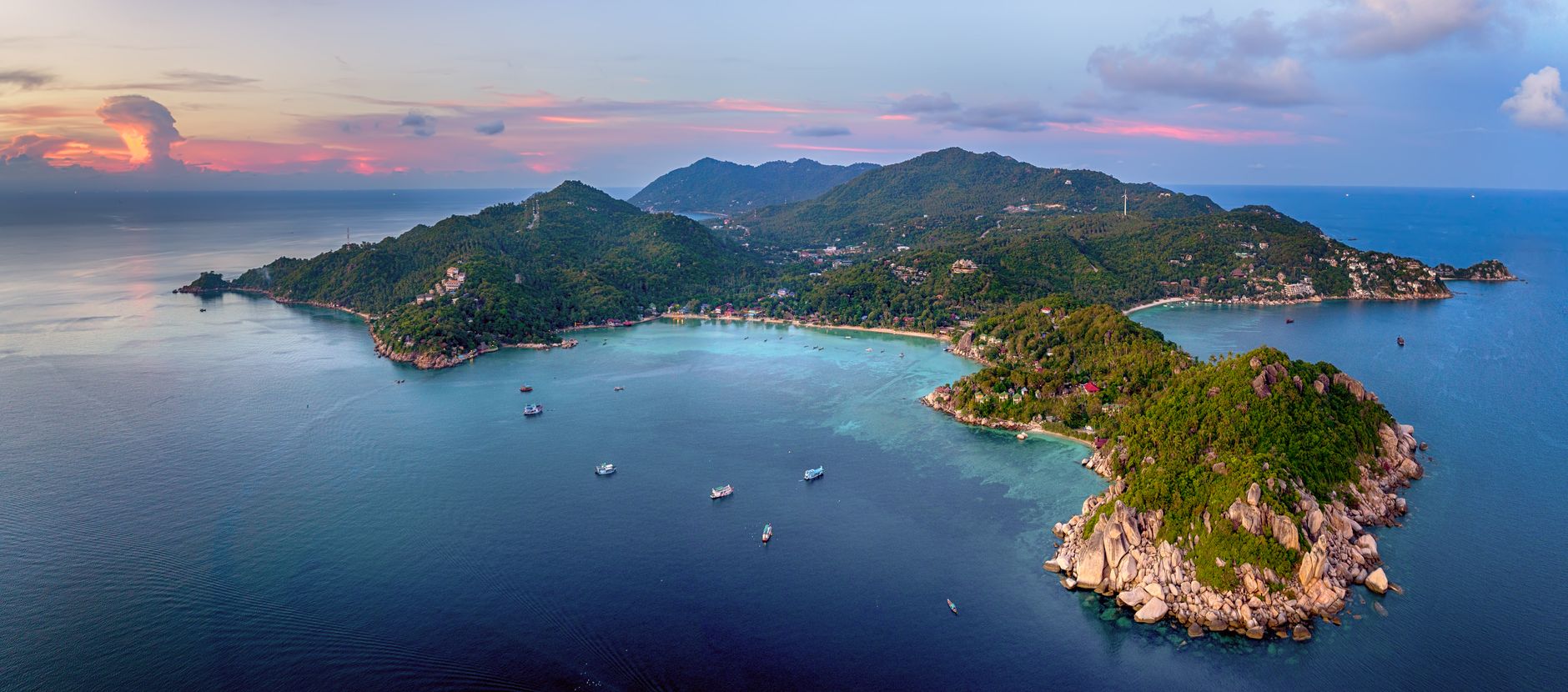
Phuket's residential property market spans a price range of roughly 117,000 USD to 90 million USD within a single island, according to London Business News data from August 2026. That gap is not a statistical anomaly. It reflects seven structurally distinct micro-markets, each carrying its own legal risk profile, resale liquidity, and supply pipeline. Our analysts monitor these markets on the ground, and the breakdown below is anchored in H1 2026 data.
The central question for any internationally focused investor is not 'where is it cheapest?' but rather 'where is the price-to-regulatory-risk-and-liquidity ratio most predictable?' Answering that requires tracking three variables simultaneously: price per square metre, the legal structure of available products (condominium freehold vs. villa on leasehold), and new supply saturation.
Quick answer
- The average condominium price in Phuket exceeded 85,000 THB per sqm (approximately 2,400 USD) in Q1 2026, representing a rise of around 14% over two years, per Colliers data cited by London Business News
- Bang Tao leads the island in supply volume with 159 active listings and the largest new-project pipeline
- Colliers forecasts delivery of 6,000 to 8,000 new units in 2026, concentrated in Bang Tao, Cherng Talay, Rawai, Kata, Karon, and Phuket Town
- In August 2026, Thai authorities tightened scrutiny of ownership structures used by foreign nationals to hold villas, per Chiang Rai Times reporting, elevating regulatory risk in the villa segment
- Districts dominated by condominium freehold product (Bang Tao, Karon, Kamala) offer the most transparent ownership structure and the lowest regulatory exposure for foreign buyers
- The price differential between the least expensive micro-market (Rawai, based on our estimates approximately 65,000 to 75,000 THB per sqm for condominiums) and the most expensive (Surin and Layan, 120,000 to 180,000 THB per sqm) exceeds 100%
Options and scenarios
Option A: Condominium in Bang Tao - high liquidity, mid-range pricing
Bang Tao and adjacent Cherng Talay concentrate the largest volume of new supply on the island. As of August 2026, this district accounts for 159 active listings, making it the most liquid single micro-market in Phuket. Condominium prices in our data sets range from 85,000 to 130,000 THB per sqm, depending on proximity to the beach and fit-out standard.
The dominant tenant profile is premium leisure travellers (European couples and families on extended winter stays) alongside a growing segment of digital nomads drawn to the coworking infrastructure in Cherng Talay. Occupancy seasonality is moderate: the high season (November through April) delivers, based on our estimates, 70 to 85% occupancy, while the low season drops to 40 to 55%.
Key risk: the large supply pipeline (a disproportionate share of the projected 6,000 to 8,000 new units will land in this corridor) may exert downward pressure on rents and price appreciation over a 2 to 3 year horizon. We continue to track the absorption rate quarterly.
Option B: Condominium in Karon or Kata - lower entry threshold, established tourism demand
Karon and Kata are mature tourism districts offering lower entry prices alongside well-developed infrastructure. Based on our estimates, condominium prices in Karon sit at 70,000 to 95,000 THB per sqm as of mid-2026, with Kata at comparable levels. Both districts carry solid short-term rental demand but display more pronounced seasonality than Bang Tao. In our data, low-season occupancy in Karon and Kata falls to 30 to 45%.
The tenant mix skews toward mid-to-upper-market leisure travellers and families. The share of digital nomads is smaller than in Bang Tao. New supply pipeline here is lighter, which limits oversupply risk.
Key risk: a portion of the existing building stock dates from 2008 to 2015. Any acquisition in this cohort requires a careful technical inspection and a review of the juristic person's sinking fund.
Option C: Rawai and Nai Harn - lowest entry price, distinct demand profile
Rawai is the second-largest market on the island by listing count. Condominium prices start at approximately 65,000 THB per sqm, making this district the lowest-cost entry point on the island. Nai Harn, immediately adjacent, offers similar pricing with a smaller pipeline of new projects.
The tenant profile shifts toward long-term residents, retired expatriates, and budget-oriented travellers. Short-term rental demand is weaker here than on the west coast. Seasonality in Nai Harn is pronounced: based on our estimates, the occupancy swing between high and low season reaches 35 percentage points.
Key risk: resale liquidity is lower and price appreciation is historically slower than in the northern and central west-coast districts. For investors targeting a shorter exit horizon, this is a material constraint.
Option D: Surin and Layan - premium segment, elevated regulatory exposure
Surin and Layan are luxury enclaves. Condominium prices reach 120,000 to 180,000 THB per sqm, and villas are priced into the multi-million-dollar range. In our data sets, Layan shows less supply saturation than Bang Tao, but a significant share of available product consists of villas held under ground leasehold structures (typically 30-plus-30-plus-30 year arrangements).
Given the tightening of regulatory oversight of foreign-held villa structures reported by Chiang Rai Times in August 2026, the villa segment in these districts carries elevated legal risk. For investors prioritising a clean ownership structure, condominium freehold remains the more defensible option, though the condominium supply in Surin and Layan is limited in volume.
Option E: Kamala - the equilibrium point
Kamala sits in the mid-range on price, between Bang Tao and Karon. Based on our estimates, condominiums in Kamala are priced at 80,000 to 110,000 THB per sqm. The district has a balanced tenant profile (premium leisure, families on extended stays) and a moderate new-supply pipeline. In our assessment, Kamala offers one of the more favourable price-to-risk ratios on the island, provided the selected project carries a full freehold chanote title.
Comparison table
| Parameter | Bang Tao | Karon / Kata | Rawai / Nai Harn | Surin / Layan | Kamala |
|---|---|---|---|---|---|
| Condo price THB per sqm (2026 estimate) | 85,000 - 130,000 | 70,000 - 95,000 | 65,000 - 85,000 | 120,000 - 180,000 | 80,000 - 110,000 |
| Active listings volume | 159 (market leader) | Moderate | High (no. 2 island-wide) | Low | Moderate |
| New supply pipeline | Very high | Moderate | Moderate | Low | Moderate |
| High-season occupancy | 70 - 85% | 65 - 80% | 55 - 70% | 70 - 85% | 65 - 80% |
| Low-season occupancy | 40 - 55% | 30 - 45% | 25 - 40% | 40 - 55% | 35 - 50% |
| Dominant product type | Condo freehold | Condo freehold | Condo freehold / villas | Villa leasehold / condo | Condo freehold |
| Regulatory risk | Low (condo) | Low (condo) | Medium (mixed stock) | Elevated (villas) | Low (condo) |
| Resale liquidity | High | Medium | Low to medium | Low (villas) / medium (condo) | Medium |
| Dominant tenant profile | Premium leisure, digital nomads | Leisure travellers, families | Long-term residents, retirees | Luxury leisure | Premium leisure, families |
Risks and mistakes
Oversupply risk in Bang Tao. The concentration of the 2026 pipeline in Bang Tao and Cherng Talay - these two corridors absorb a disproportionate share of the forecast 6,000 to 8,000 new units - may translate into slower rental growth over a 2 to 3 year window. We monitor the absorption rate in this corridor on an ongoing basis.
Regulatory risk in the villa segment. The tightening of Thai authority scrutiny over foreign-ownership structures (nominee shareholder arrangements, Thai company vehicles) used to hold villas increases legal exposure in districts dominated by villa product, primarily Surin, Layan, and parts of Rawai. Condominium freehold title remains the lowest-risk ownership structure for foreign nationals.
Comparing prices without adjusting for ownership type. A villa priced at 5 million THB on a 30-year leasehold and a condominium priced at 5 million THB with full freehold title are fundamentally different assets in terms of risk. We verify on the ground whether a given project offers a chanote (full land title) or leasehold only. That distinction should be the starting point of any acquisition analysis.
Currency risk. The THB-to-USD exchange rate has moved within a range that produces meaningful portfolio-level differences. At an investment scale of 3 to 5 million THB, a 5% currency move represents a material difference in home-currency terms that should be built into any financial model from the outset.
Ignoring ongoing holding costs. Common area maintenance fees in new Phuket projects run at 40 to 80 THB per sqm per month in our data sets. For a 50 sqm unit, that translates to an annual cost of 24,000 to 48,000 THB (roughly 650 to 1,350 USD), irrespective of whether the unit is generating rental income.
FAQ
Which Phuket district offers the best price-to-risk ratio in 2026?
Based on our H1 2026 data sets, Kamala and Karon in the condominium freehold segment deliver the most favourable combination of price, legal clarity, and supply balance. Kamala pairs mid-range pricing (80,000 to 110,000 THB per sqm) with a transparent ownership structure and a moderate pipeline. Bang Tao offers higher liquidity but carries a more pronounced oversupply risk.
What is the average price per sqm for a condominium in Phuket in 2026?
The island-wide average exceeded 85,000 THB per sqm in Q1 2026, a rise of approximately 14% over two years per Colliers data. District-level figures diverge sharply: from around 65,000 THB per sqm in Rawai to over 180,000 THB per sqm in Layan.
Can a foreign national buy a condominium in Phuket on a freehold basis?
Yes. Foreign nationals may acquire a condominium in Phuket on a full freehold basis, provided the foreign ownership quota within the building does not exceed 49% of total usable floor area. This rule applies across Thailand. The purchase funds must be transferred from abroad in a foreign currency, with the corresponding bank documentation (Thor Tor 3 form) retained as evidence of the international transfer.
What are the risks of buying a villa in Phuket as a foreign buyer?
As of 2026, Thai authorities have intensified scrutiny of the ownership structures that foreign nationals have historically used to hold villas. Because foreign nationals cannot legally own land in Thailand, villas are typically held via leasehold arrangements or corporate structures, both of which are now subject to heightened regulatory review. Condominium freehold title eliminates this category of risk.
How many new residential units will be delivered in Phuket in 2026?
Colliers projects delivery of 6,000 to 8,000 new units during 2026. For context, approximately 25,000 units were delivered across the two preceding years combined. The 2026 pipeline is concentrated in Bang Tao, Cherng Talay, Rawai, Kata, Karon, and Phuket Town.
What gross rental yield can a condominium in Phuket generate?
Based on our estimates, gross rental yields for condominiums in established Phuket districts run at 5 to 7% per year before tax and property management costs. After deducting common area fees, management fees, and applicable taxes, net yield typically falls to 3.5 to 5%. The outcome depends heavily on district, seasonality management, and operator quality.
Is Bang Tao a sound investment location in 2026?
Bang Tao offers the highest resale liquidity on the island (159 active listings) and well-developed lifestyle infrastructure. The primary risk is the large incoming supply pipeline, which may moderate rental growth. For investors with a 5-plus-year horizon who accept that supply dynamic, Bang Tao remains one of the island's principal micro-markets.
How significant is seasonality for Phuket rental income?
Seasonality is a material factor. In districts such as Karon and Nai Harn, the occupancy swing between high season (November through April) and low season can reach 35 percentage points. Bang Tao and Kamala show a shallower seasonal curve, supported by a more diversified tenant mix that includes digital nomads and long-stay visitors.
What due diligence steps are essential before buying in any Phuket district?
We verify on the ground three non-negotiable items for every project we assess: confirmation that the title document is a full chanote (not a lower-grade land document), verification that the foreign freehold quota has not been exhausted, and a review of the developer's track record and financial standing. These checks apply regardless of district.
Researching property in Phuket or Koh Samui? Get in touch - our analysts will prepare a data brief for your shortlisted location.