

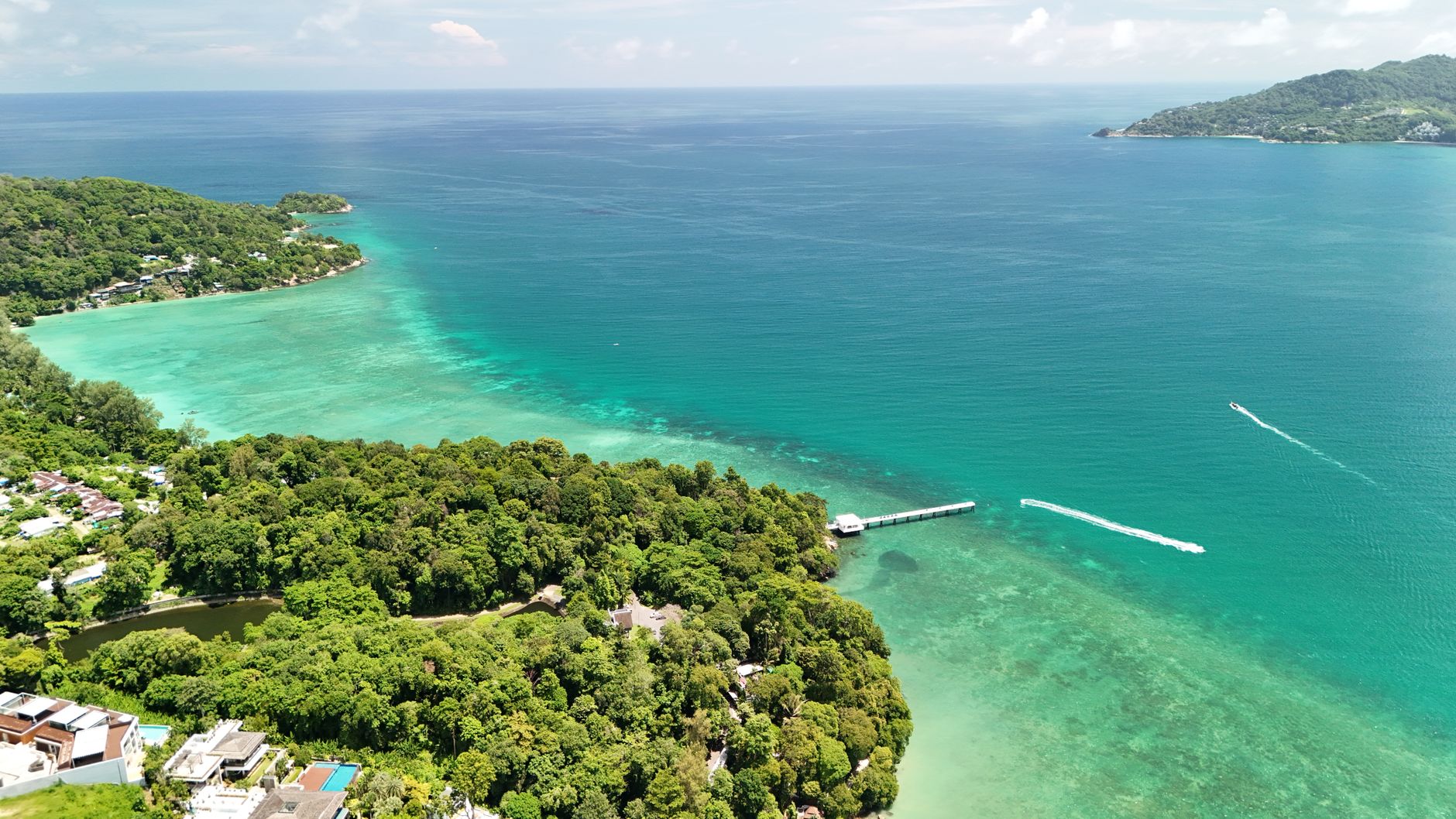
Annual condo sales in Phuket have climbed from roughly 1,100 units in the 2015-2019 period to more than 5,200 units in 2023-2025 - a rise of approximately 350%. At the same time, Thai authorities have intensified scrutiny of nominee ownership structures and announced forced divestment of land parcels worth around 14 billion THB (approximately 417 million USD) acquired by foreign nationals through Thai proxy arrangements. Our analysts have tracked both developments across several quarters and the conclusion is clear: they are not contradictory. They are mutually reinforcing.
The premium segment - condos priced above 8 million THB - recorded additional year-on-year sales growth of 11% in H1 2026, per data published by Money and Banking Magazine in October 2026. This tells us that tighter regulation is not suppressing demand from high-net-worth foreign buyers; it is redirecting that demand away from intermediary structures (companies, nominees) and toward direct freehold condo ownership. The implication for any international investor entering the market in 2026 is concrete: the form of ownership now matters at least as much as the location.
Quick answer
- Phuket condo sales rose by 350% over a decade (from roughly 1,100 to more than 5,200 units per year; 2023-2025 vs. 2015-2019)
- The luxury segment (8 million THB and above) grew 11% year-on-year in H1 2026
- The Thai government is pursuing forced sales of land worth approximately 14 billion THB linked to nominee structures
- New compliance checks apply to transactions above 2 million THB (buyer background verification) and above 5 million THB (enhanced due diligence)
- Companies acquiring land must now disclose full shareholder structure and funding sources
- Phuket's west coast - particularly Layan and Bang Tao - concentrates the largest premium-segment supply pipeline
Options and scenarios
Freehold condo: the legally straightforward path
Thai law permits foreign nationals to hold direct (freehold) ownership of a condo unit provided that the aggregate foreign-owned floor area within any single building does not exceed 49% of total usable space. In practice, high-demand projects in Bang Tao and Layan are approaching that threshold, which means freehold units sell through faster than leasehold alternatives in the most sought-after developments. Based on our pipeline monitoring of west-coast Phuket, we estimate that several new projects with dedicated foreign-quota freehold allocations are scheduled for launch or completion in 2026.
For the foreign buyer, freehold condo ownership removes the legal exposure associated with nominee arrangements. Transferring purchase funds from an overseas bank account to a Thai bank requires obtaining a Foreign Exchange Transaction Form (FETF), which simultaneously serves as documented evidence of legitimate capital origin - a document the Land Department will require at registration.
Leasehold 30+30+30: the viable alternative
Where the freehold quota is exhausted, or where an investor targets a villa rather than a condo, a long-term lease structure remains an option. Projects offering contractual rights to two successive renewals - totalling up to 90 years - typically price their units at a 15-25% discount relative to comparable freehold units within the same development. Our analysts factor this differential explicitly into rental yield projections.
The key risk with leasehold is that renewal beyond the initial 30-year term is not guaranteed by statute. It rests entirely on a contractual undertaking by the developer or land owner. If that counterparty changes ownership or becomes insolvent, renewal rights can become difficult to enforce.
Company structure with nominees: a path of increasing risk
Historically, many foreign villa buyers in Phuket used Thai company structures with nominal Thai shareholders to acquire land. According to reporting by Business Times in October 2026, Thai authorities are conducting accelerated investigations into approximately 875 hectares of land linked to such arrangements. New disclosure requirements mandate full shareholder transparency and documentation of funding sources. In our assessment, this route carries materially elevated regulatory risk in 2026, and we do not recommend it as an entry structure for investors approaching the market at this stage.
Comparison table
| Parameter | Freehold condo | Leasehold condo or villa | Company with nominees |
|---|---|---|---|
| Direct ownership | Yes (up to 49% of building) | No - 30-year lease term | Formally held by Thai company |
| Legal risk (2026) | Low | Medium | High - active government investigations |
| Typical price in Bang Tao (8M THB+) | 120,000-180,000 THB per sqm | 90,000-140,000 THB per sqm | Depends on structure |
| Estimated net rental yield | 5-7% per year | 5-8% per year | Difficult to estimate reliably |
| Land Department registration | Chanote in foreign buyer's name | Lease registered in Land Department | Chanote in company name |
| Overseas fund transfer requirement | FETF required | FETF required | FETF plus company audit documentation |
| Resale outlook | Solid - liquid secondary market | Constrained toward end of lease term | Uncertain - regulatory exposure |
Risks and mistakes
Exhaustion of freehold quota in popular projects. The 49% cap is a hard statutory limit. In our quarterly project tracking we monitor which developments in Layan, Bang Tao, Kamala and Surin are approaching this threshold. A buyer who does not verify freehold availability before paying a reservation deposit may find they are automatically offered a leasehold unit instead.
Foreign exchange exposure as a hidden cost variable. In early 2026, the THB/USD rate was tracking within a range that translates to roughly 0.028-0.030 USD per 1 THB for international reference. For buyers converting from non-USD currencies, annual fluctuations of 5-8% can materially shift the real cost of acquisition when expressed in the home currency. We monitor this parameter as a secondary variable in yield calculations.
Supply pressure in the luxury segment. A 350% sales increase has drawn significant developer activity. The west-coast Phuket pipeline of new completions is substantial, and in our estimates this could intensify competitive pricing pressure in the short-term rental segment over a 2-3 year horizon.
Incomplete due diligence on ownership documentation. Tightened background checks for transactions above 2 million THB mean the Land Department may decline to register a transfer if source-of-funds documentation is incomplete. Buyers should prepare a clear and fully documented capital transfer trail before signing any preliminary purchase agreement.
Over-reliance on developer-guaranteed rental returns. Programmes advertising guaranteed yields of 7-10% per year are common in Phuket. In our analysis, the cost of that guarantee is typically embedded in the unit price - meaning the buyer pre-funds the guarantee through a higher acquisition cost. We routinely disaggregate these offers into effective market price and implied guarantee cost to produce a clearer picture of actual yield.
FAQ
Can a foreign national own a condo in Phuket outright in 2026?
Yes. Thai law allows foreign individuals to hold direct freehold title to a condo unit as long as the aggregate foreign-owned floor space in the building does not exceed 49% of total usable area. The regulatory tightening in 2026 is directed primarily at land ownership and nominee company structures, not at freehold condo purchases by individuals.
How large is the sales increase in Phuket's luxury condo segment?
Based on our data sets, average annual condo sales in Phuket rose from roughly 1,100 units in 2015-2019 to more than 5,200 units in 2023-2025 - a 350% increase. The premium sub-segment above 8 million THB recorded a further 11% year-on-year rise in H1 2026, per Money and Banking Magazine data published October 2026.
Which Phuket districts lead in premium condo supply?
We observe the highest concentration of luxury supply on Phuket's west coast - specifically Layan and Bang Tao, within reasonable distance of the international airport. Kamala and Surin represent a secondary premium tier. Our monitoring also covers Rawai and Nai Harn on the southern tip, where entry price points are generally lower.
How do the new ownership controls affect foreign condo buyers?
The enhanced controls focus on buyer background verification for transactions above 2 million THB and on mandatory disclosure of company ownership structures for land acquisitions. For a foreign individual purchasing a freehold condo directly in their own name, the critical requirement is a properly documented FETF confirming a legitimate overseas fund transfer.
What is an FETF and why does it matter?
The Foreign Exchange Transaction Form is a document issued by a Thai commercial bank when foreign currency exceeding the equivalent of approximately 50,000 USD is remitted into Thailand. It is a mandatory document for registering freehold condo ownership in a foreign name at the Land Department. Without a valid FETF, the registration of freehold title cannot proceed.
What net rental yield can be expected from a Phuket premium condo?
Based on our estimates, net rental yield for premium freehold condos on Phuket's west coast runs at approximately 5-7% per year. The actual figure depends on seasonal occupancy patterns, the quality of property management, and whether the unit is within an operator-managed project or independently let.
Does Koh Samui follow a similar trend to Phuket?
Koh Samui is moving in a comparable direction but at a considerably smaller scale. Districts such as Bophut and Maenam are attracting premium interest, but transaction volumes are substantially lower than on Phuket. We track Koh Samui as a portfolio diversification option rather than a direct substitute for the Phuket market.
What does forced nominee land divestment mean for the broader market?
The government campaign targets land parcels worth around 14 billion THB linked to foreign nominee arrangements. Forced sales could add supply to the secondary villa market over the near term, but the measure does not directly affect condos legally purchased in a foreign individual's name under the standard 49% quota framework.
How significant is currency risk for international buyers?
A condo priced at 8 million THB represents a purchase cost that varies meaningfully depending on the buyer's home currency and prevailing exchange rates. Annual THB fluctuations of 5% against major currencies can shift the effective acquisition cost by a material amount. Our analysts treat this as an explicit variable in any return-on-investment projection, not a footnote.
Are developer-guaranteed rental returns reliable?
We treat guaranteed-return programmes with analytical caution. In the majority of cases we have reviewed, the guarantee cost is incorporated into the unit price - meaning the buyer effectively pre-pays for it at acquisition. We recommend comparing the unit price with and without the guarantee within the same project before drawing conclusions about yield.
Taken together, the 350% expansion of Phuket condo sales over the past decade and the parallel tightening of foreign ownership controls have produced a new market logic: direct freehold condo ownership is now both the dominant route and the lowest-risk path for international buyers. Nominee structures are losing their economic rationale as regulatory exposure rises, and leasehold remains a workable alternative for investors targeting villas or projects where the foreign quota is exhausted. Our analysts recommend verifying freehold availability and preparing complete FETF documentation before placing any reservation deposit.
Researching property in Phuket or Koh Samui? Get in touch - our analysts will prepare a data brief for your shortlisted location.