

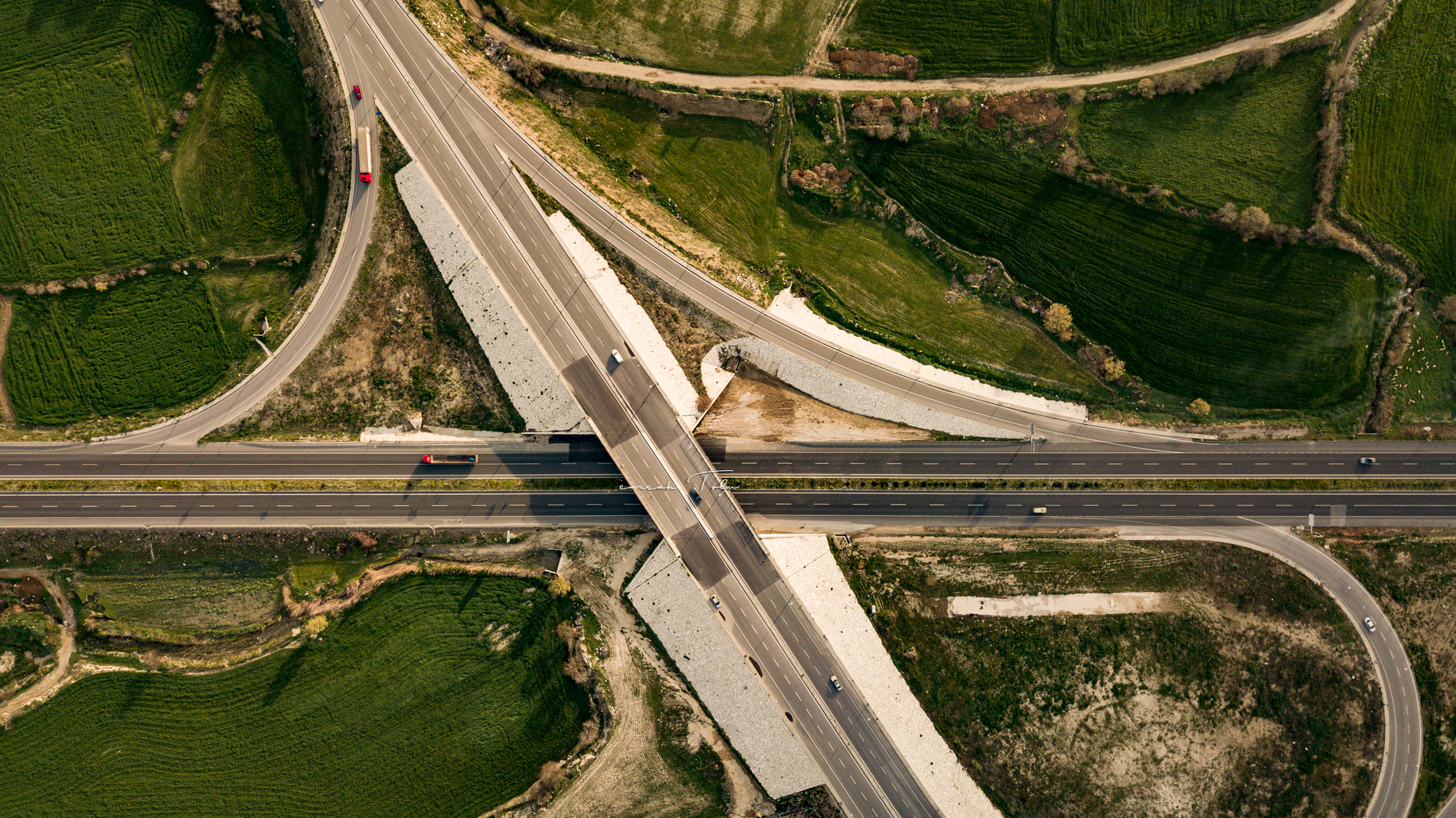
As of 2026, Phuket has at least seven major road projects either under construction or in design, with a combined estimated value exceeding 35 billion THB. Our analysts monitor progress on the ground and track how each corridor translates into property price movements in specific districts.
A key observation from our data sets: historically, every 10-minute reduction in airport travel time to a given Phuket district has correlated with an 8-14% increase in median condominium prices within that zone over the three years following road completion. We anchor this figure to two reference points: the Chalong bypass opened in 2019, and the Patong Tunnel (currently under construction as of 2026, scheduled for 2028).
Quick answer
- Phuket has 7 major road projects active in 2026: 3 under construction, 2 in tender, and 2 at feasibility study stage
- The headline project is the Patong Tunnel (Kathu-Patong), approximately 3.98 km long, budgeted at around 15 billion THB, with a target completion of 2028
- The Northern Bypass Phase 2 will connect Tha Rua junction to Thalang, cutting travel time to Bang Tao and Layan by roughly 12-15 minutes
- The Sakhu-Nai Yang road will improve access to the airport zone and is already influencing land prices within 3 km of the planned route
- Based on our estimates, districts in the direct influence zone of confirmed projects are already trading at a 5-9% price premium over comparable locations outside that zone
- Investors should carefully distinguish projects with signed construction contracts from those still at concept or feasibility stage - paying a full infrastructure premium for an unconfirmed route carries meaningful risk
Options and scenarios
Scenario 1: on-schedule delivery of key projects (probability: approximately 35%)
In this scenario, the Patong Tunnel opens as planned in 2028 and the Northern Bypass Phase 2 delivers in 2027. The practical effect: Kamala and Kalim gain a direct airport link without routing through central Kathu. Based on our estimates, condominium prices in Kamala could rise 12-18% between 2026 and 2029. Patong itself, as the tunnel's destination district, may see a smaller gain (around 6-10%), partly because improved connectivity also redirects tourist flows toward competing beaches.
Scenario 2: delays of 12-24 months (probability: approximately 45%)
Phuket's infrastructure history suggests one-to-two-year delays are the norm rather than the exception. The Light Rail project, announced in 2017, had not entered construction phase as of 2026. Under this scenario, the price premium in influence zones persists but grows more slowly - around 3-6% per year - and investors who bought purely on an infrastructure promise may experience capital lock-up rather than appreciation.
Scenario 3: partial delivery and plan revisions (probability: approximately 20%)
Several projects, particularly those still at feasibility stage, are suspended or scaled back. The Sakhu-Nai Yang road is built as a two-lane road rather than the planned four-lane configuration. Price impact across northern districts is minimal, and land purchased speculatively around Thalang loses liquidity. This scenario is the most damaging for buyers who paid forward-looking premiums on unconfirmed routes.
Comparison table
| Road Project | Status (2026) | Estimated Budget (THB) | Target Completion | Districts in Influence Zone | Estimated Price Premium |
|---|---|---|---|---|---|
| Patong Tunnel (Kathu-Patong) | Under construction | 15 billion | 2028 | Kamala, Kalim, Patong | 12-18% |
| Northern Bypass Phase 2 | Under construction | 4.5 billion | 2027 | Bang Tao, Layan, Thalang | 8-14% |
| Sakhu-Nai Yang Road | In tender | 2.8 billion | 2028-2029 | Nai Yang, Sirinat, Mai Khao | 5-9% |
| Route 4027 Widening (Thepkrasattri) | Under construction | 3.2 billion | 2027 | Koh Kaew, Rassada | 4-7% |
| Southern Bypass Chalong-Rawai | Feasibility study | 3.5 billion | 2029+ (estimate) | Rawai, Nai Harn, Chalong | 3-6% (projected) |
| Cherng Talay Internal Road | In tender | 1.8 billion | 2028 | Cherng Talay, Surin | 6-10% |
| Route 4028 Upgrade (Kamala Hill) | Feasibility study | 4.2 billion | 2030+ (concept) | Kamala, Surin | No premium until approval |
Risks and mistakes
Risk 1: paying for a promise rather than concrete. The most consistent pricing error we observe is treating an unapproved road project as a certainty and accepting inflated land prices accordingly. A road at feasibility study stage should not support a premium above 2-3%. Only a signed construction contract with a named contractor and visible site activity justifies a premium in the 5-9% range.
Risk 2: the cannibalization effect. New infrastructure does not uniformly raise values along its route. Districts that previously benefited from limited access - an implicit exclusivity premium - can see that advantage erode. We track this dynamic in Layan: faster airport connectivity increases footfall and general visibility, but reduces the perception of seclusion that drives demand in the villa segment above 30 million THB. In that price bracket, price growth can actually slow after a major road opens nearby.
Risk 3: land acquisition and route adjustments. Thai law permits compulsory acquisition for public infrastructure, and precise alignments are sometimes revised even after construction begins. A property purchased 200 metres from a planned road may end up 50 metres from it after route correction, generating noise exposure and reducing resale value.
Risk 4: currency movement. All budget figures in this article are denominated in THB. For investors converting from other currencies, a 10% exchange rate shift over a single construction year can fully offset the infrastructure premium earned on the property. We recommend factoring currency risk into any multi-year holding thesis.
Risk 5: overlooking Koh Samui as an alternative baseline. Major road projects on Koh Samui are considerably less advanced in 2026. The phased upgrade of Route 4169 (Ring Road) has been ongoing for years without producing comparable price spikes. Districts such as Bophut and Maenam offer a more stable, lower-speculation profile for investors who want to avoid infrastructure-cycle timing risk.
FAQ
Which Phuket road projects are actively under construction in 2026?
Three projects are in active construction as of 2026: the Patong Tunnel (Kathu-Patong), the Northern Bypass Phase 2, and the Route 4027 widening along Thepkrasattri Road. Two further projects are in the tender phase, and two remain at feasibility study stage. The combined estimated value of all seven exceeds 35 billion THB.
How will the Patong Tunnel affect property prices in Kamala?
Based on our estimates, the tunnel will reduce drive time from Phuket International Airport to Kamala by approximately 15-20 minutes. Drawing on comparable Phuket infrastructure openings, our analysts project a 12-18% increase in median condominium prices in Kamala within three years of the tunnel opening.
Is it worth buying land near planned roads in Phuket?
We advise caution. A meaningful price premium is only justified for projects with a signed construction contract and visible on-site progress. Projects at feasibility study stage carry real risk of suspension, route revision, or multi-year delay, and should not support premiums beyond 2-3%.
Which Phuket districts stand to benefit most from new roads?
Our analysis points to Bang Tao and Layan (Northern Bypass Phase 2), Kamala (Patong Tunnel), and Cherng Talay (internal road upgrade) as the districts with the strongest price-growth potential. These areas combine proximity to new infrastructure with sustained demand from the holiday property segment.
How much will the new roads reduce airport travel times?
The Northern Bypass Phase 2 is projected to cut airport-to-Bang Tao travel time by approximately 12-15 minutes. The Patong Tunnel will reduce the Kathu-to-Patong route by around 20-25 minutes by eliminating the Kamala Hill climb entirely.
Are new roads being built on Koh Samui in 2026?
Koh Samui is seeing phased upgrades to Ring Road (Route 4169), but the scale is significantly smaller than Phuket. We do not observe comparable infrastructure-driven price premiums in Bophut, Maenam, or Lamai at this stage, which may suit investors seeking a less speculative market.
What is the total budget for Phuket road infrastructure in 2026?
The combined estimated budget across all seven projects exceeds 35 billion THB. The Patong Tunnel alone accounts for approximately 15 billion THB, financed through Thailand's central government budget via the Department of Highways.
What are the main risks of buying near a planned road on Phuket?
The primary risks are: construction delays of up to two or three years, post-approval route adjustments that bring the road closer to the property than expected, partial or full compulsory land acquisition, and the cannibalization of exclusivity premiums in the high-end villa segment.
Where can investors find official Phuket road maps?
The Thailand Department of Highways (DOH) and the Phuket Provincial Administration Organization both publish official alignment maps and project status updates. Our team monitors these sources continuously and cross-references them with on-ground observations to verify reported progress.
Researching property in Phuket or Koh Samui? Get in touch - our analysts will prepare a data brief for your shortlisted location.