
As of 2026, Phuket has at least seven major road projects under construction or in active design, with a combined estimated budget exceeding 30 billion THB (roughly 870 million USD at Q1 2026 exchange rates). Our analysts monitor progress on the ground and track how each corridor reshapes the property value map across specific districts.
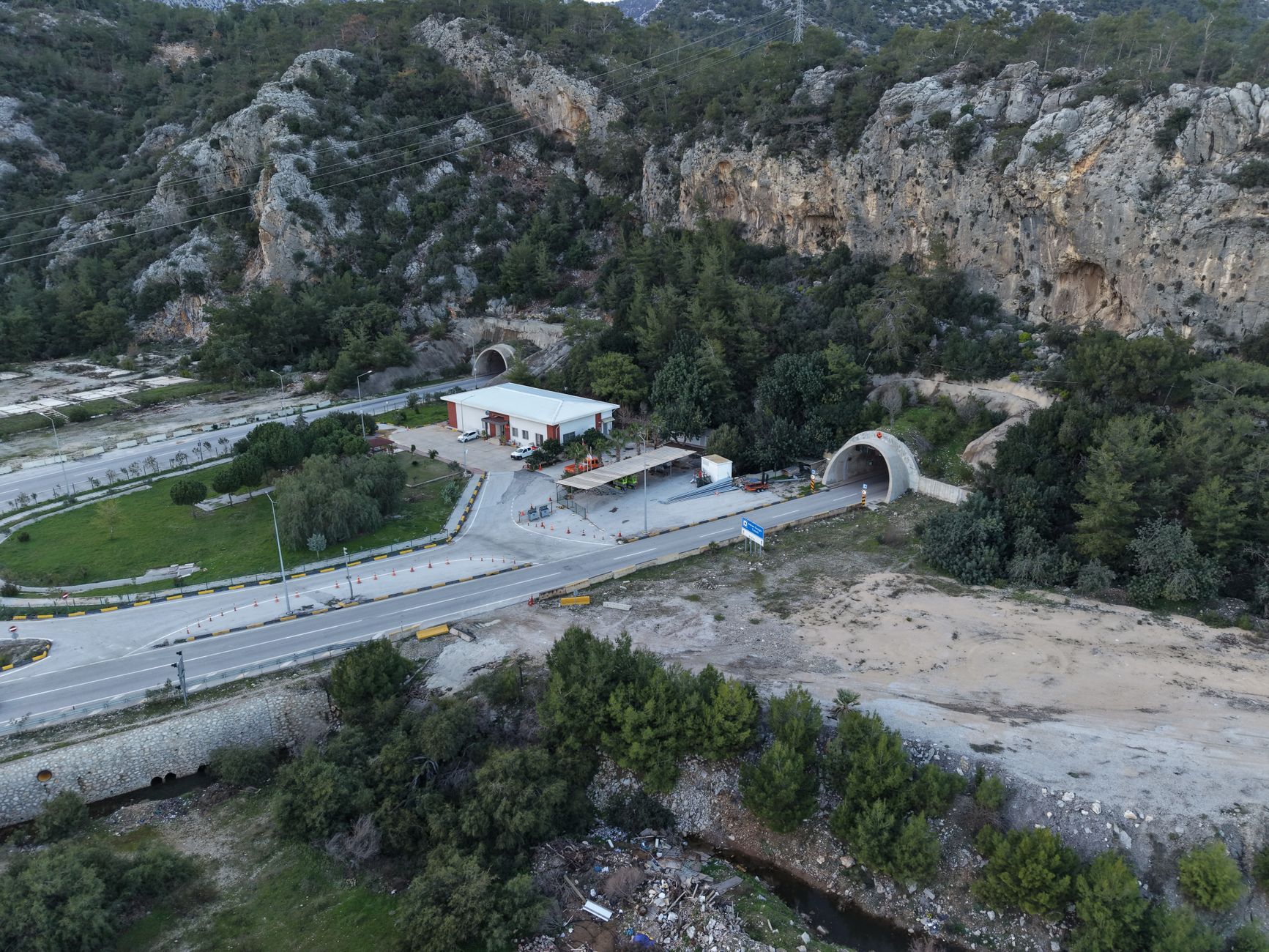
The headline project remains the Patong Tunnel, which will cut the airport-to-Patong-Beach journey from roughly 45 minutes to around 15. Running in parallel, central-government funding covers the widening of Route 4027 (Thep Krasattri to Nai Yang) and a new eastern bypass linking Koh Kaew to Chalong. Based on our estimates derived from Land Department transaction records for 2018-2024, the opening of a new road in Phuket has historically lifted the median land price within a 2 km radius of the interchange by 12-18% within 24 months of the section becoming operational.
Quick answer
- Patong Tunnel (Kathu to Patong): as of 2026, in active construction; planned opening 2027-2028; budget approximately 14.6 billion THB; funded from Thailand's central budget
- Route 4027 widening (airport to Thalang section): works ongoing; completion forecast for late 2026; cost approximately 2.8 billion THB
- Eastern bypass (Koh Kaew to Chalong, approximately 22 km): at tender and land-acquisition stage; delivery horizon 2027-2029
- Layan-Bang Tao bypass: preliminary concept only; no approved budget; per our on-the-ground verification the project remains at feasibility-study stage
- Chao Fa West Road widening (Chalong to Rawai): design completed; tender announced in Q4 2025
- Tha Chatchai to airport expressway (known as 'Phuket Gateway'): government concept; no EIA approval as of 2026
- Historical land-price uplift near new roads: 12-18% within 24 months of opening, based on our estimates
Options and scenarios
Scenario A: on-schedule delivery of key projects (2027-2028)
If the Patong Tunnel and the eastern bypass are delivered as planned, we expect investment demand to rotate away from the already-saturated western-coast districts - Kamala and Surin - toward Kathu and Chalong. Kathu gains direct access to Patong without the hill-road congestion that currently defines that commute. Based on our estimates, median condominium prices in Kathu could rise by 15-22% by end-2028 relative to Q1 2026 levels.
Bang Tao and Layan, already the island's most expensive residential pockets (median villa prices above 25 million THB per our data sets), stand to benefit only modestly - their pricing is driven by beach proximity, not road infrastructure.
Scenario B: delays of 18-24 months
Delays are routine in Thai infrastructure delivery. The Patong Tunnel alone has gone through several schedule revisions since its first approval in 2017. In this scenario, land parcels within the project's influence zone shed their speculative premium. We monitor conditions under which developers pause new launches in Kathu and land prices retrace 5-8% from their speculative highs.
Scenario C: partial delivery with deferred flagship projects
The government completes only the Route 4027 widening and Chao Fa West Road, deferring the tunnel and the bypass. This outcome is most favourable for northern districts - Thalang, Nai Yang and Mai Khao - where shorter airport access times improve short-term rental economics. Based on our estimates, rental ROI in Nai Yang could increase by 0.8-1.2 percentage points as a result of improved accessibility alone.
Comparison table
| Parameter | Patong Tunnel | Eastern Bypass | Route 4027 | Chao Fa West Road |
|---|---|---|---|---|
| Stage (2026) | Under construction | Tender / land acquisition | Under construction | Tender |
| Budget (billion THB) | 14.6 | approx. 8-10 | 2.8 | approx. 1.5 |
| Delivery horizon | 2027-2028 | 2029 | Late 2026 | 2027 |
| Funding source | Central budget | Central budget | Central budget | Local + central |
| Districts in influence zone | Kathu, Patong | Koh Kaew, Chalong | Thalang, Nai Yang | Chalong, Rawai |
| Estimated land-price uplift (24 months) | +15-22% | +10-15% | +8-12% | +6-10% |
| Delay risk | Medium | High | Low | Medium |
| EIA status | Approved | In progress | Approved | Approved |
Risks and mistakes
Paying for a promise rather than poured concrete. The most common error we observe is pricing in infrastructure that exists only on a planning document. Our on-the-ground checks confirm that the eastern bypass is still at the land-acquisition stage, yet some listings in Koh Kaew already incorporate a future commute-time premium to Chalong into their asking prices.
Ignoring construction disruption along the route. Road widening means demolitions. Along Chao Fa West Road, we have identified several villa plots now subject to compulsory purchase proceedings. Compensation offered in Thai expropriation cases has typically been below open-market value. Buyers of adjacent parcels should factor disruption risk into their holding-period assumptions.
Treating the Phuket Gateway expressway as a near-term catalyst. The Tha Chatchai-to-airport expressway concept has appeared and disappeared from government plans at least three times since 2019. We do not recommend incorporating this project into valuation models at this stage.
Mispricing currency exposure. The Thai baht strengthened against several major currencies through 2024-2025. An investor acquiring land on the basis of a future infrastructure catalyst carries two layers of risk: project delay and an unfavourable exchange rate at the point of profit realisation.
Foreign land-ownership constraints. No road project changes the underlying legal reality: foreign nationals cannot hold freehold land title in Thailand. Leasehold structures (typically 30-year terms with renewal options) or Thai-company arrangements each carry distinct legal implications and require independent legal review before commitment.
FAQ
Which new roads are under construction in Phuket in 2026?
As of 2026, active construction covers the Patong Tunnel (Kathu to Patong, budget 14.6 billion THB) and the Route 4027 widening (airport to Thalang, budget 2.8 billion THB). The eastern bypass (Koh Kaew to Chalong) and Chao Fa West Road widening (Chalong to Rawai) are both at the tender stage.
Where can I find an official map of Phuket's new road projects?
The Department of Highways publishes official route maps at doh.go.th. In our research, we overlay those routes onto district-level property price data to identify the influence zones most relevant to residential and land investment decisions.
How do new roads affect property prices in Phuket?
Based on our estimates using Land Department data for 2018-2024, a new road opening has historically pushed median land prices up by 12-18% within a 2 km radius of the interchange over a 24-month window. The effect is typically stronger for undeveloped plots than for completed condominium units.
When will the Patong Tunnel open?
The planned opening is 2027-2028. The project has gone through several schedule revisions since first approval in 2017. Our ground-level checks in early 2026 confirmed that earthworks are ongoing on the Kathu side.
Is the eastern bypass (Koh Kaew to Chalong) fully approved?
The project alignment is approved, but the Environmental Impact Assessment (EIA) procedure was still in progress as of 2026. Land acquisition has begun but is not complete. We estimate a realistic delivery date of 2029.
Which Phuket districts stand to gain most from the new road programme?
We see the strongest uplift potential in Kathu (Patong Tunnel), Thalang and Nai Yang (Route 4027), and Chalong (eastern bypass combined with Chao Fa West Road). Bang Tao and Layan are likely to record modest gains only, as their pricing already reflects a premium location with existing infrastructure.
Are there comparable road projects on Koh Samui in 2026?
On Koh Samui, the primary road project in 2026 is the widening of Route 4169 on the Nathon to Lipa Noi section, alongside access road works for the planned new airport terminal. The scale is considerably smaller than the Phuket programme, and our analysts track a more limited set of influence zones there - principally Maenam and Bophut for the northern corridor.
How should infrastructure delay risk factor into an investment model?
We recommend discounting the infrastructure premium by 30-50% to reflect realistic delay probability. If the market is pricing a 15% uplift on the basis of a road project, a risk-adjusted assumption of 7-10% is more defensible. Paying the full speculative premium at the planning stage is a structural mistake we see repeated across market cycles.
Is the Phuket Gateway expressway a reliable investment signal?
No. The Tha Chatchai-to-airport expressway concept has resurfaced and been shelved multiple times since 2019, and as of 2026 it has no approved EIA. We exclude it from our valuation models and advise others to do the same until a concrete funding and EIA approval is in place.
What legal structure do foreign buyers typically use to hold land near these corridors?
Foreign nationals cannot hold freehold land title in Thailand. The two most common structures are long-term leasehold (30-year registered lease with contractual renewal options) and land held through a Thai-registered company. Each structure has distinct cost, tax and exit implications. Our research covers the financial metrics; independent legal counsel is required before any commitment.
Researching property in Phuket or Koh Samui? Get in touch - our analysts will prepare a data brief for your shortlisted location.