
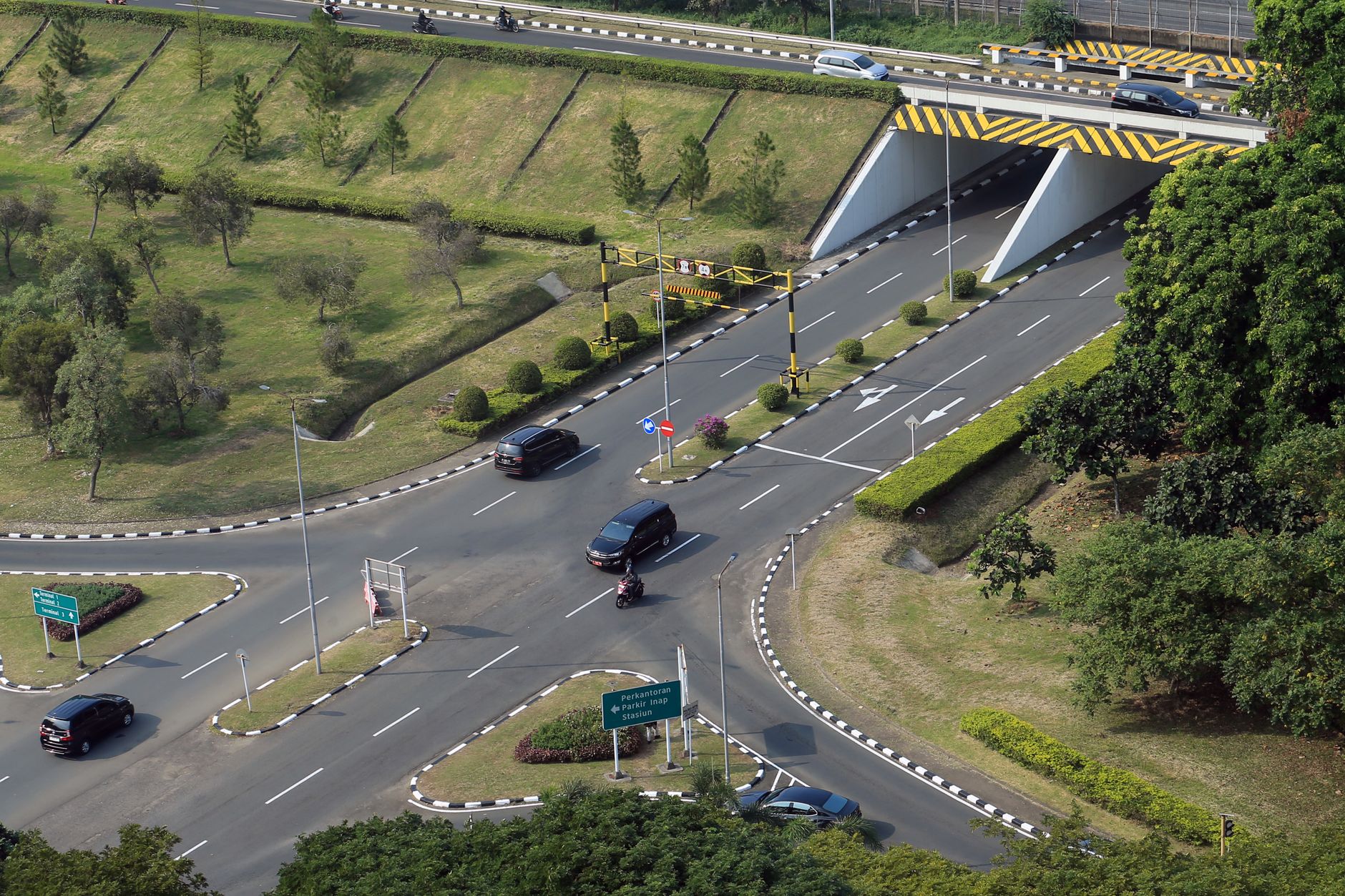
Road infrastructure expansion is one of the most consistent price drivers we track in the Phuket residential market. New bypass sections reduce travel times between the west coast and the airport by up to 15-25 minutes during peak season, and historical data from earlier road projects on the island shows that the pricing effect within 3 km of a new interchange typically materialises within 12-18 months of opening.
Based on our analysis of transactions from 2023-2025, completion of key sections of the western bypass (the Patong-Kathu corridor) and the upgrade of Route 4027 translated into land price increases of 8-14% year-on-year in the immediate impact zone. These figures are drawn from Land Office registries that our team verifies on the ground.
Quick answer
- The Phuket western bypass (Kathu-Patong tunnel section) carries a budget of approximately 14.7 billion THB; as of Q1 2026, the Environmental Impact Assessment (EIA) was approved in 2024, physical works are scheduled to begin in 2027, with estimated completion in 2030-2031
- The northern bypass (Thalang bypass, Routes 4026-4031) is approximately 85% complete, with handover targeted for late 2026
- Districts in the direct impact zone: Kathu, Kamala, Patong, Thalang, and Cherng Talay (including Bang Tao and Layan)
- Historical precedent: after the Sarasin-Thalang road opened in 2019, land prices within 2 km rose +12% over 18 months, per Land Department records
- Per our estimates, Cherng Talay and Thalang offer the strongest upside under a baseline scenario, with potential appreciation of 10-20% through 2028
- Delay risk on the tunnel is material - our team monitors Department of Highways (DOH) tender announcements and construction schedules continuously
Options and scenarios
Scenario A: Thalang bypass completes on schedule (late 2026), Kathu-Patong tunnel breaks ground in 2027
This is the baseline scenario used in our models. Completing the Thalang bypass opens a fast corridor from the airport through Cherng Talay to Surin. Based on our estimates, airport-to-Bang Tao travel time would fall from the current 35-50 minutes (high season) to roughly 20-25 minutes. Historically on Phuket, a 15-minute reduction in commute time has correlated with land price gains of 5-10% over a two-year horizon in the destination zone.
Under this scenario, Cherng Talay and Layan stand to benefit most. Both districts sit within the new road's impact corridor and already command premium positioning (Layan and Bang Tao beaches). Condominium prices in the 80,000-130,000 THB per sqm band may shift toward 90,000-145,000 THB per sqm by end-2027, based on our current projections.
Scenario B: Kathu-Patong tunnel delayed by 2-3 years (completion pushed to 2033)
This is the scenario we model as the primary risk case. The tunnel has a difficult history: it first appeared in DOH planning documents in 2014. Multiple deferrals since then suggest another slip is a realistic outcome. Under this scenario, Patong remains a bottleneck district with a single access road over the hill (Route 4029), which caps its price appreciation potential. Paradoxically, this would strengthen the relative position of Kamala and Surin, which offer better accessibility and are already absorbing demand displaced from congested Patong.
In our data sets, Kamala is already recording land price growth of +10-15% per year (2024-2025 transactions), partly driven by this demand displacement effect.
Scenario C: Additional infrastructure projects - light rail and Ao Po Marina
The Department of Land Transport (DLT) is conducting a feasibility study for a light rail system on the airport-Phuket Town corridor. As of 2026, the project remains conceptual with no approved budget, so we treat it as a speculative variable rather than a pricing input. The Ao Po Marina on the east coast has an approved masterplan and a budget of approximately 3.5 billion THB, with planned completion in 2028. This project could lift prices in Pa Khlok and eastern Thalang by an estimated 5-8%, though it addresses a niche yachting segment.
Comparison table
| Parameter | Cherng Talay / Layan | Kamala / Surin | Patong | Thalang / Pa Khlok |
|---|---|---|---|---|
| Distance from new interchange | 2-4 km | 5-8 km | 3-6 km (tunnel) | 1-3 km |
| Land price 2025 (THB per sqm) | 35,000-80,000 | 40,000-90,000 | 60,000-120,000 | 12,000-30,000 |
| Estimated appreciation to 2028 | +10-18% | +8-15% | +3-8%* | +12-20% |
| Primary road project | Thalang bypass | Western bypass | Kathu-Patong tunnel | Thalang bypass |
| Construction stage (2026) | 85% complete | Design phase | EIA / design phase | 85% complete |
| Delay risk | Low | Medium | High | Low |
| Dominant property segment | Premium villas, condominiums | Premium villas | Tourist condominiums | Houses, investment land |
*Patong appreciation is conditional on tunnel delivery. Without the tunnel, our models point to stagnation or gains of only 1-3%.
Risks and mistakes
Paying a full infrastructure premium before ground is broken is the most frequent error we observe among international buyers in Phuket. Developers regularly feature planned road projects in sales materials, framing them as confirmed outcomes. The Kathu-Patong tunnel has been in planning for more than a decade and still has no confirmed general contractor as of 2026.
Our internal pricing framework applies the following discounting logic: a project at conceptual stage (no EIA, no approved budget) should carry zero pricing premium. A project with an approved EIA and confirmed budget - such as the Thalang bypass - justifies a premium of roughly 3-5% relative to pre-announcement prices. Full discounting of the road benefit (8-15%) is only warranted once physical construction has visibly commenced.
Currency exposure is a second risk layer that international buyers outside the THB zone often underestimate. The Thai baht depreciated against a basket of major currencies by approximately 4% in 2025. A nominal land price gain of 10% in THB can translate to a materially lower real return once currency movement is factored in. We track this spread in our quarterly data sets.
Legal exposure near new road alignments is specific to this infrastructure theme. Road construction can trigger land acquisition or zoning reclassification under the City Plan. Before any investment recommendation, our analysts verify on the ground whether a target parcel sits within a designated road reservation zone - information that is publicly available at the local Tessaban office and Land Office, though DOH online maps are not always current.
Phuket versus Koh Samui comparison: Koh Samui has no comparable bypass projects planned for 2026. The existing ring road (Routes 4169/4170) encircles the island and no extension is scheduled. The main infrastructure variable on Samui is a potential expansion of Samui Airport (USM), but the airport's private ownership structure limits the scope for public capital investment. As a result, the infrastructure-to-price correlation in districts such as Bophut and Maenam on Samui is considerably weaker than the dynamics we are tracking on Phuket.
FAQ
When will the Phuket northern bypass (Thalang bypass) open?
As of 2026, the Thalang bypass is approximately 85% complete. The Department of Highways targets handover in late 2026, which we treat as the baseline in our models. Delay risk for this specific section we assess as low, given the advanced construction stage.
When is the Kathu-Patong tunnel expected to open?
The current official estimate is 2030-2031, with physical works scheduled to begin in 2027. Based on the project's history - it has appeared in DOH plans since 2014 - our analysts assign a high probability to a further delay of 2-3 years. We do not use this project as a confirmed pricing input in current valuations.
Which Phuket districts stand to gain most from the new road infrastructure?
Under our baseline scenario, Thalang and Pa Khlok offer the highest estimated appreciation (12-20% through 2028) due to direct proximity to the completing northern bypass. Cherng Talay and Layan follow closely (10-18%), benefiting from both the bypass corridor and existing premium demand. Kamala and Surin (8-15%) gain partially as a secondary effect of demand displacement from Patong.
Should buyers pay a price premium for property near the planned Kathu-Patong tunnel?
Our framework says no - not at full premium. A project still in design and EIA phase, with no confirmed contractor, does not warrant the 8-15% infrastructure premium that active construction sites justify. We recommend buyers treat the tunnel as an option, not a certainty, and price accordingly.
How does road infrastructure affect condominium prices specifically?
Based on our data sets from 2019-2025, condominium prices in Phuket respond to road improvements with a lag of roughly 12-18 months after opening. The magnitude of the effect depends on segment: premium villa and condominium zones (Cherng Talay, Layan) show stronger price response than mass-market tourist condominium zones (central Patong), where accessibility was already adequate.
How can buyers verify whether a parcel sits in a road reservation zone?
The road reservation zone designation is recorded at the local Tessaban office and at the Land Office. Our analysts check this directly on the ground before any investment recommendation, as DOH online maps and City Plan documents are not always synchronised with the latest approved alignments.
Does Koh Samui have any comparable road infrastructure projects in 2026?
No. Koh Samui has no new bypass projects planned or under construction in 2026. The main infrastructure variable on Samui is the potential expansion of Samui Airport (USM), but private airport ownership limits public capital allocation. Infrastructure-driven price uplift in districts such as Bophut, Maenam, Lamai, and Chaweng is therefore structurally weaker on Samui than on Phuket in the current cycle.
What is the total budget for the Kathu-Patong tunnel project?
The approved budget estimate for the Kathu-Patong tunnel section stands at approximately 14.7 billion THB. The Thalang bypass is being delivered from a separately allocated Department of Highways budget under a previously approved infrastructure programme.
How should international investors think about currency risk on Phuket property?
The Thai baht depreciated approximately 4% against a basket of major currencies in 2025. A 10% nominal land price gain in THB may therefore represent a meaningfully lower real return in the buyer's home currency. We monitor THB cross-rates in our quarterly data briefs and encourage buyers to factor currency assumptions explicitly into their return modelling.
Researching property in Phuket or Koh Samui? Get in touch - our analysts will prepare a data brief for your shortlisted location.