

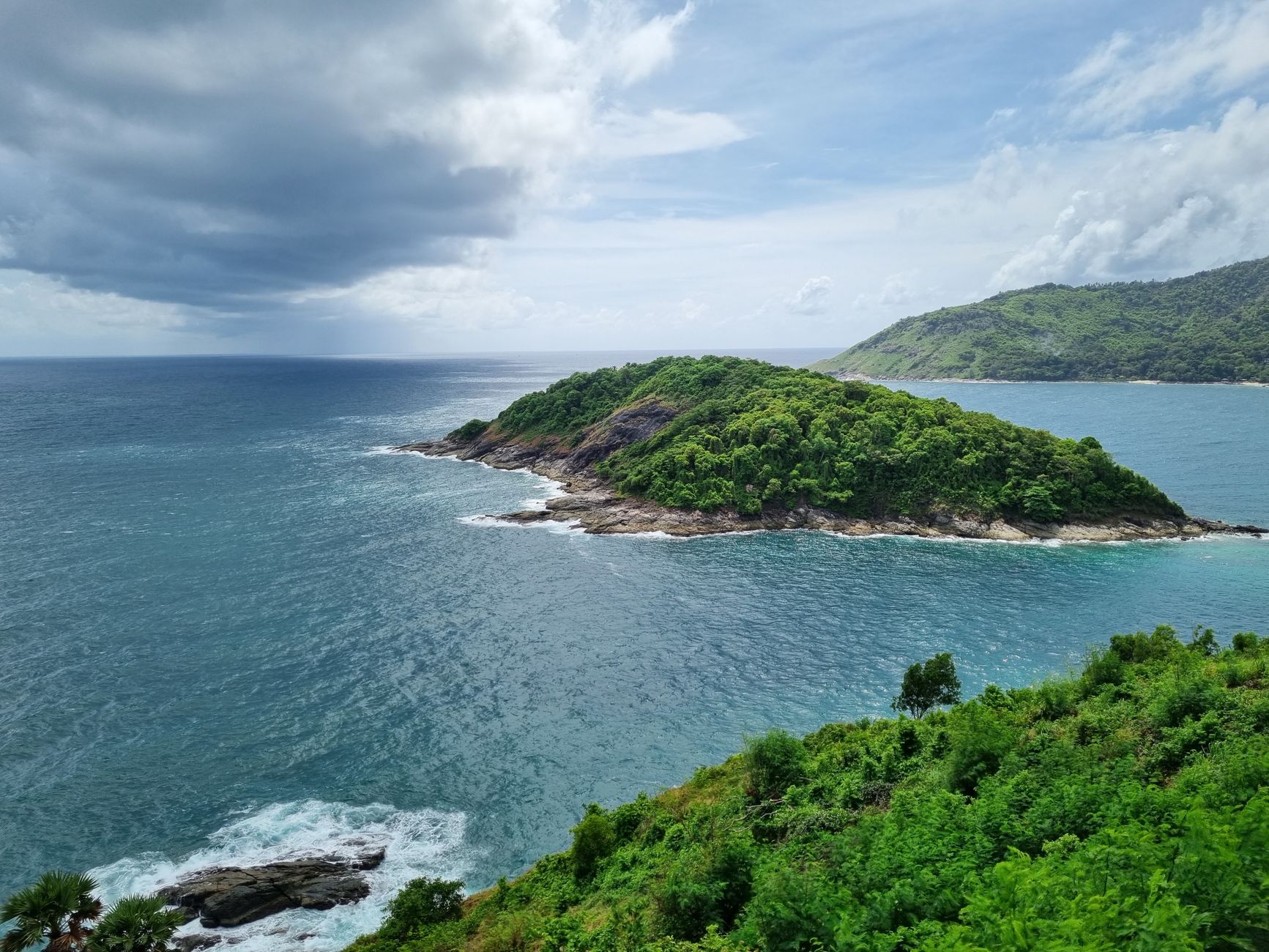
Based on our Q1 2026 data sets, listed prices for new condominiums in Rawai sit at approximately 75,000-95,000 THB per sq m, positioning the district 30-40% below Bang Tao and 45-55% below Surin. At the same time, the new-supply pipeline in Rawai is expanding faster than in any other submarket in southern Phuket. Our analysts have tracked this micro-market for several years and are now observing a clear shift in its profile.
For most of the past decade, Rawai operated as a quiet, affordable alternative to the west coast. In 2026 that characterisation is changing. A wave of new development projects, rising interest from digital nomads and long-stay residents, and road improvements linking Rawai to Nai Harn are repositioning the district as an increasingly competitive investment location.
In our data sets we identify three distinct segments in Rawai: compact condominiums (30-45 sq m) targeting digital nomads and budget travellers; mid-size apartments (60-90 sq m) purchased by families for extended winter stays; and hillside pool villas with Andaman Sea views. Each segment carries a different price dynamic and tenant profile.
Quick answer
- Listed condominium prices in Rawai (Q1 2026): approximately 75,000-95,000 THB per sq m, placing compact studios from around 2.5 million THB
- Year-on-year price movement: based on our estimates, listed prices rose 6-9% YoY in 2025-2026, with pool villas appreciating faster at up to 12% YoY
- Supply pipeline: we monitor 14-18 projects at various construction stages; at least six have planned delivery in 2026-2027
- Tenant profile: long-stay residents (6-12 month leases) and digital nomads dominate; short-term premium tourists represent a smaller share here compared with Kamala or Surin
- Low-season occupancy (May-October): per our estimates, 40-55% for pool-equipped apartments - weaker than Karon (55-65%) but stronger than Nai Harn (35-50%)
- Indicative net rental yield: 5-7% per year for well-located units after management fees and sinking-fund contributions
Options and scenarios
Option A: compact condominium for short-term rental
A 30-45 sq m unit in a new project, purchase price in the range of 2.5-4.0 million THB. This option targets digital nomads and budget-conscious travellers. Our on-the-ground verification shows that projects with well-designed co-working areas and pools achieve occupancy rates 10-15 percentage points higher than comparable buildings without those amenities. The principal risk is that the growing supply pipeline in this segment may compress rental rates from 2027 onward.
Option B: family apartment for extended winter stays with rental upside
A 60-90 sq m unit in a secured project with a playground and beach shuttle. Purchase price: 5.5-8.5 million THB. The typical user profile is an overseas family wintering in Phuket (November to March) and renting the unit during the remaining months. In our data sets this segment records more stable year-round occupancy than small studios, because it attracts medium-term tenants - staff at international schools, retirees from Western Europe. We estimate net yield at 4.5-6% per year, accounting for periods of personal use.
Option C: hillside pool villa in Rawai
A private-pool villa on a 200-400 sq m plot, priced at 12-25 million THB. This is the segment with the strongest price momentum: based on our estimates, values rose 10-12% YoY in 2025-2026. Pool villas in Rawai are 25-40% cheaper than comparable properties in Layan or Kamala, though the beach offering here is less appealing for mass tourism. The primary tenant is families or small groups seeking privacy. Short-term occupancy rates are lower than on the west coast, but per-booking daily rates can be competitive when bookings do occur.
Comparison table
| Parameter | Rawai | Nai Harn | Karon | Bang Tao |
|---|---|---|---|---|
| Listed condo price (THB per sq m) | 75,000-95,000 | 85,000-110,000 | 90,000-120,000 | 110,000-150,000 |
| YoY price change (est. 2025-2026) | +6-9% | +5-8% | +4-7% | +7-10% |
| New projects under construction | 14-18 | 6-8 | 8-12 | 20-25 |
| High-season occupancy (Nov-Mar) | 70-80% | 75-85% | 80-90% | 85-92% |
| Low-season occupancy (May-Oct) | 40-55% | 35-50% | 55-65% | 60-72% |
| Dominant tenant profile | Resident / nomad | Tourist / family | Mass tourist | Premium tourist |
| Estimated net yield | 5-7% | 4.5-6.5% | 5-7% | 5-8% |
| Drive time from airport (min.) | 50-60 | 55-65 | 40-50 | 20-30 |
All figures are indicative, based on our Q1 2026 data sets and on-the-ground observations.
Risks and mistakes
Supply saturation in the studio segment. We are monitoring a growing number of projects delivering 25-35 sq m units at the 2-3 million THB price point. If all planned projects complete on schedule, supply in this segment may outpace rental demand during the low season. This is the most material risk for investors targeting exclusively short-term lets.
No direct access to a swimmable beach. Rawai Beach is a working beach - fishing boats, no designated swimming zone. Beach-focused tourists gravitate toward neighbouring Nai Harn or Yanui. This structurally limits short-term rental potential relative to west-coast districts.
Land title variation. A significant share of plots in Rawai carry Chanote title (full ownership certificate), but we also encounter Nor Sor 3 Gor documents, particularly on hillside parcels. Before any pool villa acquisition, we verify the title type directly at the Land Office. Foreign buyers can hold condominium units in freehold under the foreign quota (up to 49% of a building's total usable area), while land can only be held under a leasehold structure (typically 30 years with renewal options).
Hidden costs. Sinking-fund contributions in new Rawai projects run at 400-700 THB per sq m (one-off payment) in our data sets, while common-area fees typically range from 40-70 THB per sq m per month. Investors often overlook withholding tax on rental income (5-15% depending on legal structure) and the annual land and building tax when modelling returns.
Currency exposure. An investment denominated in THB carries foreign-exchange risk. The THB/USD and cross-rates against European currencies moved meaningfully over the past 24 months; this variability can shift the effective portfolio value by a double-digit percentage independently of property market performance.
FAQ
What is the typical purchase price for a condominium in Rawai, Phuket in 2026?
Based on our Q1 2026 data sets, new condominiums in Rawai are listed at approximately 75,000-95,000 THB per sq m. A compact studio of 30-35 sq m starts at around 2.5 million THB, while a two-bedroom unit of 60-80 sq m typically falls in the 5-8 million THB range.
Is Rawai significantly cheaper than Bang Tao?
Yes, and materially so. The price gap between Rawai and Bang Tao is 30-40% in Rawai's favour, per our data. The primary driver is location: Bang Tao sits closer to Phuket International Airport and fronts a long, wide beach that sustains premium tourism demand.
What net rental yield can investors expect in Rawai?
We estimate net yields of 5-7% per year for well-located pool-equipped units, after deducting management fees, sinking-fund contributions and taxes. The outcome is highly sensitive to low-season occupancy, which in Rawai is lower than in Karon or Bang Tao.
Who typically rents property in Rawai?
The dominant profile in our observations is long-stay residents - European retirees, international school staff, remote workers - on stays of one to six months. Short-stay tourists (under two weeks) account for a smaller share here than on Phuket's west coast.
Can a foreign national buy a Rawai condominium in freehold?
Yes, provided the foreign quota (up to 49% of a building's total usable floor area) has not been fully allocated. Purchase funds must be remitted from abroad into a Thai bank account with the transfer purpose clearly stated. In our monitoring, popular Rawai projects see their foreign quota fill relatively quickly once sales launch.
What are the main investment risks in Rawai?
The key risks we identify are: supply saturation in the small-studio segment, the absence of a swimmable beach, currency fluctuation exposure, and potential construction delays on planned projects. Each is covered in the 'Risks and mistakes' section above.
How does Rawai compare with Nai Harn for investors?
Rawai is approximately 10-15% cheaper per sq m in the condominium segment. Nai Harn, however, offers one of Phuket's most attractive beaches, which supports stronger short-term rental rates. Rawai compensates with denser everyday infrastructure - restaurants, fresh markets, convenience retail - and, in our data sets, tends to outperform Nai Harn on long-term rental yields.
Will prices in Rawai continue to rise?
Based on our estimates, a pace of 5-8% annual appreciation in listed prices is plausible over the next two to three years, provided the supply pipeline does not materially outrun demand. A key variable will be completion of planned infrastructure improvements, including upgrades to the road connecting Rawai to Chalong Circle.
What is low-season occupancy like in Rawai, and why does it matter?
We estimate low-season (May-October) occupancy at 40-55% for pool-equipped apartments in Rawai. This figure matters because it drives a significant portion of annual rental revenue and is the main reason net yields can diverge from gross headline numbers quoted by developers.
How long is the drive from Phuket Airport to Rawai?
The drive from Phuket International Airport to Rawai takes approximately 50-60 minutes by car, depending on traffic conditions. This is among the longer airport-to-district commutes on the island and is a factor worth weighing when considering short-term rental appeal for arrival-day convenience.
Researching property in Phuket or Koh Samui? Get in touch - our analysts will prepare a data brief for your shortlisted location.