

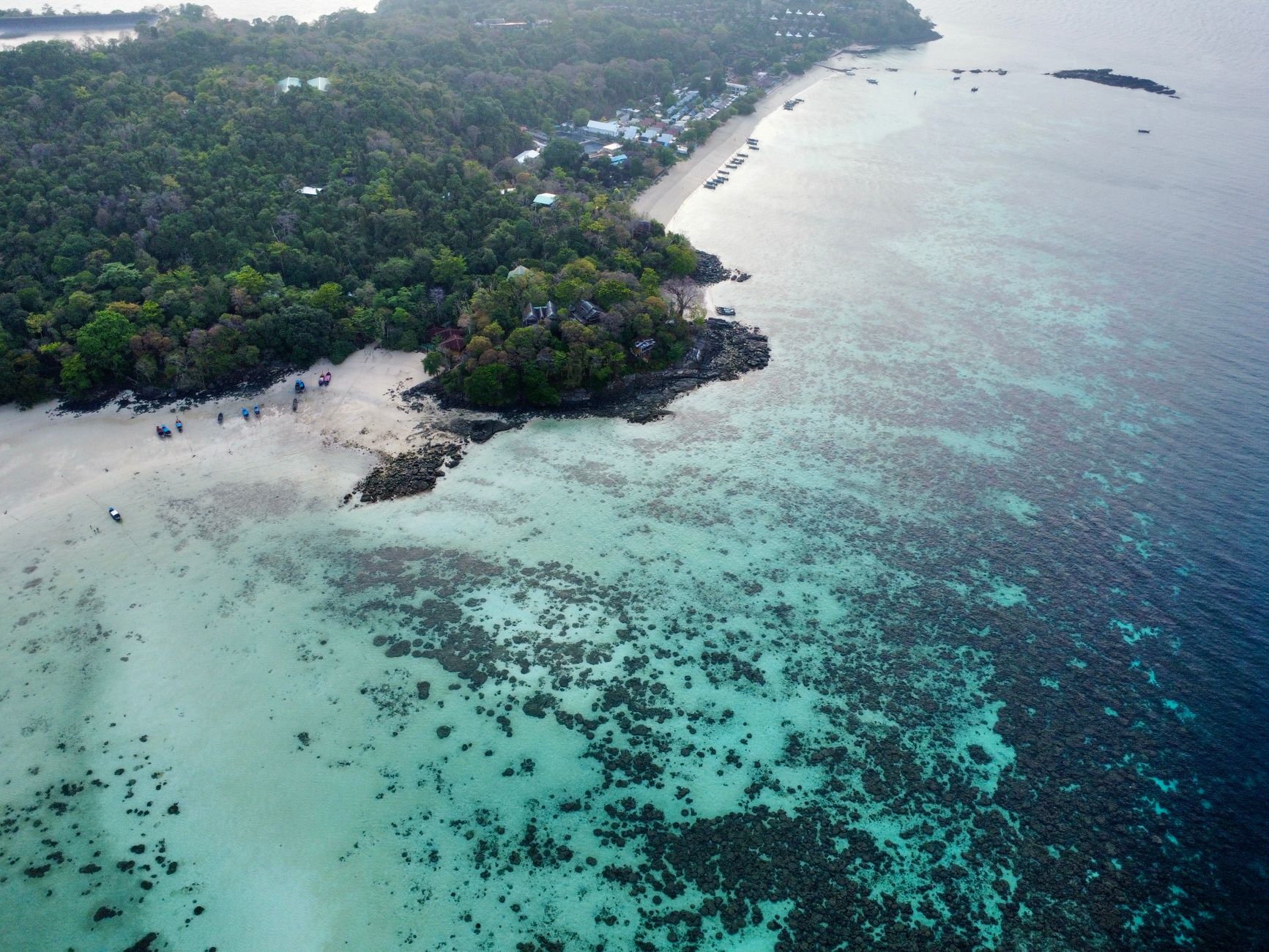
The average asking price gap between Rawai and Nai Harn sits at 15,000-25,000 THB per sqm in favour of Rawai, based on our Q1 2026 data sets. In practical terms: a budget sufficient for a 30 sqm studio in Nai Harn could stretch to a 35-38 sqm unit of comparable specification in Rawai.
We have tracked both micro-markets for several years and observe a clear price convergence. In 2023, Nai Harn freehold condominiums commanded a premium of 30-35% over equivalent Rawai stock. As of Q1 2026, that gap has narrowed to roughly 18-22%, driven by a surge in new supply entering Rawai and growing demand from European buyers drawn to Nai Harn's quieter character.
The central question for any investor is whether Nai Harn's higher entry cost translates into proportionately stronger rental returns. The sections below address that with specific numbers.
Quick answer
- Rawai freehold condominium average asking price: 85,000-110,000 THB/sqm (Q1 2026, our data)
- Nai Harn freehold condominium average asking price: 105,000-135,000 THB/sqm (same period and source)
- Year-on-year price growth: Rawai +8-10%, Nai Harn +6-8% (per market estimates, Q1 2025 to Q1 2026)
- High-season occupancy (December-March): Rawai 72-78%, Nai Harn 80-88% (based on our estimates from booking-platform data)
- Estimated gross short-term rental yield: Rawai 5.5-7.0%, Nai Harn 5.0-6.5% per annum
- New-supply pipeline: Rawai - 8-10 projects under construction or in pre-sale, Nai Harn - 4-5 projects (as of 2026)
Options and scenarios
Option A - short-term rental investment in Rawai
Rawai attracts a broad tenant mix: digital nomads on one-to-three-month stays, Russian-speaking families wintering on the island, and older European residents covering the November-to-March season. We verify on the ground that the density of restaurants, fresh markets, and daily-service businesses is noticeably higher here than in Nai Harn, which extends the effective rental season. The lower entry threshold - 2.5-3.3 million THB for a 30 sqm studio - accelerates time to market.
The primary risk is supply pressure. In our end-2025 data sets we recorded more than 600 new units across projects scheduled for completion by end-2027. This volume could weigh on achievable nightly rates if absorption lags.
Option B - premium rental investment in Nai Harn
Nai Harn beach consistently ranks among the top three on Phuket by water quality and scenery. The tenant profile skews clearly upmarket: European couples aged 35-55 and families with a daily accommodation budget above 4,000 THB per night. Seasonality is more pronounced than in Rawai - our estimates show occupancy falling to 40-50% in July-September, compared with 50-60% in Rawai, where long-stay tenants provide a steadier base load.
Entry cost for a new-project 30 sqm studio: 3.2-4.0 million THB.
Option C - leasehold villa as an alternative
Both districts carry a leasehold villa segment (30+30+30 years). In Rawai, two-to-three-bedroom pool villas start from 8-10 million THB; in Nai Harn, from 12-15 million THB. We verify on the ground that buildable land in Rawai is increasingly constrained - most new villa projects are concentrated along Soi Saiyuan and in areas 2-4 km inland from the shoreline. Nai Harn villa development is focused on hillside plots with sea views, but site-preparation costs (grading, access roads) push final prices up meaningfully.
Comparison table
| Parameter | Rawai | Nai Harn | Analyst note |
|---|---|---|---|
| Freehold condo price/sqm | 85,000-110,000 THB | 105,000-135,000 THB | 18-22% gap in favour of Rawai |
| YoY price growth | +8-10% | +6-8% | Rawai converging upward, Q1 2026 data |
| High-season occupancy | 72-78% | 80-88% | Nai Harn leads on beach quality |
| Low-season occupancy | 50-60% | 40-50% | Rawai more stable year-round |
| Gross rental yield | 5.5-7.0% | 5.0-6.5% | Rawai higher at lower entry cost |
| Pipeline to 2027 | 600+ units | 250-300 units | Rawai supply risk is higher |
| Dominant tenant profile | Nomads, long-stay families, residents | Premium couples, EU families | Rawai more diversified |
| Distance from airport | approx. 50 km, 60-75 min | approx. 47 km, 55-70 min | Comparable, traffic-dependent |
| 2-3 bed leasehold villa | from 8-10 million THB | from 12-15 million THB | 30+30+30-year leasehold structure |
| Daily infrastructure | Well developed | Limited | Rawai has more shops and services |
Risks and mistakes
Oversupply in Rawai. Our analysts flag the pace at which new projects are entering the Rawai pipeline. If all announced developments are delivered on schedule, the new-supply-to-rental-demand ratio could deteriorate in 2027-2028. We recommend heightened scrutiny of developer track records before committing to any pre-sale purchase in this district.
Nai Harn seasonality extrapolation. Investors frequently project high-season nightly rates across the full calendar year. In our modelling we apply effective annual occupancy of 60-65% for Nai Harn and 65-70% for Rawai. Using more optimistic assumptions inflates projected yield by 1-2 percentage points relative to realistic outcomes.
Underestimating management costs. A typical short-term rental management fee in southern Phuket runs at 20-30% of gross revenue. Common area maintenance (CAM) charges add 40-80 THB/sqm per month on top. After these deductions, net yield for both locations typically lands in the 3.5-5.0% range - meaningfully below the gross figures quoted in developer materials.
Foreign-exchange exposure. Investors converting from currencies other than THB face an additional variable. Over the past 12 months, exchange rates have shifted enough to alter the effective purchase cost of a 3 million THB unit by several percentage points. We monitor this factor as part of total-cost analysis for internationally based buyers.
Skipping legal due diligence. We encounter projects in both districts offering ownership structures of questionable long-term validity, including nominee shareholding arrangements. Our standing recommendation is independent title verification by a qualified Thai property lawyer before any deposit is transferred.
FAQ
Is Rawai cheaper per sqm than Nai Harn?
Yes. Based on our Q1 2026 data sets, freehold condominium asking prices in Rawai average 18-22% below those in Nai Harn - a gap of roughly 15,000-25,000 THB per sqm.
Which district offers a higher short-term rental yield?
Rawai produces estimated gross yields of 5.5-7.0% per annum against 5.0-6.5% for Nai Harn. The difference reflects both Rawai's lower purchase price and its more stable off-season occupancy.
What type of tenant does Nai Harn attract?
Nai Harn draws primarily European couples and families with above-average accommodation budgets. A typical booking runs 7-21 nights during the high season, with above-average finish expectations.
How many new projects are under way in Rawai in 2026?
Our current data sets show 8-10 projects either under construction or in pre-sale, representing more than 600 units targeted for completion by end-2027.
Is a leasehold villa in Rawai worth considering over a condominium?
Leasehold pool villas in Rawai start from 8-10 million THB for two-to-three bedrooms. They command higher nightly rates but carry higher operating costs and a longer payback period. For buyers with a budget below 5 million THB seeking liquidity, a freehold condominium remains the more practical vehicle.
How long does the drive from Phuket Airport to each district take?
Both Rawai and Nai Harn lie in southern Phuket, approximately 47-50 km from the airport. Journey times range from 55-75 minutes depending on traffic. There is no material accessibility difference between the two.
What are typical running costs for a unit in either district?
CAM fees run at 40-80 THB/sqm per month in both areas. Utilities (electricity, water, internet) for a 30-40 sqm studio typically add 2,000-5,000 THB per month.
Will Rawai prices keep rising?
Asking prices in Rawai rose 8-10% over the past 12 months. Based on our estimates, the growth rate is likely to moderate to 5-7% per annum through 2027-2028 as new supply is absorbed by the market.
Which district suits a family looking for a long winter stay?
Nai Harn offers a calmer beach environment and lighter traffic, making it the more common choice for families with children on one-to-three-month stays. Rawai provides better access to daily infrastructure - international schools within 10-15 km, fresh markets, clinics, and a wider restaurant choice.
How do prices compare when converted to a hard currency such as USD?
At a reference rate of approximately 34 THB per USD (Q1 2026 orientation), a 30 sqm Rawai studio at 85,000-110,000 THB/sqm corresponds to roughly 75,000-97,000 USD for the unit. A comparable Nai Harn studio at 105,000-135,000 THB/sqm falls in the 93,000-119,000 USD range. Exchange-rate movement introduces an additional 5-8% variability on an annual basis.
To summarise our analysis: Rawai presents a lower entry cost and more consistent year-round occupancy, which translates to a higher gross yield. Nai Harn justifies its premium through a stronger tenant profile and well-established location identity, offset by more pronounced seasonality. For investors with budgets up to approximately 3.5 million THB seeking yield efficiency, Rawai offers a more favourable risk-to-return profile. Above 4 million THB, and with active seasonal management in place, Nai Harn remains one of the most sought-after addresses in southern Phuket.
Researching property in Phuket or Koh Samui? Get in touch - our analysts will prepare a data brief for your shortlisted location.