

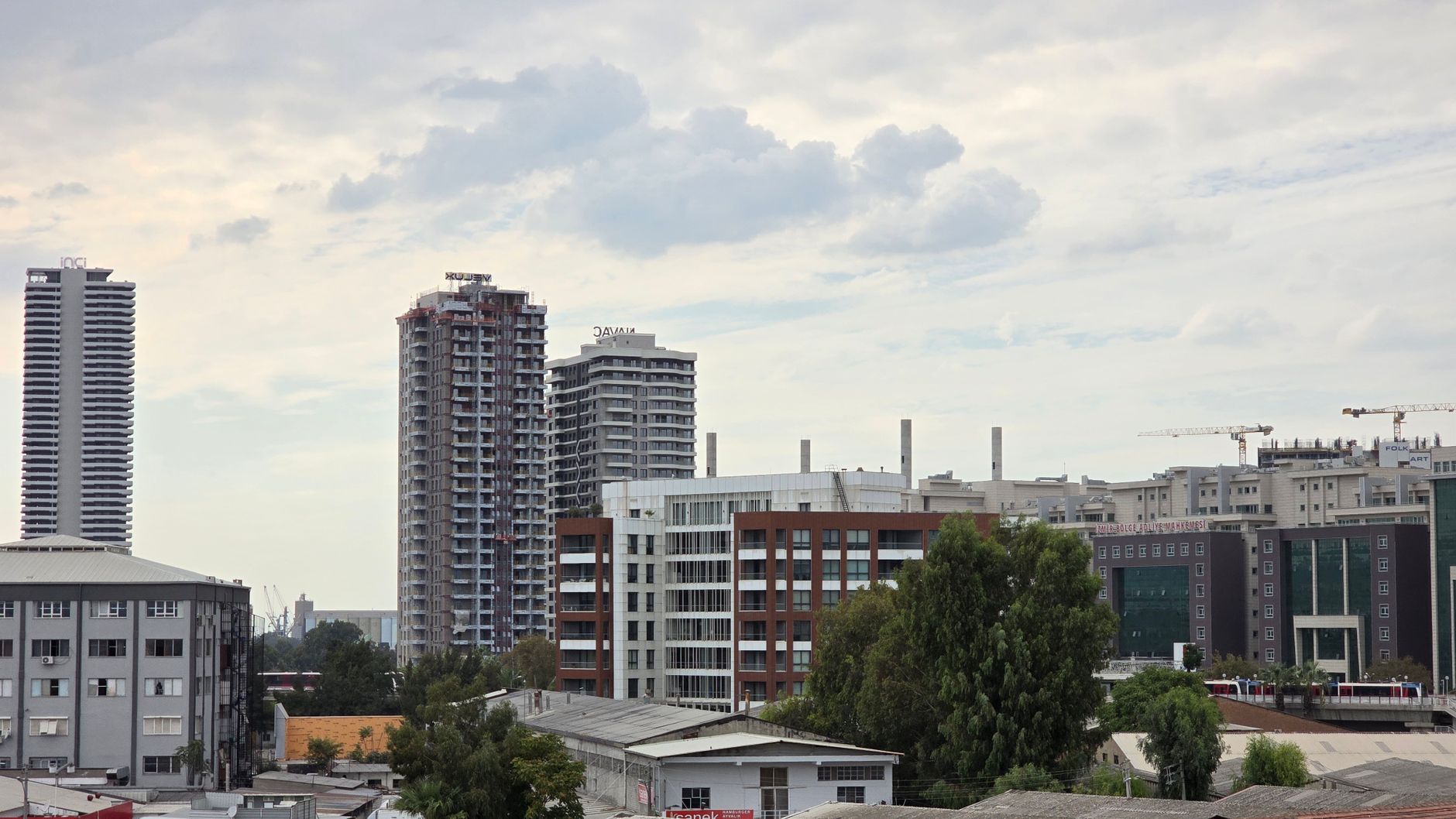
In Q1 2026, the total value of residential property transfers in Phuket rose 34.9% year-on-year, while the number of transfers increased by only 17.9%. That divergence between value and volume is a structural signal, not noise. Our analysts have been tracking this pattern for several quarters, and the underlying mechanism is now clear: softening Chinese demand is being displaced by an expansion of Russian buyers concentrating on Phuket and Chonburi province.
For internationally minded investors, this shift in demand composition has concrete consequences. Russian buyers operate in different price bands, favour different districts, and approach financing differently from the Chinese buyers who previously dominated foreign purchase flows. The result is a price realignment across specific market segments rather than a uniform rise or fall.
Quick answer
- Transfer value on Phuket rose 34.9% year-on-year in Q1 2026, while transfer count rose 17.9%, per registry data cited by International Investment (October 2026)
- Chinese demand is in structural retreat: Chinese tourist arrivals to Thailand fell roughly 34% in 2025 (to approximately 4.47 million), which, per Chiang Rai Times (October 2026), directly compresses the pipeline of prospective property buyers from China
- Russian buyers have taken the leading position among foreign purchasers in Phuket and Chonburi, concentrating activity in the condominium segment
- Condominium supply is expanding fast: new units launched in H1 2026 on Phuket were 44.8% higher than in H2 2025, building supply-side pressure in districts including Bang Tao and Kamala
- Koh Samui remains a villa-dominated market, with foreigners accounting for 85-90% of demand and total market value estimated at approximately 53.2 billion THB at the start of 2026
- Currency dynamics - specifically the THB/USD and THB/RUB relationships - are the key variables that will determine how long this demand shift persists
Options and scenarios
Scenario A: Russian demand dominance continues
If Western sanctions on Russia remain at current levels or tighten further, Russian capital flows into Thailand are likely to hold or grow. Based on our estimates, this scenario supports annual condominium price growth of 8-12% in THB terms in the 4-8 million THB band on Phuket's west coast, particularly in Bang Tao, Surin, and Kamala. Russian buyers show a strong preference for completed or near-complete units with managed rental programmes, which concentrates upward price pressure within that specific sub-segment.
For foreign investors, this means rising acquisition competition but also a more robust short-term rental market, as Russian tourists and Russian buyers tend to cluster in the same districts.
Scenario B: Partial recovery of Chinese demand
Data from February 2026 showed Chinese arrivals to Thailand up 82% year-on-year, albeit from a low base. The Thai government has set a target of 6 million Chinese tourists in 2026. If that target is met at even 70-80%, some Chinese investment demand may return, particularly in the sub-4 million THB condominium segment. Under this scenario, price pressure distributes more evenly across segments, and growth in the premium tier moderates to approximately 5-7% per year.
Scenario C: Supply-side correction
The 44.8% surge in new launches in H1 2026 relative to H2 2025 is a supply warning signal. If developers sustain this pace while Russian demand softens - for example due to a strengthening rouble or a partial easing of sanctions - selected locations could move into oversupply. Based on our on-the-ground monitoring, the highest exposure sits in northern Bang Tao and the Layan corridor, where a significant number of condominium projects remain under construction simultaneously.
Comparison table
| Parameter | Phuket - condominiums | Phuket - villas | Koh Samui - villas |
|---|---|---|---|
| Dominant foreign buyers (2026) | Russia, China (declining) | Mixed: Europe, Russia | Western Europe, Australia |
| Foreign share of demand | 50-65% (market estimates) | 40-55% (market estimates) | 85-90% |
| Transfer value growth Q1 2026 YoY | +34.9% | Aggregate data only | No quarterly data available |
| New units H1 2026 vs H2 2025 | +44.8% | 16 projects / 224 units | Limited new supply |
| Typical price range (THB) | 3-10 million | 8-30 million | 10-50 million |
| Typical price range (USD approx.) | 85,000-285,000 | 230,000-860,000 | 285,000-1,430,000 |
| Oversupply risk (our assessment) | Moderate to high | Low | Low |
| Resale liquidity | High | Medium | Low to medium |
USD equivalents are based on an indicative rate of approximately 35 THB per USD, as of mid-2026.
Risks and mistakes
Nationality concentration risk. A market where one country dominates the demand side is inherently exposed to geopolitical shocks. If Thailand were to introduce transactional or banking restrictions affecting Russian nationals - a low-probability but non-zero scenario - demand could contract sharply. We monitor the positions of the Thai Ministry of Foreign Affairs and the Bank of Thailand on this question continuously.
Extrapolating aggregate price growth. A 34.9% rise in transaction value does not mean individual unit prices rose by the same amount. A significant portion of that increase reflects a mix shift toward higher-value properties rather than uniform price appreciation. Investors should analyse price per square metre in a specific district, not market-wide aggregates.
Currency risk layering. In 2025, the THB/USD rate traded in a range of approximately 33-36 THB per USD. For investors holding capital in currencies other than USD, an additional exchange rate layer applies. The combined currency exposure can materially amplify or erode returns from property price appreciation.
Guaranteed rental return programmes. Phuket developers frequently offer 'guaranteed return' schemes running 3-5 years at 6-8% annually. In our data sets, we regularly find that these guarantees are priced into the purchase cost - the unit is sold at an inflated base price to fund the return. Investors should model the effective yield on a fair-market price, not the headline guarantee figure.
Supply pipeline risk in Bang Tao and Layan. With new launches up 44.8% half-on-half, the districts with the heaviest developer activity face potential saturation within an 18-24 month horizon. Anyone acquiring today should verify the development pipeline within a 2 km radius of their target property.
FAQ
Why are Russian buyers replacing Chinese buyers in Phuket?
Two factors converged. On the Chinese side, economic deceleration in mainland China and a roughly 34% drop in Chinese tourist arrivals to Thailand in 2025 compressed the pipeline of prospective buyers. On the Russian side, Western sanctions closed off European real estate markets, redirecting investment capital toward Thailand, the UAE, and Turkey. Phuket absorbed a disproportionate share of that redirected flow.
How is the shift in demand composition affecting condominium prices in Phuket?
Transaction value in Q1 2026 rose 34.9% year-on-year while transfer count rose only 17.9%. That gap indicates that incoming buyers - including Russian purchasers - are targeting higher-value units. The strongest price pressure in our monitoring sits in the 5-10 million THB segment, particularly in Kamala and Surin.
Will Chinese property demand in Thailand recover?
Partially, and gradually. February 2026 data showed Chinese arrivals up 82% year-on-year, though from a low base. A full recovery of investment demand requires improved consumer confidence in China and stabilisation of trade relations. Based on our estimates, a return to 2019-level activity would take at least two to three years.
Which Phuket districts face the highest oversupply risk in 2026?
Northern Bang Tao and the Layan corridor carry the highest exposure, given the concentration of active condominium projects in those areas. Across Phuket as a whole, new launches in H1 2026 rose 44.8% compared with H2 2025, and these two sub-districts account for a disproportionate share of that increase.
How does Koh Samui compare with Phuket as a market?
Koh Samui is structurally different: it is villa-dominated, with foreign buyers accounting for 85-90% of demand. Total residential market value was approximately 53.2 billion THB across 113 projects at the start of 2026, with villas representing around 30 billion THB of that figure. The market is less liquid than Phuket and less exposed to abrupt demand-mix shifts, but entry prices are higher and resale timelines are longer.
How does tourist arrival data relate to rental market performance?
We treat arrival volumes as a leading indicator. In our data sets, a 20-30% rise in arrivals from a given country translates - with a 6-12 month lag - into an 8-15% improvement in short-term rental occupancy in the districts popular with that nationality. The decline in Chinese arrivals has weighed on occupancy in Karon and Patong, while rising Russian arrivals have strengthened occupancy in Rawai and Nai Harn.
What is the typical entry cost for a Phuket condominium in 2026?
The standard market range runs from 3 to 10 million THB - approximately USD 85,000 to USD 285,000 at the indicative mid-2026 rate of 35 THB per USD. The premium sub-segment in Surin, Kamala, and Layan typically starts at 8 million THB and above.
Should investors be concerned about guaranteed rental return schemes?
Yes, with a specific caveat. The concern is not the guarantee structure itself but whether the base purchase price has been inflated to fund the promised return. We verify this on a project-by-project basis. Where that inflation is present, the effective yield on a fair-market valuation is materially lower than the headline figure - sometimes by 2-4 percentage points annually.
Our analytical conclusion for 2026: the 34.9% rise in Phuket transaction values does not distribute evenly across the market. It concentrates in the 5-10 million THB condominium band on the west coast. Simultaneously, the surge in new supply requires careful pipeline verification at the district level. Koh Samui offers lower oversupply risk with a higher entry threshold and lower resale liquidity. The key variables to monitor over the next two quarters are: Chinese arrival trajectory, the RUB/THB exchange rate, and the pace of new project launches in Bang Tao and Layan.
Researching property in Phuket or Koh Samui? Get in touch - our analysts will prepare a data brief for your shortlisted location.