

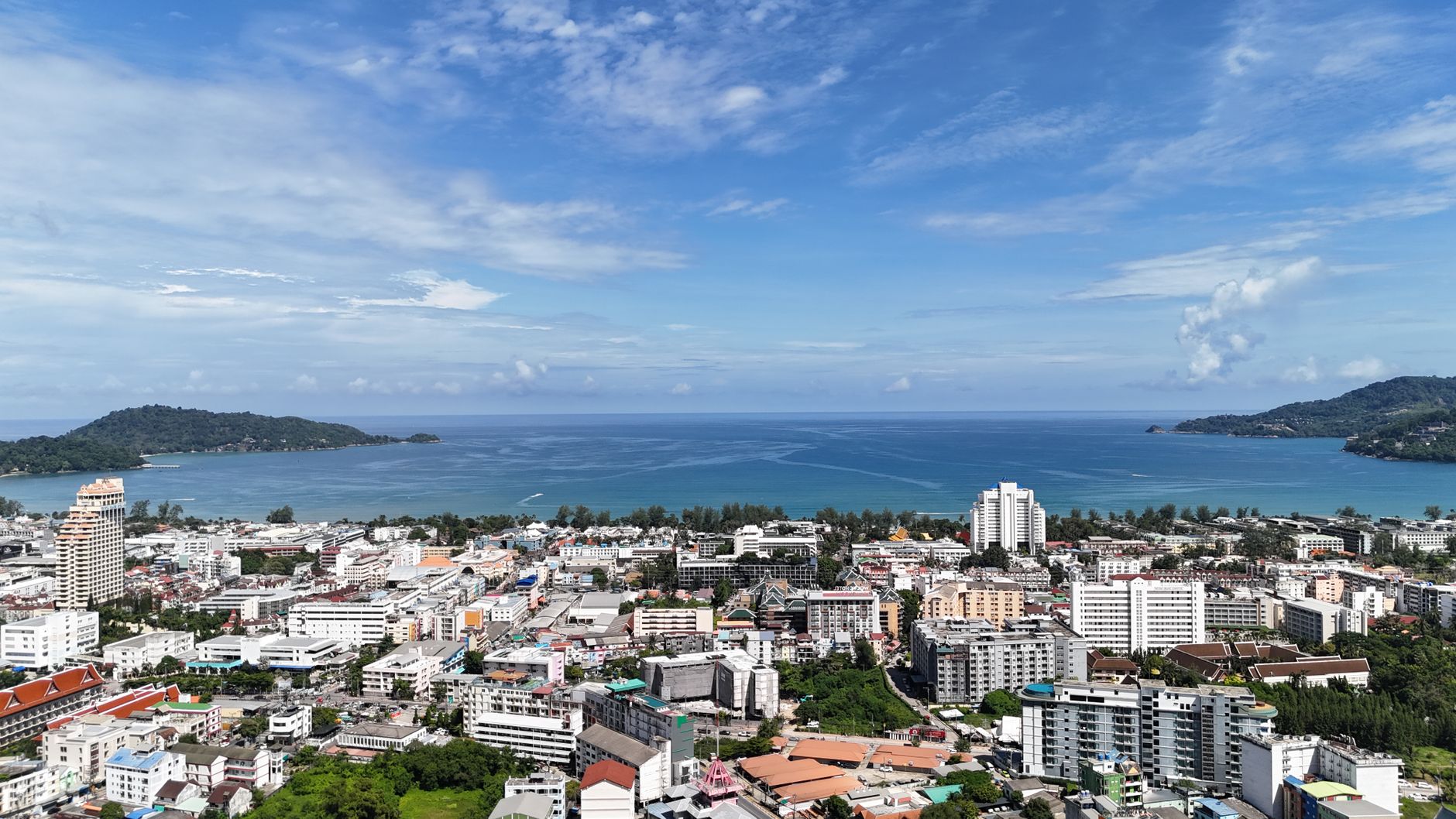
Based on our Q1 2026 monitoring, the average listing exposure time on the Phuket resale market runs from 8 to 14 months, depending on the segment. That is a fundamentally different dynamic from the primary market, where developers routinely close sales within weeks. Investors who purchased between 2021 and 2023 are now testing that liquidity firsthand and discovering that a clean exit requires at least 12 months of forward planning.
We have tracked transaction prices against listing prices on Phuket and Koh Samui since 2019. The core finding: the discount from asking price in the condo segment below USD 200,000 typically sits at 8-12%, while in the premium villa segment above USD 500,000 it reaches 15-22%. A seller who does not factor those figures into their projections will overstate expected annualised returns by several percentage points.
Quick answer
- Average listing exposure for freehold condo (foreign quota) in Phuket: 8-11 months (as of 2026, based on our estimates)
- Average listing exposure for leasehold or Thai-company-structure villas: 12-18 months
- Typical discount from asking price, segment below USD 200,000: 8-12%
- Typical discount in the premium segment above USD 500,000: 15-22%
- Total seller-side transaction costs: 4-7% of deal value (transfer tax, fees, agent commission)
- Koh Samui: exposure time runs 30-50% longer than a comparable Phuket segment, owing to the shallower buyer pool
Options and scenarios
Segment 1: freehold condo under USD 200,000
This is the highest-liquidity segment on the Phuket resale market. Freehold condos - held under full ownership within the statutory 49% foreign quota of a building - in Bang Tao, Kamala and Surin attract both yield-focused investors and lifestyle buyers. Our data shows that sea-view units inside well-managed rental programmes sell in roughly 8-10 months on average. Units without a sea view in older buildings with elevated sinking-fund charges can sit for 14-16 months.
For foreign buyers, freehold condo title remains the only form of Thai real estate that a non-citizen can own directly in their own name. That simplifies the resale process and shortens the due-diligence phase on the buyer side, which is a measurable liquidity advantage.
Segment 2: villas on leasehold or Thai company structure
Villas are harder to exit. The legal structure - whether a leasehold (typically 30+30+30 years) or ownership routed through a Thai limited company - demands deeper legal review from any prospective buyer. We observe on the ground that a meaningful share of interested parties withdraw once they review company documentation or lease conditions in detail. Based on our estimates, villas priced at USD 300,000-700,000 on Phuket's west coast - covering Layan, Surin and Nai Harn - carry an exposure window of 12-18 months. The asking-price discount is wider in this segment because the market is less transparent and every transaction involves individual negotiation over the legal structure.
Segment 3: off-plan contract assignment before completion
Selling a reservation agreement or off-plan contract via assignment is a distinct exit path. The constraints are material: many Phuket developers charge an assignment fee of 1-3% of the contract value, and a portion of contracts prohibit assignment until the buyer has paid a defined share of the purchase price (typically 30-50%). We monitor that in 2026 the supply of new Phuket launches is elevated, which means an off-plan assignment competes directly with the developer's own live inventory. A seller typically needs to price at a 5-10% discount to the developer's current headline price to generate genuine buyer interest.
Koh Samui: a shallower market
Koh Samui records fewer annual transactions than Phuket. Based on our estimates, the island sees roughly 150-250 foreign-buyer transactions per year, compared with 1,200-1,800 on Phuket. Bophut, Maenam and Chaweng offer the best relative liquidity, but exposure times still run 30-50% longer than equivalent Phuket segments. Villas on Lamai or in the island interior can require 24 months of active listing before closing.
Holding-period analysis: a Phuket condo worked example
Consider a condo in Bang Tao purchased at 6,000,000 THB (approximately USD 163,000 at Q1 2026 exchange rates).
Assumptions used in our model:
- Annual net rental income (after management fees, maintenance and vacancy allowance): 5% of property value, or 300,000 THB per year
- Annual capital appreciation: 3% (our estimate for well-located Phuket condo stock)
- Purchase transaction costs (registration fees, transfer tax, legal): 2%, or 120,000 THB
- Sale transaction costs: Specific Business Tax of 3.3% applies if held under 5 years; Stamp Duty of 0.5% applies if held 5 years or more; plus withholding tax and agent commission of 3-5%. Total estimated at 5-7% for shorter holds and 4-5% for longer holds
3-year horizon:
- Cumulative net rent: 900,000 THB
- Estimated property value: approx. 6,556,000 THB (3% p.a. appreciation)
- Transaction price after 10% discount: approx. 5,900,000 THB
- Sale costs at 6%: 354,000 THB
- Net result: 5,900,000 + 900,000 - 354,000 - 6,120,000 = 326,000 THB
- Annualised real return: approx. 1.8%
5-year horizon:
- Cumulative net rent: 1,500,000 THB
- Transaction price after 8% discount: approx. 6,400,000 THB
- Sale costs at 4.5%: 288,000 THB
- Net result: 6,400,000 + 1,500,000 - 288,000 - 6,120,000 = 1,492,000 THB
- Annualised real return: approx. 4.9%
10-year horizon:
- Cumulative net rent: 3,000,000 THB
- Transaction price after 6% discount: approx. 7,580,000 THB
- Sale costs at 4%: 303,000 THB
- Net result: 7,580,000 + 3,000,000 - 303,000 - 6,120,000 = 4,157,000 THB
- Annualised real return: approx. 6.8%
The pattern is clear. At a 3-year horizon, the Specific Business Tax (3.3%) and total transaction costs materially compress returns. At 5 years, the seller crosses into the lower Stamp Duty regime (0.5%), which substantially improves the outcome. At 10 years, cumulative rental income and appreciation together absorb all transaction costs with a comfortable margin.
Market-timing observations
We monitor the Phuket resale cycle and identify several factors that shift conditions in the seller's favour:
- High season (November to March): buyer activity is highest, particularly from Europe and Russia. Listings placed in September or October are well-positioned to transact during peak season
- Developer supply cycles: when developer completions are sparse - a pattern that recurs roughly every 3-4 years - resale stock gains relative appeal. In 2026 we observe elevated off-plan supply, which is a headwind for resale sellers
- THB/USD and THB/EUR movements: a 5-10% baht depreciation increases price attractiveness for foreign buyers. Investors settling in other currencies should monitor cross rates closely when timing a listing
- Regulatory signals: discussions around raising the foreign quota ceiling above the current 49% can generate short-term buyer interest, though no legislative change has been enacted as of 2026
Comparison table
| Parameter | Freehold condo under USD 200k | Leasehold villa USD 300k-700k | Off-plan assignment | Koh Samui condo |
|---|---|---|---|---|
| Avg. exposure time | 8-11 months | 12-18 months | 3-8 months | 11-16 months |
| Discount from asking price | 8-12% | 15-22% | 5-10% vs developer price | 10-15% |
| Total seller-side costs | 4-6% | 5-7% | 1-3% assignment fee | 4-6% |
| Legal complexity | Low | High | Medium | Low |
| Buyer pool | Broad (foreign buyers) | Restricted | Investors | Narrower than Phuket |
| Optimal hold horizon | 5+ years | 7+ years | Before completion | 5+ years |
Risks and mistakes
- Overpricing relative to the market is the most common seller error we record. Sellers benchmark against developer primary prices and ignore the resale discount. Our listings data includes properties sitting unsold for 18 months or more with no price adjustment
- Incomplete legal documentation: resale buyers expect a full documentation pack - Chanote title or lease agreement, tax settlement records, and company documents if applicable. Missing paperwork adds months to the timeline
- Underestimating total sale costs: Specific Business Tax at 3.3% (for sub-5-year holds), progressive withholding tax, and agent commission at 3-5% combine to absorb 4-7% of the transaction value. This figure must be modelled before setting an asking price
- Currency risk: an investor who purchased at a stronger home-currency-to-THB rate and sells at a weaker rate can lose an additional 10-12% on the currency conversion alone, independent of any change in THB-denominated value
- Nominee shareholder structures under scrutiny: the Land Department has increased scrutiny of Thai companies with nominee shareholders used to hold property. Transactions involving such structures face a higher risk of delays or challenge during the sale process
- Absence of an exit strategy at the time of purchase: many buyers do not analyse segment liquidity before committing. A villa priced at USD 800,000 in a remote Koh Samui location can become effectively illiquid for years. Liquidity analysis should precede any acquisition decision
FAQ
How long does it typically take to sell a resale condo in Phuket in 2026?
Based on our tracking data, the average exposure time for a freehold condo under USD 200,000 in popular districts such as Bang Tao, Kamala and Surin is 8-11 months. Units in less desirable locations or poor condition can remain listed for 14-16 months.
What taxes does a seller pay when selling property in Thailand?
For properties held under 5 years, Specific Business Tax of 3.3% applies alongside withholding tax. For holds of 5 years or more, SBT is replaced by the lower Stamp Duty of 0.5%. Withholding tax is progressive and depends on the assessed value and holding period. Combined tax costs typically amount to 2-4% of transaction value.
Can I assign an off-plan contract before the property is completed?
Yes, but with constraints. Many Phuket developers charge an assignment fee of 1-3% and require a minimum of 30-50% of the purchase price to have been paid before they will consent to an assignment. In 2026, high off-plan supply means an assignment must be priced at a 5-10% discount to the developer's current price to attract a buyer.
What is the realistic annualised return on a Phuket condo sold after 5 years?
Based on our modelling - incorporating net rental income, capital appreciation at 3% per year and full transaction costs on both sides - we estimate an annualised real return of approximately 4.5-5.5% at a 5-year horizon. The actual figure varies by location, condition and market conditions at the time of sale.
Is the Koh Samui resale market liquid?
Koh Samui has a substantially shallower market than Phuket. We estimate 150-250 foreign-buyer transactions per year on the island. Exposure times run 30-50% longer than equivalent Phuket segments. The best relative liquidity is found in Bophut and Maenam for both condos and villas.
When is the best time to list a property for sale on Phuket?
In our assessment, listing in September or October gives a property the best chance of transacting during the high season (November to March), when European and other international buyer activity is at its peak.
How does THB exchange-rate movement affect a seller's net result?
Exchange-rate movement has a direct impact on the return measured in the seller's home currency. Swings of 10% or more over a multi-year hold are not uncommon. We advise monitoring the rate and, where possible, timing a sale during periods of relative baht strength against the seller's reference currency.
What agent commission is standard on the Phuket resale market?
The market standard is 3-5% of transaction value, paid by the seller. In the premium segment commission is sometimes negotiable. Selling without an agent eliminates that cost but removes access to an established buyer database, which typically extends the exposure period.
Do internationally based investors owe tax in their home country on a Thai property sale?
This depends on each investor's country of tax residence and any applicable double-taxation treaty with Thailand. Many jurisdictions tax foreign property gains, though tax paid in Thailand may be creditable. We strongly recommend consulting a tax adviser experienced in cross-border real estate transactions before completing a sale.
Researching property in Phuket or Koh Samui? Get in touch - our analysts will prepare a data brief for your shortlisted location.