

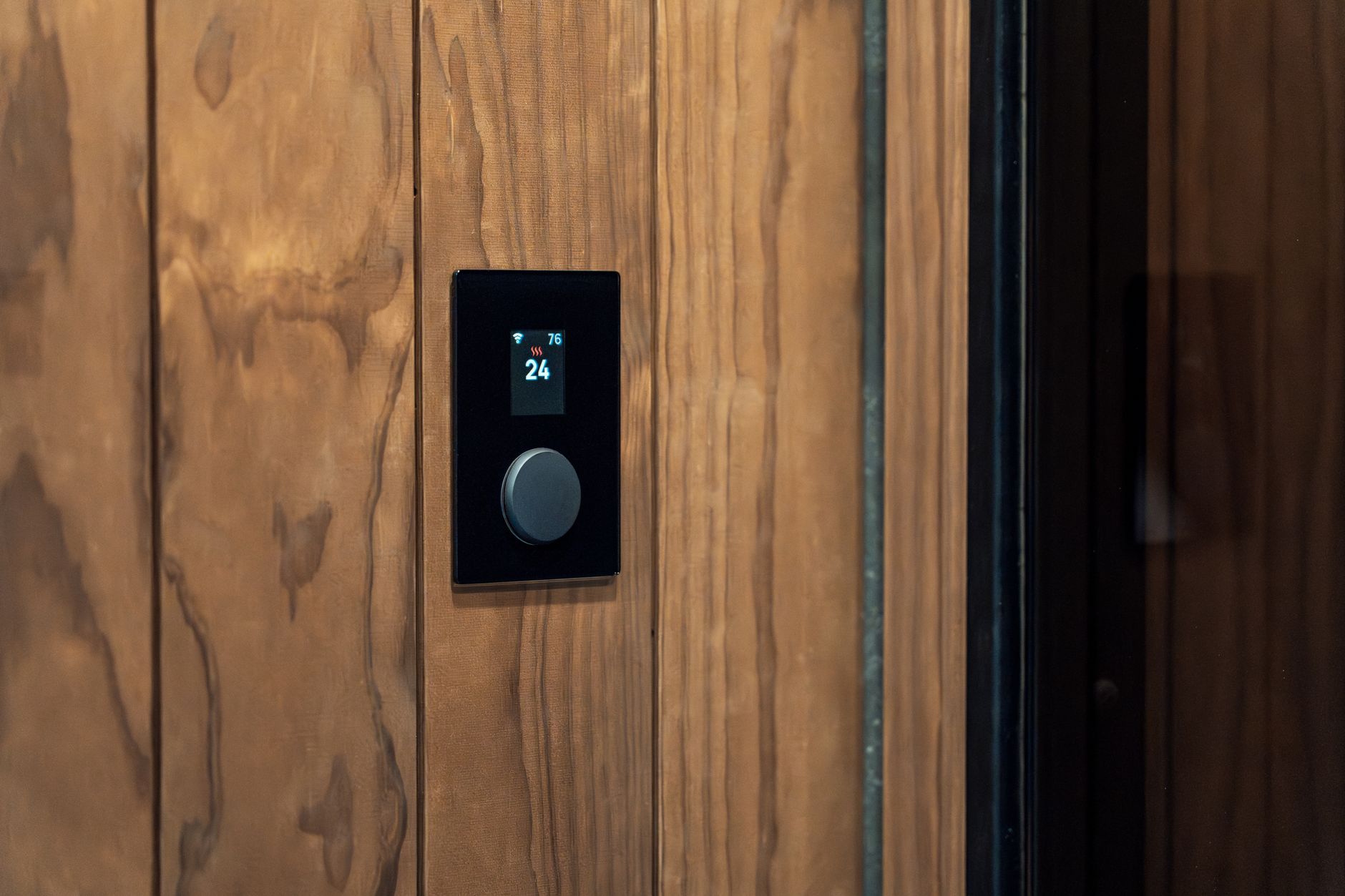
Based on market data from August 2026, villas with full home automation in Bang Tao, Cherng Talay, and Kamala are listed at asking prices 8-15% higher than comparable properties without smart-home systems. At the same time, based on our estimates, the average cost of installing automation in a new villa runs between 350,000 and 900,000 THB (roughly USD 9,700-25,000 at current rates). Not every component of that investment translates directly into higher rent.
Our analysts have tracked this segment for several years and observe a clear structural shift: smart-home technology in Phuket has moved from a luxury add-on to a baseline expectation among short-term tenants and owners managing assets remotely from Europe or Australia. New residential developments on Phuket's western coast now routinely include integrated automation in their base specification. The relevant question for investors today is no longer whether to install smart systems, but which specific technologies produce a measurable lift in rental income and resale value.
Quick answer
- Climate management (smart air-conditioning units, occupancy sensors) cuts electricity costs by an estimated 15-25% during low-season months, per market estimates
- Remote monitoring and keyless entry show the strongest correlation with higher guest ratings on booking platforms - in our data sets, villas with keyless access record 10-20% higher occupancy in the May-to-October shoulder season
- Solar PV systems with energy management pay back in approximately 4-6 years on Phuket, assuming a mix of owner occupation and rental income
- Remote property management (gate, pool, lighting control via a mobile app) is particularly valuable for owners based outside Thailand who do not retain an on-site property manager
- Premium AV and mood lighting improve listing photography and perceived quality, but their isolated impact on daily rental rates is difficult to quantify - we treat them as presentation costs rather than yield-generating investments
- Automated villas sell faster and sustain more consistent occupancy than non-tech properties, particularly in the segment above 15 million THB
Options and scenarios
Option A: Base smart-home package (budget 350,000-500,000 THB)
This tier covers smart climate control (Daikin or Mitsubishi units with Wi-Fi modules), an electronic lock with single-use access codes, an IP camera system (4-6 points) with in-app live view, and central LED lighting control. Based on our analysis, this configuration is sufficient for a villa in Cherng Talay or Kamala to register as 'smart-enabled' in the eyes of a tenant arriving from Europe or Australia. We estimate this package allows the daily rental rate to be positioned 5-10% above an otherwise identical property without automation.
Option B: Extended package with solar integration (budget 600,000-900,000 THB)
Building on the base tier, this option adds a 5-8 kWp solar PV array with a hybrid inverter and battery storage, an intelligent pool controller (pump scheduling, pH and chlorine dosing), water-leak and smoke sensors with push alerts, and a real-time energy dashboard. In Bang Tao and Layan, where villa rooflines tend to offer large south-facing surfaces, solar is particularly cost-effective. Per market estimates, a 6 kWp installation on Phuket generates savings in the range of 4,000-6,000 THB per month at full occupancy. From a resale perspective, properties with solar integration have shown stronger value retention than comparable non-solar assets, according to data we monitor on an ongoing basis.
Option C: Full premium automation (budget 1,200,000-2,000,000 THB)
A complete system based on KNX or Control4 architecture: programmed lighting scenes, motorised blinds and shutters, integrated AV (multi-room audio, dedicated home-cinema space), automated gate and garage, an EV charging station, and AI-assisted motion recognition for security. Our on-the-ground verification shows that this tier makes economic sense only for villas priced above 25 million THB - specifically properties on Kamala's Millionaire's Mile or in premium gated developments in Layan and Surin. In that segment, buyers treat full automation as a baseline, not a differentiator.
Comparison table
| Parameter | Option A - Base | Option B - Solar+ | Option C - Premium |
|---|---|---|---|
| Installation cost (THB) | 350,000-500,000 | 600,000-900,000 | 1,200,000-2,000,000 |
| Installation cost (USD, approx.) | 9,700-13,900 | 16,700-25,000 | 33,300-55,600 |
| Daily rental rate uplift | 5-10% | 10-15% | 12-18% |
| Estimated payback period | 2-3 years | 4-6 years | 6-10 years |
| Impact on resale value | Moderate | Significant | High, but niche |
| Best-fit locations | Cherng Talay, Kamala | Bang Tao, Layan | Kamala (Millionaire's Mile), Surin |
| Servicing complexity | Low | Medium | High - requires a local system integrator |
| Full remote management | Yes | Yes | Yes, but technical support needed |
Risks and mistakes
Buying a specification promise rather than a working system
We monitor cases in which a developer markets a project as 'smart-home ready' in off-plan materials, but delivers only structured cabling without any end devices. Investors purchasing off-plan should require a detailed equipment schedule - brand, model, and integration scope - as a contract appendix. The phrase 'smart villa' in a brochure carries no contractual weight on its own.
Technology obsolescence within 3-5 years
A smart-home system built on a single manufacturer's closed ecosystem can become difficult to service if that manufacturer discontinues the product line. We recommend systems built on open protocols (Zigbee, Z-Wave, Matter) or, at minimum, platforms with a demonstrated local service network in Thailand. This is particularly relevant for Control4 and older proprietary systems.
Overestimating the rental premium
Short-term tenants pay primarily for location, sea view, and finish quality. Smart home features are a supporting factor, not a deciding one. Based on our estimates, automation accounts for roughly 5-15% of the total rental premium; the remainder comes from physical attributes. Spending 2 million THB on premium automation in a poorly located villa - for example, an inland Thalang property with no view - will not recover that investment through rental income.
Tropical climate accelerates hardware degradation
Phuket's relative humidity sits at 70-90% for most of the year, which accelerates corrosion in outdoor-mounted electronics. Our on-the-ground checks confirm that control panels installed externally without adequate IP-rated enclosures show corrosion within two to three monsoon seasons. For a mid-range system (Option B), we estimate an annual maintenance budget of 15,000-25,000 THB.
Currency movement as a variable
As of August 2026, the THB has experienced volatility driven by geopolitical signals and US monetary policy signals, per Bank of Thailand data. Investors calculating returns in USD or EUR need to factor exchange-rate risk into payback projections, particularly for Option C with its 6-10 year horizon.
FAQ
Does smart-home technology actually raise rental rates in Phuket villas?
Yes, but within defined limits. Based on our estimates, smart climate control, keyless entry, and remote monitoring allow daily rates to be positioned 5-15% above comparable non-automated villas, depending on location and price tier. The strongest effect appears in Bang Tao and Cherng Talay properties let to European and Australian travellers.
What does a smart-home installation cost in a new Phuket villa in 2026?
A base package covering climate control, electronic locks, cameras, and lighting runs 350,000-500,000 THB. An extended package with solar PV costs 600,000-900,000 THB. Full premium automation is in the range of 1,200,000-2,000,000 THB. These figures apply to 3-4 bedroom villas as of 2026.
Which smart-home systems have the shortest payback period?
Based on our analysis, smart climate control (15-25% energy savings) and keyless entry systems (eliminating the cost and logistics of physical key handovers) return the investment fastest. We estimate a 2-3 year payback at regular rental occupancy.
Can I manage a Phuket villa remotely from another country?
Yes. Cloud-connected Wi-Fi systems allow full control of climate, lighting, gate, pool, and security cameras via a mobile app from anywhere. Fibre internet at 100-300 Mbps is available in most western-coast Phuket districts, including Bang Tao, Cherng Talay, Kamala, and Surin.
Do Phuket developers include smart home in the base specification?
Increasingly, yes. New projects in Bang Tao, Cherng Talay, and Kamala routinely list integrated automation as standard as of 2026. However, the scope varies considerably - from full integration to bare structural cabling only. We recommend verifying the detailed equipment schedule before signing any purchase agreement.
Are solar panels a sound investment for a Phuket villa?
Phuket averages 1,800-2,000 hours of direct sunlight per year. A 6 kWp installation generates estimated savings of 4,000-6,000 THB per month at full villa occupancy. The estimated payback period is 4-6 years, making solar one of the more straightforward technology investments in the segment.
How does the tropical climate affect smart-home hardware longevity?
High humidity (70-90%) and monsoon rainfall accelerate corrosion in any externally mounted electronics. Minimum IP65 protection rating is required for outdoor components. Owners should plan for an annual servicing budget of 15,000-25,000 THB for a mid-range system.
Does smart-home integration affect villa resale value?
Yes. Villas with automation and solar integration sell faster and maintain value better than non-tech properties, based on our tracking of western-coast Phuket listings. The effect is strongest in the above-15-million-THB segment.
Do the same technologies apply to Koh Samui?
Broadly yes, with one qualification. Internet infrastructure on Koh Samui is less developed than on Phuket. Fibre connectivity is available in Bophut and Maenam, but more remote parts of the island - particularly southern Lamai - can have inconsistent speeds that limit the reliability of cloud-dependent systems. Our analysts continue to monitor network rollout on Samui.
What is the most cost-effective smart-home package for an investment villa?
For a villa in Bang Tao, Cherng Talay, or Layan targeting short-term rentals, Option B (solar-extended package) represents the most balanced choice in our assessment. It delivers a measurable rental uplift (10-15%), real energy savings, and a resale argument, at a payback period of 4-6 years. Option C is justified only for properties priced above 25 million THB in the luxury segment.
Researching property in Phuket or Koh Samui? Get in touch - our analysts will prepare a data brief for your shortlisted location.