

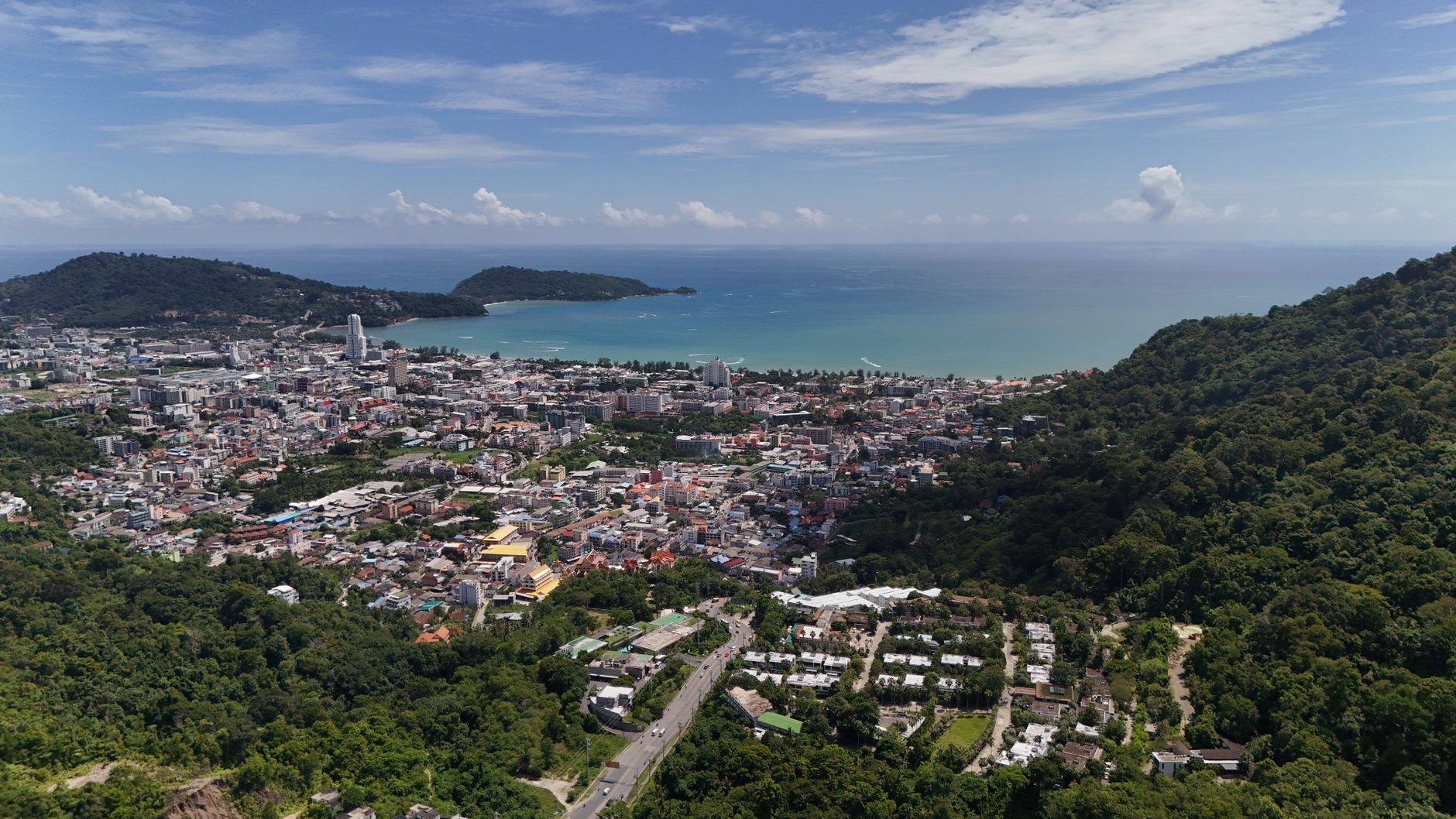
In October 2026, Thailand's Ministry of Interior and the Land Department confirmed that regulatory work is under way to raise the foreign ownership quota in condominium buildings from 49% to 75% of a project's total floor area. Under the same proposal, foreign voting rights at juristic-person meetings would remain frozen at 49% - a structure our analysts refer to as the quota split (75/49). The proposal is currently in the Regulatory Impact Assessment phase and still requires Cabinet and parliamentary approval. As of the date of this analysis, no amendment to the Condominium Act has taken effect.
The practical question for any investor considering a condominium purchase in Phuket or Koh Samui is straightforward: commit under current law, or wait for new legislation? We have been tracking this legislative process since mid-2024, when initial reform concepts appeared in government working documents. Below we set out the data, the legal mechanics, and the three scenarios our team considers most plausible.
Quick answer
- The current foreign ownership ceiling under Section 19 bis of the Condominium Act is 49% of a building's total floor area. As of 2026, this limit is in force and unchanged.
- The proposed reform would raise that ceiling to 75%, while keeping foreign voting rights capped at 49% - the quota split model.
- Land Department data from October 2026 show a decline in new condominium construction permits and registrations, signalling a contraction in supply.
- Foreign nationals may purchase residential land only if they invest a minimum of 40 million THB in a qualifying business and maintain that investment for five years, for a maximum plot of 1 rai (1,600 sq m) - a threshold that excludes most individual buyers.
- The Land Department has stepped up enforcement against nominee structures, where Thai nationals hold land title on behalf of foreign buyers.
- A parallel reform track under the Sapp-ing-sith Act proposes extending the maximum land lease term from 30 to 99 years.
Options and scenarios
Scenario A: The bill passes broadly as drafted (12-18 month horizon)
If parliament approves the 75% ceiling with voting rights frozen at 49%, developers across Phuket and Koh Samui would be able to sell a materially larger share of units to foreign buyers. Based on our project-level data, this matters most in Bang Tao, Layan, and Surin on Phuket, where foreign demand routinely exhausts the existing 49% quota within the first months of a sales launch. For an investor who buys today under the 49% rule, a higher foreign quota would expand the secondary-market buyer pool at the point of resale.
The governance caveat is significant: buyers in the 49-75% tranche would hold no voting rights at juristic-person meetings. The building's management decisions - including service charge budgets, contractor selection, and house rules - would remain under the control of a minority of owners by floor area, which creates a structural misalignment between economic interest and governance power.
Scenario B: The bill stalls or is shelved (18-36 month horizon)
Thailand's legislative history offers relevant precedent. Comparable quota-increase proposals surfaced in 2015 and 2019; neither was enacted. In this scenario the 49% ceiling holds. Declining new condominium supply (confirmed by October 2026 Land Department figures) combined with sustained tourism demand in Phuket supports upward price pressure regardless of any legislative change. An investor who purchases under the current rules benefits from constrained supply-side competition.
Scenario C: The bill passes with modifications, for example a 60% ceiling (18-36 month horizon)
In our assessment this is the most probable outcome. Civil society groups in Thailand have raised concerns about foreign majority ownership of residential communities. A compromise ceiling of 60% - paired with the 49% voting cap - would represent a measured liberalisation: enough to improve secondary-market liquidity without fundamentally restructuring ownership patterns. We note that a 60/49 split would still create a governance gap, though a narrower one than the 75/49 version.
Comparison table
| Parameter | Current law (49%) | Proposed reform (75/49) | Compromise scenario (60/49) |
|---|---|---|---|
| Foreign ownership ceiling | 49% of floor area | 75% of floor area | 60% of floor area |
| Foreign voting rights | 49% | 49% (frozen) | 49% (frozen) |
| Secondary-market liquidity | Limited - narrow foreign buyer pool | Significant increase in potential buyers | Moderate increase |
| Community governance | Proportional to ownership share | Disproportionate - 75% ownership, 49% votes | Mild disproportion |
| Regulatory risk for buyers today | None - law is settled | New rules could shift price dynamics | Moderate |
| Estimated timeline to effect | In force now | 12-18 months (optimistic) | 18-36 months |
| Price impact in Bang Tao and Bophut | Steady upward pressure | Possible 8-15% rise, per our estimates | 4-8% rise, per our estimates |
Risks and mistakes
Risk 1: The quota split and real investor protection. Under the 75/49 model, a foreign buyer in the 49-75% tranche holds no vote at the juristic-person meeting. In practice, that means no influence over the choice of property manager, maintenance budgets, or building regulations. We flag this particularly for projects on Koh Samui - in Bophut and Maenam, short-term rental occupancy rates correlate directly with management quality, so governance rights carry measurable economic value.
Risk 2: Tightening enforcement against nominee structures. October 2026 Land Department data confirm intensified audits of Thai companies where foreign shareholders hold more than 49% of equity. Investors using Thai company structures to hold villa-type assets in Rawai and Nai Harn on Phuket should treat this as an active legal risk, not a theoretical one. Detection can result in transaction voidance and administrative penalties.
Risk 3: Legislative timing. Waiting for new legislation carries a price risk. Land Department registration data for 2026 point to a shrinking pipeline of new condominium projects. With Phuket Airport handling an estimated 9.5 million passengers in 2025 (per market estimates) and arrivals continuing to grow, asking prices in Kamala and Surin are rising independently of any regulatory reform. Delay means buying into a tighter supply environment.
Mistake 4: Assuming the reform covers land ownership. The proposed 75% ceiling applies exclusively to condominiums under the Condominium Act. Land acquisition rules for foreign nationals - the 40 million THB investment threshold under Section 96 bis of the Land Code - are a separate regulatory track and are not addressed by the current proposal.
Mistake 5: Overlooking currency exposure. The THB/USD rate and cross rates against other currencies introduce meaningful variability. For reference, a condominium priced at 8 million THB sees its foreign-currency equivalent shift by thousands of dollars with a move of just a few satang in the exchange rate. Investors should model purchase costs and projected resale proceeds in a consistent base currency and stress-test for a 5-10% adverse rate move over a typical 3-5 year holding period.
FAQ
Is the 75% foreign ownership limit already in force in Thailand?
No. As of October 2026, the proposal to raise the condominium foreign ownership ceiling from 49% to 75% is in the Regulatory Impact Assessment phase. It requires Cabinet and parliamentary approval before it can take effect. The operative limit remains 49%.
What does the 75/49 quota split mean for voting rights?
If the reform passes in its current form, foreign nationals could collectively own up to 75% of a building's floor area, but their aggregate voting rights at juristic-person meetings would be capped at 49%. Buyers in the 49-75% ownership tranche would have no vote on management decisions.
Should an investor buy a condo in Phuket now or wait for the new law?
Based on our analysis, the decision depends on the investment horizon. Buying today under the 49% rule secures full voting rights proportional to ownership. If the reform passes, secondary-market liquidity improves, widening the pool of eligible foreign resale buyers. Waiting carries the risk of purchasing into a supply-constrained market at higher prices.
How would the reform affect prices in Bang Tao and Bophut?
Per our estimates, a ceiling increase to 75% could translate into an 8-15% price increase in locations with strong foreign demand: Bang Tao, Surin, and Layan on Phuket, and Bophut on Koh Samui. Under the 60% compromise scenario, we estimate a more modest 4-8% uplift.
Is the 99-year lease proposal part of the same legislation?
No. The proposed extension of land lease terms from 30 to 99 years falls under the Sapp-ing-sith Act and is being processed on a parallel legislative track. Both reforms share the broader objective of improving Thailand's competitiveness relative to neighbouring real estate markets.
Can a foreign national buy land in Thailand?
In a limited sense. Section 96 bis of the Land Code permits a foreign individual to purchase up to 1 rai (1,600 sq m) of residential land, subject to a minimum investment of 40 million THB in a qualifying business maintained for at least five years. This threshold places direct land ownership out of reach for most individual investors.
What are the consequences of using a nominee structure in Phuket?
The Land Department classifies a Thai company with more than 49% foreign equity as a foreign entity, which cannot hold land title. If a nominee structure is detected, the transaction can be voided and administrative penalties applied. Enforcement activity has increased visibly in 2026, based on Land Department case data we monitor.
How does Phuket tourism volume connect to condominium prices?
We track this correlation on a quarterly basis. In our data sets, increases in arrivals at Phuket Airport translate into higher short-term rental occupancy with a lag of roughly two to three quarters, which then feeds into stronger asking prices for new condominium launches.
When could the reform realistically take effect?
In the optimistic case, 12-18 months from October 2026. Given that comparable proposals in 2015 and 2019 were not enacted, a horizon of 18-36 months - or the possibility that the bill is withdrawn - remains a realistic planning assumption.
Researching property in Phuket or Koh Samui? Get in touch - our analysts will prepare a data brief for your shortlisted location.