

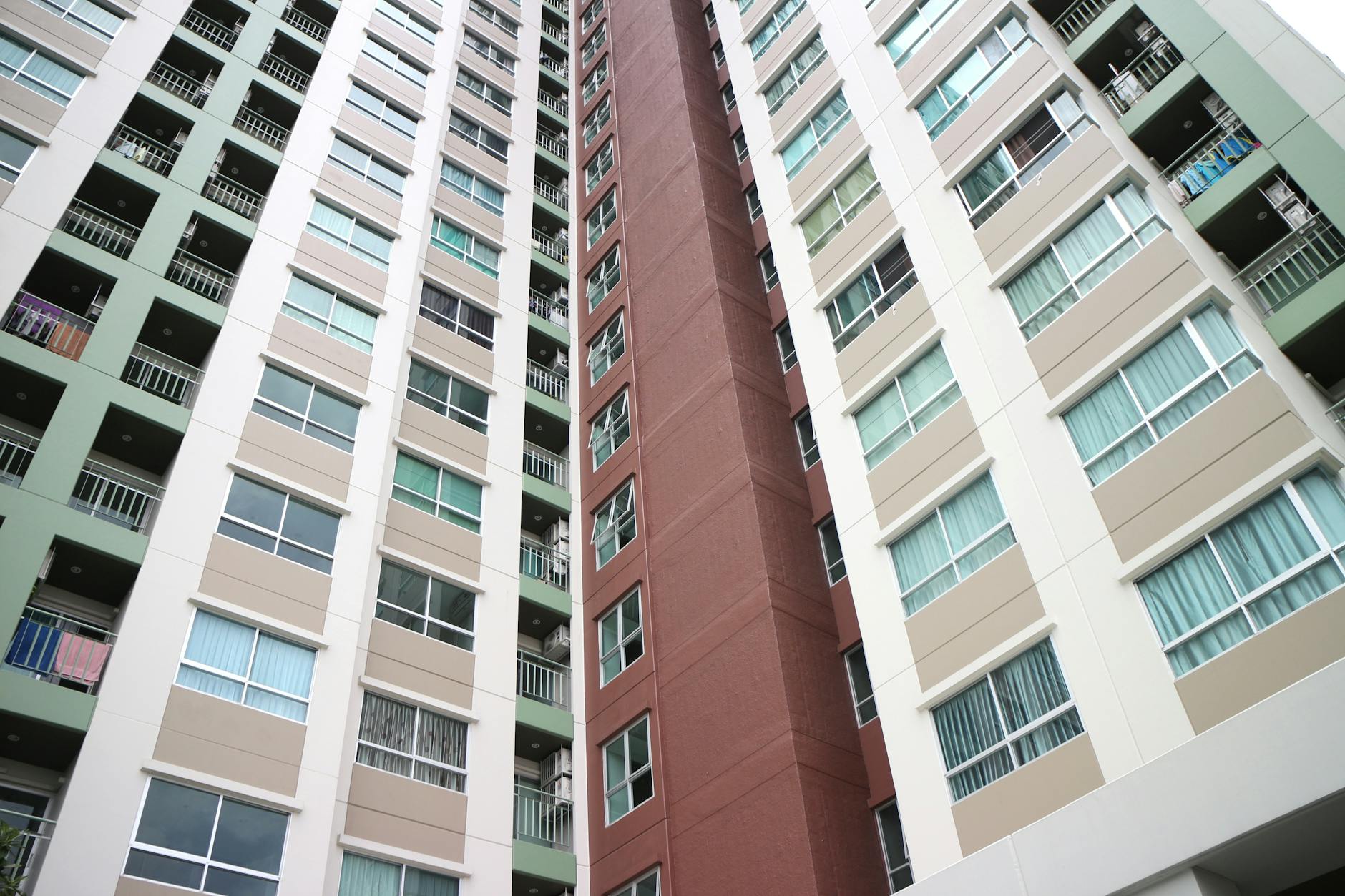
As of October 2026, Bangkok's condominium market was carrying over 65,300 unsold units with a combined estimated value of around 370 billion THB. A substantial share of that overhang, according to Cushman & Wakefield Thailand, is a direct consequence of mass mortgage rejections by Thai commercial banks. For a foreign investor planning an exit from a Phuket or Koh Samui condo position, Bangkok's figures are not abstract data points. They reflect a structural liquidity problem that runs across the entire Thai condominium sector.
The mechanism is straightforward. A foreign buyer who holds a freehold condo unit typically expects to resell to a local Thai buyer or to another international investor. When banks systematically reject Thai mortgage applications, the pool of eligible local buyers shrinks. At the same time, the structure of transfer fees creates a cost asymmetry that further reduces resale attractiveness from the perspective of the domestic market.
Quick answer
- The Thai government extended reduced transfer fees (0.01% instead of the standard 2%) for properties valued up to 7 million THB, but only until 30 June 2027 and exclusively for Thai citizens.
- Foreign sellers of condominium units still pay the standard transfer fee of 2% of the Land Office appraised value at registration.
- Based on October 2026 data, approximately 55% of unsold Bangkok stock consists of units priced below 3 million THB, rising to around 76% when the threshold is extended to units at or below 150,000 THB per sq m.
- Mortgage rejections are blocking ownership transfers and, per Cushman & Wakefield estimates, extending average exit timelines by 2 to 3 years.
- Chinese buyer demand has contracted: condo transfers to buyers from China declined by roughly 13% in 2025, and the first half of 2026 showed no reversal of that trend.
- In Phuket and Koh Samui the problem is structurally smaller than in Bangkok due to the dominance of foreign buyers in the premium segment, but the underlying risk mechanism is identical.
Options and scenarios
Selling a condo under 7 million THB to a Thai buyer (before 30 June 2027)
Under this scenario, the Thai purchaser benefits from the reduced transfer fee of 0.01%. On a unit valued at 5 million THB, that represents a saving of approximately 90,000 THB relative to the standard 2% rate. It is a genuine demand incentive for the domestic market, but it expires at end of June 2027 and applies exclusively to Thai nationals. The practical constraint is that even with lower fees, banks continue to reject a significant share of mortgage applications, which limits actual conversion from expressed interest to closed transactions.
Selling a condo to a foreign buyer
Foreign purchasers receive no fee reduction. The transfer fee remains 2% of the Land Office appraised value, and mortgage registration fees (where applicable) are 1% of the loan amount. In practice, most resale transactions in Phuket and Koh Samui above 10 million THB occur between foreign parties. Based on our monitoring across districts including Bang Tao, Layan, and Bophut, time-on-market lengthens noticeably when asking prices exceed the local median by more than 15 to 20%.
Holding the unit and leasing while waiting for liquidity to recover
Cushman & Wakefield estimates a market normalisation horizon of 2 to 3 years from end-2026. For an investor holding a condo in Kamala, Surin, Chaweng, or Lamai, this implies carrying the asset through that window. Ongoing costs include common area fees (typically 40 to 80 THB per sq m per month depending on project grade), building insurance, and applicable land and building tax. Short-term rental operations in well-located Phuket districts generate, based on our estimates, 5 to 7% gross yield annually, but require active property management.
Comparison table
| Parameter | Sell to Thai buyer (by 30 June 2027) | Sell to foreign buyer | Hold and lease |
|---|---|---|---|
| Transfer fee | 0.01% (government concession) | 2% of appraised value | Not applicable |
| Mortgage registration fee | 0.01% (concession) | 1% of loan amount | Not applicable |
| Buyer pool depth | Constrained by mortgage rejections | Shrinking (Chinese demand decline) | Not applicable |
| Estimated transaction timeline | 6 to 18 months | 3 to 12 months (premium segment) | No sale event |
| Annual holding costs | None after sale | None after sale | 40 to 80 THB/sq m/month plus taxes |
| Currency conversion risk | One-off at settlement | One-off at settlement | Ongoing on rental repatriation |
| Exit horizon | Before June 2027 (concession window) | 2 to 3 years (full normalisation) | 2 to 3 years minimum |
Risks and mistakes
Risk 1: Misreading the transfer fee concession scope. A common error among international investors is assuming the 0.01% rate applies to all transactions. It does not. At 5 million THB, the difference between 0.01% and 2% is close to 100,000 THB - a material figure that is either absorbed by the seller or negotiated into the sale price. Verifying which fee schedule applies to a specific transaction is a necessary due-diligence step, not an optional one.
Risk 2: Mortgage rejections blocking exit liquidity. Per Bangkok Post reporting from October 2026, mortgage application rejections continue to block ownership transfers particularly in the sub-3-million-THB segment. For investors in Phuket or Koh Samui who targeted lower-priced units with a quick-resale thesis, this materially compresses the accessible buyer pool.
Risk 3: Contraction of Chinese buyer demand. Condo transfers to Chinese nationals fell by 13% in 2025, per Access Thailand data. The first half of 2026 produced no trend reversal. Chinese buyers had previously represented a meaningful share of foreign demand, with particular concentration in Rawai, Karon, and Chaweng. Their reduced presence lowers resale liquidity in those districts.
Risk 4: Misinterpreting the concession deadline as a guaranteed exit window. The reduced transfer fee runs to 30 June 2027. Sellers targeting Thai buyers after that date must revert to standard rates. The deadline creates scheduling pressure, but it does not guarantee that a prospective Thai buyer will actually obtain mortgage approval. The two variables - fee relief and credit access - are independent.
Risk 5: Multi-year currency exposure on the held position. For investors who funded acquisition in a non-THB currency, holding the asset over a 2 to 3 year normalisation period introduces ongoing foreign exchange risk. As a general reference point, 1 THB equated to approximately 0.115 PLN in 2026 (treat as indicative only; verify with a currency adviser). Movements of 10 to 15% over a 3-year horizon are within the historical range for this pair and can materially affect net returns when measured in the home currency.
Risk 6: Overlooking the full transfer cost stack. Beyond the transfer fee, sellers should budget for Specific Business Tax at 3.3% (if the property has been held for fewer than 5 years) or alternatively Stamp Duty at 0.5%, plus withholding tax calculated on the appraised value and holding period. Failing to model the full cost stack leads to exit price miscalculations.
FAQ
Does the 0.01% reduced transfer fee apply to foreign buyers purchasing a condo in Thailand?
No. The government concession, in force until 30 June 2027, covers only Thai nationals and applies only to properties appraised at up to 7 million THB. Foreign buyers pay the standard 2% transfer fee on the Land Office appraised value.
What is the total transfer cost when a foreign owner sells a Phuket condo?
The baseline is a 2% transfer fee on the appraised value. Additional charges depend on the holding period: Specific Business Tax at 3.3% applies if the unit has been held fewer than 5 years; Stamp Duty at 0.5% applies instead if the holding period exceeds 5 years. Withholding tax is calculated separately based on declared price and years of ownership. We recommend modelling all four cost lines before setting an asking price.
Why do Bangkok mortgage rejection rates matter to an investor in Koh Samui?
The transmission is indirect but real. Over 65,300 unsold Bangkok units mean developers and private sellers are competing for the same domestic buyer pool. When banks reject mortgage applications at scale, local buyers cannot close on Bangkok units or on resort-market units in Phuket and Koh Samui. The effect is proportionally smaller in resort markets due to the higher share of foreign transactions, but the sub-5-million-THB segment on Koh Samui and Phuket faces the same constraint.
How long will it take for the Thai condo market to normalise?
Per Cushman & Wakefield Thailand estimates from October 2026, a return to equilibrium requires 2 to 3 years. The key variables are the pace of unsold stock absorption, improvement in Thai household mortgage eligibility, and any recovery in Chinese buyer volumes.
Can a foreign national obtain a Thai bank mortgage to buy a condo?
In practice, Thai commercial banks do not extend mortgage credit to non-resident foreigners. Alternatives include instalment payment plans from developers (typically 12 to 36 months, often reflected in a higher total price), financing through selected regional banks (with high minimum asset thresholds), or leveraging assets held in the buyer's home country. Each option carries distinct costs and risks that our analysts assess on a case-by-case basis.
What happens to transfer fees after 30 June 2027 if the concession is not renewed?
The transfer fee for Thai nationals reverts to the standard 2% rate, and the mortgage registration fee reverts to 1%. For foreign sellers and buyers nothing changes structurally, since the current concession does not cover them in any case.
How do we assess resale liquidity for a specific Phuket condo before listing?
Our analysts monitor several indicators: the ratio of unsold units to annual absorption in a given district, median price per sq m relative to competing new launches, the foreign ownership utilisation rate within the 49% freehold quota of the building, and actual transaction volumes registered at the Land Office. We verify these figures on the ground for specific locations and buildings.
Has Chinese buyer demand declined in Phuket specifically?
Yes. Per Access Thailand data from November 2026, condo transfers to Chinese nationals fell 13% in 2025, and Chinese tourist arrivals to Thailand contracted by 33.6% over the same period. In Phuket, Chinese demand had been concentrated in Rawai and Karon. The decline is measurable in those districts, though partially offset by sustained demand from European and Russian buyers.
Which Phuket and Koh Samui districts show the most resilient resale liquidity in 2026?
Based on our data sets, the premium segments of Bang Tao, Layan, and Surin in Phuket, and Bophut and Maenam on Koh Samui, show relatively firmer liquidity compared to lower-priced sub-markets. This is primarily because transactions in those corridors are dominated by foreign-to-foreign transfers, which are less exposed to Thai mortgage rejection dynamics. Units priced above 10 million THB in those zones transact faster than the broader market average, though time-on-market has extended across all segments in 2026.
Researching property in Phuket or Koh Samui? Get in touch - our analysts will prepare a data brief for your shortlisted location.