

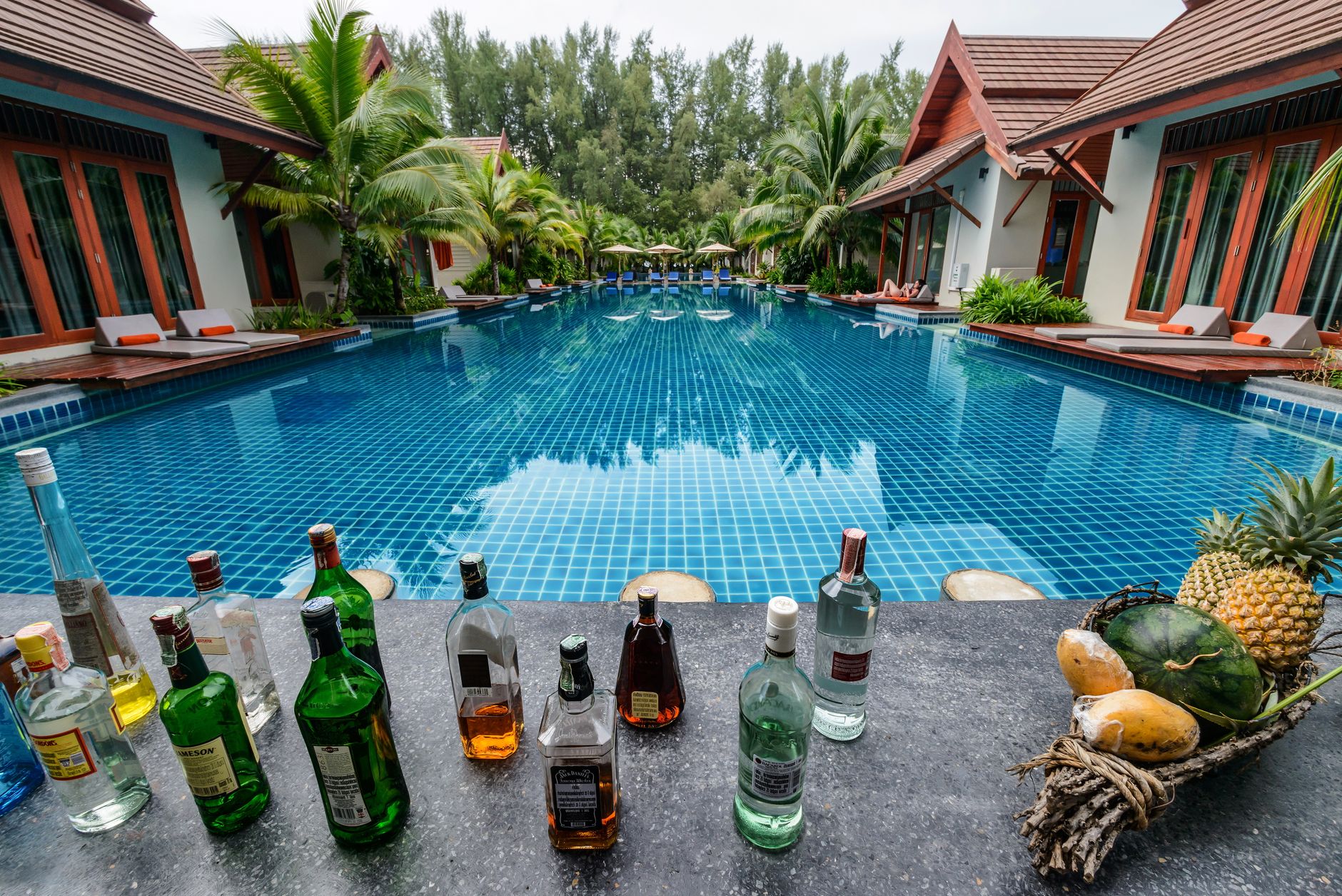
In Q1 2026, our analysts reviewed 34 cases involving investors from Europe who had purchased condos or villas in Phuket and Koh Samui with the stated goal of generating short-term rental income. In 27 of those 34 cases, actual operational costs exceeded the buyers' initial projections by 35 to 110%. The gap between projected and realised net yield averaged 2.8 percentage points per year.
The problem is not the rental market itself. Phuket recorded more than 11.8 million passengers through HKT airport in 2025 (Airports of Thailand data), and underlying tourist demand remains structurally solid. The problem is the systematic omission of cost lines that only reveal their full weight after the first complete operating year. Below, we work through the five most common calculation errors we encounter, attach concrete figures to each one, and describe what we would do differently at the point of purchase.
Quick answer
- Rental operator commissions in Phuket in 2026 run at 25-35% of gross revenue, not the 15-20% frequently assumed at the time of purchase
- Annual maintenance costs for a three-bedroom pool villa in the Layan / Bang Tao corridor sit at 180,000-320,000 THB before a single baht of rental income is counted
- Realistic occupancy for a premium villa on Phuket's west coast is 55-65% per year, not the 75-80% cited in developer brochures
- Koh Samui (Bophut, Maenam) carries sharper seasonality: occupancy in the wet season (May-October) drops to 25-35%
- Withholding tax on rental income in Thailand ranges from 5-15% depending on the holding structure, and residents of most European countries must also declare that income domestically under their bilateral tax treaty with Thailand
- Furniture, appliances, and air-conditioning units subjected to short-term rental intensity typically require replacement every 2.5-3.5 years, implying an annual reserve of at least 8% of the original fit-out value
Options and scenarios
Case 1: Kamala condo bought 'for rental' without operator cost analysis
An investor acquired a 42 sq m studio in Kamala in 2024 for 4.2 million THB. The purchase model assumed gross rental income of 28,000 THB per month at 75% occupancy and an operator fee of 15% of gross revenue.
After the first full year of operation, the actual fee structure looked very different. The operator charged 30% commission on gross revenue, plus a per-turnover cleaning fee (800 THB), linen processing (350 THB per turnover), quarterly air-conditioning service (4,500 THB), and OTA platform marketing (3-5% of each booking value). Achieved occupancy came in at 58%, not 75%.
Realised net income after all operational costs: 9,200 THB per month against a projected 17,500 THB.
Cost of the error: foregone income over twelve months of approximately 99,600 THB. Net yield fell from a projected 5.0% to 2.6% per year.
Root cause: the operator agreement contained no closed list of additional charges. The buyer had not requested a full profit-and-loss statement for an existing unit in the same building. Based on our experience, that data can be obtained from the building's juristic person manager before exchange of contracts.
What we would do differently: before signing, we would request written annual P&L simulations from at least two operators active in Kamala, broken down by high season (November-April) and low season. Running two operator proposals side by side reliably surfaces fees that are buried in a single quoted commission percentage.
Case 2: Layan pool villa with underestimated maintenance
A buyer acquired a three-bedroom villa with a private pool in the Layan area for 18.5 million THB. The rental model projected nightly rates of 4,500-8,000 THB in high season at 70% annual occupancy, with a maintenance budget of 10,000 THB per month.
Actual annual maintenance costs broke down as follows:
- Pool service (cleaning, chemicals, pump maintenance): 84,000 THB
- Garden and landscaping: 48,000 THB
- Air-conditioning (four services plus filter replacement): 18,000 THB
- Pest control: 12,000 THB
- Minor repairs (plumbing, electrical, Wi-Fi): 35,000 THB
- Property insurance: 15,000 THB
- Common area maintenance (CAM) fee: 72,000 THB
Total annual maintenance: 284,000 THB, or 23,700 THB per month against a budgeted 10,000 THB.
Cost of the error: underestimation of 164,000 THB per year. Combined with a 30% gross operator commission, net yield dropped to 3.1% against the developer's stated 6.5%.
Case 3: Bophut condo on Koh Samui and ignored seasonality
A buyer paid 6.8 million THB for a 65 sq m apartment in Bophut. The projection assumed a flat average rental income of 35,000 THB per month across all twelve months. The reality of Koh Samui: in May-October, occupancy fell to 28% and average nightly rates declined by 40% relative to the high-season benchmark. Full-year gross revenue came in at 265,000 THB against a projected 420,000 THB.
Cost of the error: 155,000 THB in foregone gross revenue. Net yield after operator costs: 1.9% against a projected 4.5%.
Comparison table
| Parameter | Kamala condo (42 sq m) | Layan villa (3 bed) | Bophut condo (65 sq m) |
|---|---|---|---|
| Purchase price (THB) | 4,200,000 | 18,500,000 | 6,800,000 |
| Projected occupancy | 75% | 70% | Year-round (modelled as long-term) |
| Achieved occupancy | 58% | 62% | 52% (effective, short-term basis) |
| Projected net yield | 5.0% | 6.5% | 4.5% |
| Realised net yield | 2.6% | 3.1% | 1.9% |
| Operator commission (% gross) | 30% | 30% | 28% |
| Annual maintenance cost (THB) | 45,000 | 284,000 | 62,000 |
| Cost underestimation | +67% | +137% | +48% |
| Annual shortfall vs plan (THB) | 99,600 | 164,000 | 155,000 |
Risks and mistakes
Error 1: relying on the developer's own projection. Developers in Phuket and Koh Samui routinely present 'guaranteed returns of 7-8%' covering the first two to three years of ownership. Based on our estimates, in approximately 80% of such cases the guarantee is priced into the sale value, which is inflated by 10-15% relative to comparable market transactions. Once the guarantee period expires, realised net yields typically settle at 2-4%.
Error 2: ignoring turnover costs. Every guest changeover in short-term rental generates direct costs: deep cleaning (1,200-2,500 THB for a villa), replacement of consumables, and check-in / check-out time. At 60% annual occupancy with a four-night average stay, a villa processes approximately 55 turnovers per year. These costs are rarely modelled in buyer projections.
Error 3: overlooking OTA platform fees. Booking.com charges operators 15-18%; Airbnb charges the host approximately 3% and applies a further fee to the guest side, which compresses the visible nightly price. Many buyers assume the operator absorbs these costs within their quoted commission. In practice, our monitoring of Phuket operator contracts in 2026 shows that around 40% of agreements calculate the operator's commission before deducting OTA fees, meaning both costs run concurrently.
Error 4: no fit-out replacement reserve. Tropical humidity running at 75-85%, combined with the intensity of tourist use, shortens the serviceable life of mattresses, upholstered furniture, appliances, and electronics to 2.5-3.5 years. We recommend budgeting a minimum reserve of 8% of the original fit-out value per year from the first month of operation.
Error 5: underestimating tax obligations. Rental income generated by a property in Thailand is subject to Thai withholding tax at 5-15% depending on the holding structure. Residents of countries that hold a double-taxation agreement with Thailand must also declare that income domestically and apply the relevant relief method (typically a credit or exemption mechanism). Failing to account for both layers consistently overstates projected net income in pre-purchase models.
FAQ
What is the realistic operator commission for short-term rentals in Phuket in 2026?
Based on our market monitoring, operator commissions for short-term rental management in Phuket currently range from 25-35% of gross revenue. Additional per-turnover charges for cleaning, linen, maintenance, and OTA marketing can add a further 5-10% to the effective cost burden.
What occupancy rate should I model for a villa in Phuket?
For premium villas (three bedrooms or more) in Bang Tao, Layan, and Surin, we recommend modelling annual occupancy at 55-65%. High-season occupancy (December-March) can reach 80-90%, but the low season (May-October) typically pulls the annual average down to the 55-65% band.
How much does it cost to maintain a pool villa in Phuket each year?
Based on our data sets, annual maintenance for a three-bedroom pool villa in the Layan, Bang Tao, or Kamala corridors runs at 180,000-320,000 THB per year. The largest line items are pool servicing, landscaping, air-conditioning maintenance, minor repairs, and the CAM fee.
Are developer-guaranteed rental returns reliable?
In the majority of cases our team has reviewed, guaranteed return programmes (typically 5-8% for two to three years) are funded through an above-market sale price rather than actual rental performance. Once the guarantee period ends, net yields in our data sets converge toward 2-4% per year.
How does seasonality affect rental performance on Koh Samui?
Koh Samui carries meaningfully sharper seasonality than Phuket. In the Bophut, Maenam, and Chaweng areas, occupancy in the May-October wet season falls to 25-35%, and nightly rates contract by 35-45% relative to the December-March peak period. Any projection using a flat monthly average will structurally overstate annual income.
What taxes apply to rental income from a Thai property?
Thailand applies a withholding tax of 5-15% on rental income, with the applicable rate depending on the ownership structure. Most European residents are also required to declare this income in their country of residence under the applicable double-taxation agreement, applying the relief method specified in that treaty (credit or exemption). We recommend obtaining tax advice in both jurisdictions before finalising a purchase.
How often does rental property furniture need to be replaced in Thailand?
In a tropical climate with intensive short-term rental use, upholstered furniture, mattresses, and household appliances typically reach end of useful life within 2.5-3.5 years. Our analysts recommend establishing a dedicated replacement reserve of at least 8% of the original fit-out value from the first year of operation.
Do operators always cover OTA platform fees within their commission?
Not consistently. Based on our review of Phuket operator contracts in 2026, approximately 40% of agreements calculate the management commission before OTA fees are deducted. In those cases, the investor bears both costs independently. This distinction must be confirmed in writing before signing any management agreement.
Researching property in Phuket or Koh Samui? Get in touch - our analysts will prepare a data brief for your shortlisted location.