

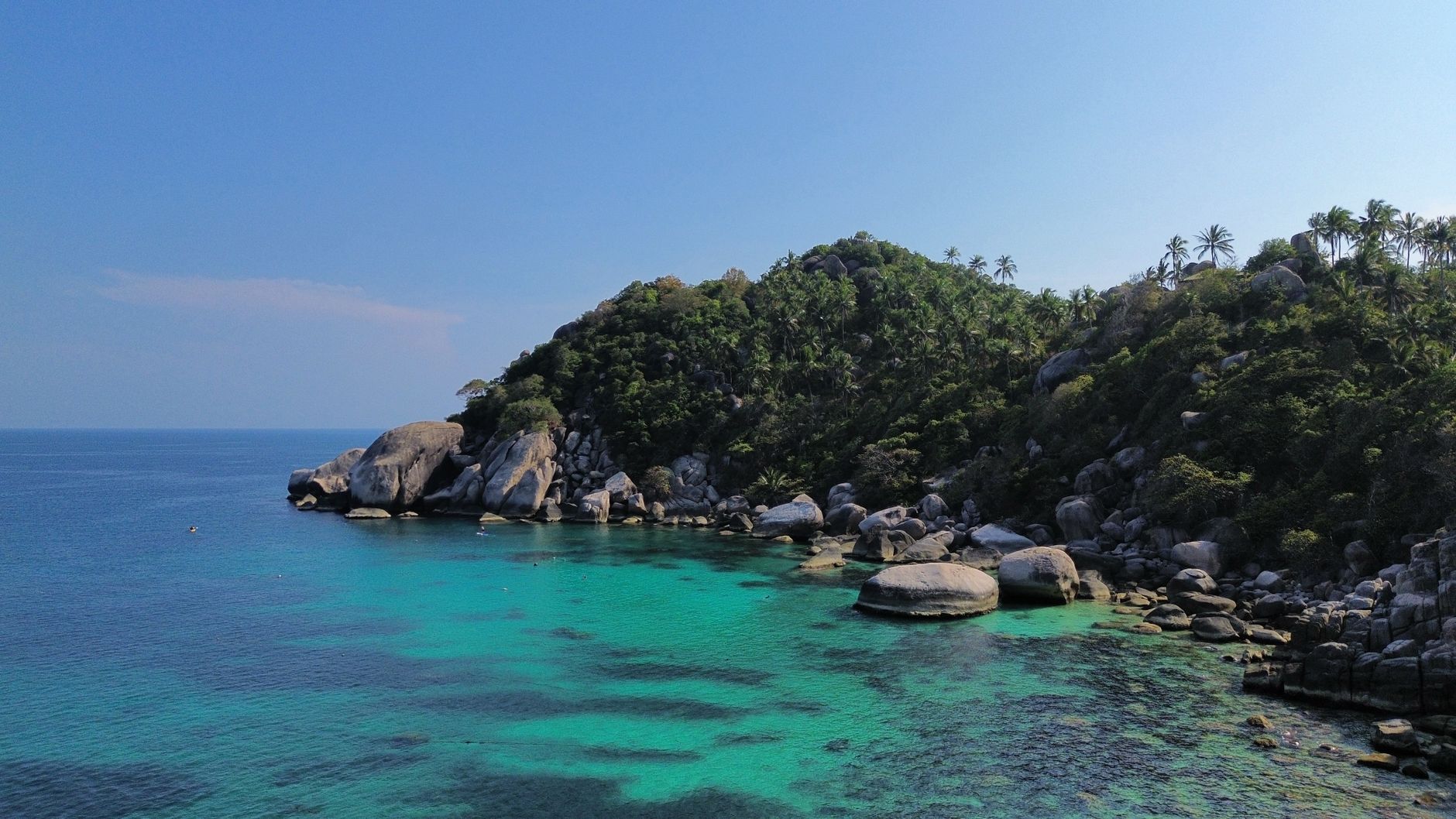
During the dry season on Koh Samui (February through May), reservoir levels across the island drop by an average of 35-45% relative to the wet-season peak. According to Provincial Waterworks Authority (PWA) data from 2025, the island operates just three main retention reservoirs with a combined capacity of approximately 7.8 million m³, while peak tourist-season demand reaches around 42,000 m³ per day. That supply-demand gap is a hard operational variable, and our analysts treat it as a direct line item in every property cost model we build for this market.
We have monitored this issue on the ground across several seasons. In Maenam, Lamai, and southern Chaweng, network water supply interruptions during the 2024/2025 dry season occurred on average 2-4 times per month, lasting anywhere from a few hours to a full 24-hour period. Electricity is more stable by comparison, but tariff rates on Koh Samui remain among the highest in Thailand due to the underwater cable transmission from the mainland.
For any investor modelling net returns on a villa or condominium here, these are concrete cost positions that cannot be left as rough estimates.
Quick answer
- PWA mains water on Koh Samui costs approximately 18-22 THB/m³, but during dry-season shortfalls many villa owners must order tanker deliveries at 250-400 THB/m³ - a tenfold to twentyfold markup per unit volume
- Electricity runs at 4.2-7.4 THB/kWh depending on consumption tier (PEA tariff, effective September 2025), plus the Fuel Tariff (Ft) surcharge of approximately 0.39 THB/kWh applicable island-wide as of 2025
- On-site water storage (5,000-10,000 litres) is standard in villas priced above 10 million THB; installation cost ranges from 80,000 to 150,000 THB
- Diesel generators (10 kVA) are effectively mandatory in villa-class projects; fuel and servicing at sporadic use levels runs approximately 3,000-4,500 THB per month
- Condominiums in central Chaweng and Bophut typically hold their own deep wells and buffer tanks, which smooths supply but pushes common-area fees (common fee) up by 15-25% versus comparable projects without that infrastructure
- Samui Airport (USM) throughput of roughly 1.8 million passengers per year (AoT 2025 data) caps the scale of inbound tourism and, by extension, limits short-term rental demand during peak dry-season months
Options and scenarios
Scenario A - pool villa in Bophut (upper segment)
A villa with a 30 m³ pool in the Fisherman's Village area of Bophut needs its pool topped up every 10-14 days during the dry season due to evaporation and backwash filtration losses. Based on our on-the-ground checks, a typical three-bedroom villa in this sub-district consumes 80-120 m³ of water per month at peak season.
Full calculation chain (Bophut villa, purchase price 18 million THB, 30-year leasehold):
- Rental revenue (dry season, February-May): average rate 8,500 THB/night, 65% occupancy = approximately 662,000 THB over 4 months
- Dry-season operating costs (4 months):
- Electricity (air-conditioning plus pool pump): approximately 18,000 THB/month = 72,000 THB
- Water (mains plus tanker deliveries in deficit months): approximately 8,000 THB/month = 32,000 THB
- Pool maintenance (chemicals and servicing): approximately 5,000 THB/month = 20,000 THB
- Property manager and cleaning: approximately 15,000 THB/month = 60,000 THB
- Insurance (pro-rated): 12,000 THB
- Generator (fuel and servicing): 8,000 THB
- Total dry-season operating costs (4 months): approximately 204,000 THB
- Dry-season net result: approximately 458,000 THB
For a full year (factoring in lower wet-season occupancy of roughly 35-40%), our analysts estimate annual net income at approximately 850,000-1,050,000 THB, equivalent to a net yield of 4.7-5.8% on the purchase price. Water and electricity together account for 20-28% of total operating costs in this model.
Scenario B - condominium in Chaweng (freehold, short-term rental)
A 45 m² freehold unit in central Chaweng, purchase price 4.5 million THB (foreign-quota freehold title). Water and electricity are partially covered through the common fee (approximately 65-85 THB/m²/month), with individual consumption billed via a sub-meter.
- Rental revenue (full year): average 2,200 THB/night, 55% occupancy = approximately 441,000 THB/year
- Annual costs:
- Common fee: approximately 3,400 THB/month = 40,800 THB
- Individual electricity: approximately 3,500 THB/month = 42,000 THB
- Individual water: approximately 800 THB/month = 9,600 THB
- Rental management (platform plus cleaning): 25% of revenue = 110,250 THB
- Total costs: approximately 202,650 THB
- Net result: approximately 238,350 THB, net yield 5.3%
In a condominium format, utility costs are lower and more predictable because the building operates its own buffer infrastructure. However, the dry season creates an indirect drag: higher airfares into Samui (Bangkok Airways operates USM under a quasi-monopoly structure) can suppress occupancy relative to comparable properties in Phuket, where flight competition is considerably stronger.
Scenario C - villa in Maenam (mid-market, family segment)
Maenam offers lower land prices but comes with a higher water-supply risk profile. The northern part of the island sits farther from the main reservoirs, and in our monitoring data, interruptions here are more frequent. Developers active in Maenam are increasingly installing rainwater harvesting systems with capacities of 15,000-20,000 litres as a baseline feature.
For a two-bedroom villa in Maenam priced at 9 million THB (30-year leasehold plus Thai company structure), dry-season water costs run approximately 30-40% higher than in Bophut, largely because tanker deliveries to this sub-district arrive with longer lead times and carry a distance premium.
Comparison table
| Parameter | Bophut Villa (18 M THB) | Chaweng Condo (4.5 M THB) | Maenam Villa (9 M THB) |
|---|---|---|---|
| Ownership structure | 30-year leasehold + Thai company | Freehold (foreign quota) | 30-year leasehold + Thai company |
| Water cost - dry season/month | 6,000-10,000 THB | 600-1,000 THB (sub-meter) | 8,000-14,000 THB |
| Electricity cost - dry season/month | 15,000-22,000 THB | 2,800-4,500 THB | 10,000-16,000 THB |
| Generator required | Yes (10 kVA+) | No (building supply) | Yes (8-10 kVA) |
| On-site water storage | 5,000-10,000 L (standard) | Building-level (included in common fee) | 10,000-20,000 L (recommended) |
| Utilities share of operating costs | 20-28% | 12-18% | 25-35% |
| Net yield (annual estimate) | 4.7-5.8% | 5.0-5.5% | 4.0-5.0% |
| Supply interruption risk | Medium | Low | High |
| Resale liquidity | Medium (leasehold) | High (freehold) | Low to medium |
Risks and mistakes
1. Underestimating water costs in the financial model. Many investors price utilities using the PWA mains rate (18-22 THB/m³) and overlook the fact that a pool villa in March through May may require three to five tanker deliveries per month at 250-400 THB/m³. This can effectively double the monthly water bill and erode projected net yields by 0.5-1.0 percentage points annually.
2. No generator on a villa property. Power cuts on Koh Samui typically last 1-4 hours, but failures of the underwater mainland cable have extended outages to 12 hours or more. Short-term rental guests respond with negative reviews, which suppresses future occupancy. An automatic transfer switch (ATS) generator costs 120,000-250,000 THB installed - a significant capital outlay, but one that protects the asset's rental reputation.
3. USM airport capacity as a demand ceiling. Samui Airport handles approximately 30-36 flights per day. Bangkok-to-Samui airfares range from 3,500-7,000 THB one-way (per booking portal data, Q1 2026), roughly two to three times the cost of Bangkok-to-Phuket. This structurally excludes budget travellers and limits occupancy growth potential for lower-tier rental properties.
4. Shortage of construction contractors. Our datasets show that the pool of qualified construction firms active on Koh Samui is considerably smaller than on Phuket. As of early 2026, we estimate turnkey villa construction costs at 45,000-65,000 THB/m² on Samui versus 38,000-55,000 THB/m² on Phuket - a differential of roughly 15-25%, driven by ferry freight costs for materials and reduced contractor competition.
5. Road access to hillside villas. Access roads to elevated villa plots in Maenam and Lamai can become difficult to navigate in the wet season (May through October), which suppresses occupancy during those months. In the dry season this issue disappears, but the cost of maintaining private road surfaces (grading, concrete repairs) falls entirely on the property owner.
6. Tax residency considerations for foreign investors. From 1 January 2024, Thailand taxes foreign-sourced income remitted to Thailand in the year it is earned. Any investor who is a tax resident elsewhere and receives rental income from a Samui property should account for Thai personal income tax (progressive scale up to 35%) and their home-country reporting obligations. The applicable double-taxation agreement should be reviewed carefully with a qualified tax adviser, as treaty credit mechanisms require proper documentation.
FAQ
Is tap water safe to drink on Koh Samui?
PWA mains water on Koh Samui is not potable. Even premium villas install reverse-osmosis (RO) filtration systems for culinary use. Installation costs approximately 15,000-35,000 THB, with annual filter replacement running 3,000-5,000 THB.
How much does tanker water delivery cost in dry season on Koh Samui?
Based on our monitoring during the 2025 dry season, one tanker load of approximately 6,000 litres in the Maenam and Lamai areas cost 1,500-2,400 THB, which works out to roughly 250-400 THB/m³. In Bophut, prices were slightly lower due to proximity to distributor depots.
How often do power cuts occur on Koh Samui?
During the 2025 dry season our team recorded an average of 2-5 interruptions per month across different parts of the island, ranging from 30 minutes to 8 hours. The longest single outage in 2025 ran approximately 14 hours and was caused by an underwater cable fault.
Do condominiums on Samui have more stable utility supply than villas?
In our assessment, yes. Condominium buildings in Chaweng and Bophut generally maintain their own deep wells, buffer tanks, and backup generators. These costs are absorbed into the common fee, which runs at 65-85 THB/m²/month.
How do Koh Samui electricity costs compare to Phuket?
The PEA tariff schedule is uniform across Thailand. However, effective electricity consumption at a villa on Samui tends to run approximately 10-15% higher than at a comparable Phuket property, primarily because of more frequent water pump usage and less natural ventilation in hillside villa layouts.
Does Samui Airport affect rental yields?
Directly. Capped capacity at approximately 1.8 million passengers per year, combined with premium Bangkok Airways fares, structurally limits the tourist base. The alternative route via Surat Thani Airport (URT) plus a two-to-three-hour ferry crossing is viable for budget travellers but discourages the premium segment that drives villa occupancy.
What does it cost to build a villa on Koh Samui in 2026?
Based on our early-2026 estimates, turnkey villa construction at a mid-to-upper standard on Koh Samui runs 45,000-65,000 THB/m², compared to 38,000-55,000 THB/m² on Phuket. The gap reflects ferry transport costs for building materials and a thinner contractor market.
Can rainwater harvesting reduce utility costs on Samui?
Yes. Systems with 15,000-20,000 litre capacity cost approximately 60,000-120,000 THB to install. During the wet season (June through November), they can cover 40-60% of total water demand in a villa without a pool, meaningfully reducing tanker dependency in the months immediately following the rains.
What is the total annual utility bill for a Samui villa?
For a three-bedroom pool villa in Bophut, our estimates put combined annual utility costs (electricity, water, generator, pool maintenance) at approximately 240,000-360,000 THB per year. This figure should be treated as a baseline, not a ceiling, given the structural water-supply constraints discussed above.
Researching property in Phuket or Koh Samui? Get in touch - our analysts will prepare a data brief for your shortlisted location.