

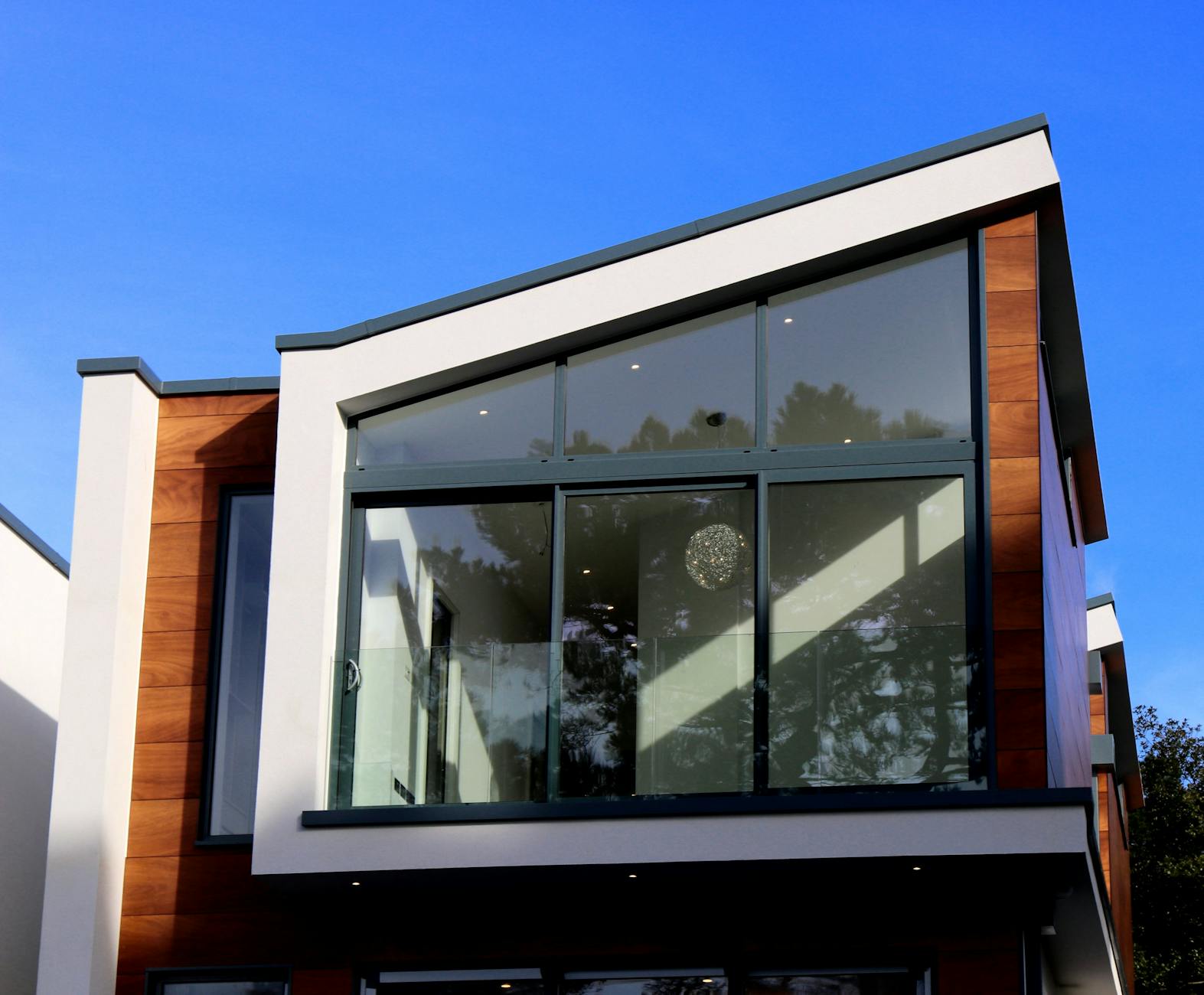
In August 2026, a branded residence project at Kamala Beach became the first development on the island to receive a two-star Fitwel certification under the Multifamily Residential v3.0 framework. The development comprises 111 units with asking prices starting from approximately 15 million THB (as of August 2026). The central question for any investor evaluating this segment is whether a wellness certification translates into a measurable pricing premium and better secondary-market liquidity, or whether it functions primarily as a positioning tool.
Our analysts have been tracking the Phuket branded residences segment for several years. We have observed a clear directional shift: the developer behind this Kamala project holds Fitwel certification across all four of its Thailand developments, which points to a systematic approach to wellness standards rather than a one-off marketing exercise. Below we set out what the data shows and where uncertainty remains.
Quick answer
- The two-star Fitwel certification awarded at Kamala in 2026 is a first for any residential development on Phuket Island
- Starting prices at the certified Kamala project are approximately 15 million THB per unit, as of August 2026
- Based on our estimates, comparable branded residences in Kamala and Surin without wellness certification list from 12-13 million THB, implying a premium in the range of 15-25%
- Branded residences account for roughly 8-12% of the wider luxury condominium market on Phuket, per market estimates
- Fitwel, WELL, and LEED certifications differ in scope: Fitwel addresses resident health outcomes, WELL focuses on occupant comfort, and LEED targets energy efficiency and sustainable construction
- In our data sets, international buyers increasingly ask about building standards, but purchase decisions remain primarily driven by hotel brand affiliation and location
Options and scenarios
Scenario A: certification as a durable value driver
Under this scenario, the Phuket branded residences market follows the trajectory of more mature Asian markets such as Singapore and Hong Kong, where wellness and green building certifications have generated documented premiums of 7-12% in the premium segment. For this to materialise on Phuket, several conditions would need to hold: sustained growth in awareness among European and Middle Eastern buyers, incremental tightening of Thai construction standards, and the emergence of additional certified projects that establish a reliable pricing reference.
For investors entering in 2026-2027, a unit carrying Fitwel certification may preserve value more effectively over a 5-7 year horizon than a comparable uncertified product. In our comparison data sets, projects aligned with globally recognised standards consistently attract a broader pool of secondary-market buyers, which supports liquidity even if it does not guarantee a specific price uplift.
Scenario B: certification as a supplementary factor, not a decisive one
This is the more probable scenario over the next 2-3 years. The secondary market for Phuket branded residences remains relatively shallow. Buyers in this segment evaluate, in order of priority: the hotel brand managing the asset, location attributes (beach access, distance from Phuket International Airport), and any guaranteed rental return structure. A wellness certification adds to the narrative but does not close deals on its own.
We observe that international buyers from Europe and the Middle East notice certifications and respond positively during viewings, but rarely state a clear willingness to pay a materially higher price for the certificate alone. The pricing premium is more accurately attributed to the elevated fit-out standards that typically accompany a certification process than to the certificate itself.
Scenario C: certification as a pure marketing cost
In the downside scenario, the certification generates no measurable price uplift. Its estimated cost - roughly 1.5-3% of the construction budget per market estimates - is embedded in unit prices without delivering real added value to the buyer. This outcome is more likely if no further Fitwel-certified projects appear on Phuket, leaving the standard as an isolated data point with no basis for market comparison.
Comparison table
| Parameter | Branded residence with Fitwel (Kamala) | Branded residence without certification (Kamala / Surin) | Luxury condo, no hotel brand (Bang Tao / Layan) |
|---|---|---|---|
| Starting price (THB) | from 15 million | from 12-13 million | from 8-10 million |
| Price per sq m (THB) | 180,000-220,000 | 140,000-180,000 | 100,000-140,000 |
| Wellness certification | Fitwel 2-star | None | None |
| Hotel brand operator | Yes (international flag) | Yes (various brands) | None |
| Estimated wellness premium | 15-25% vs. uncertified peer | Baseline | Not applicable |
| Rental yield (market estimates) | 5-6% gross | 5-7% gross | 6-8% gross |
| Secondary market liquidity | Low (nascent segment) | Moderate | Moderate |
| Primary buyer profile | Europe, Middle East, Asia | Europe, Russia, Asia | Broad |
| Estimated handover | 2027 | Various | Various |
All figures are estimates by the Tajlandia.com team, as of Q3 2026. Prices vary by floor, view, and sales stage.
Risks and mistakes
Risk 1: conflating certification with construction quality assurance. Fitwel evaluates a project against resident health criteria - air quality, natural light access, physical activity infrastructure - but it does not replace an independent structural or finishing inspection. Our analysts verify build quality on the ground regardless of what certifications a project holds.
Risk 2: absence of secondary transaction data. As of August 2026, no resale transactions exist for Fitwel-certified residential projects on Phuket. The 15-25% premium figure is derived by analogy with other Asian markets and from a comparison of current list prices, not from closed secondary deals. Investors should weight these estimates accordingly.
Risk 3: certification cost absorbed into unit pricing. The developer bears the cost of obtaining and maintaining the certification. In the branded residences segment, this cost is distributed across unit prices. The buyer effectively funds the certification, which means part of the observed premium reflects cost recovery rather than genuine added value.
Risk 4: limited recognition of the Fitwel standard among some buyer groups. Fitwel is well established in the United States and Southeast Asia, but many European buyers are more familiar with LEED or BREEAM. When reselling to a European buyer on the secondary market, the seller may need to invest time in explaining what the Fitwel certification covers and why it matters.
Risk 5: payment schedule structure in off-plan purchases. Independently of any wellness certification, we always analyse the payment schedule. There are no escrow arrangements for foreign real estate buyers in Thailand. We verify whether instalment milestones are tied to measurable construction progress, whether the purchase contract includes contractual penalties for developer delays, and how the project is financed - bank credit versus buyer deposits.
FAQ
What is Fitwel and how does it differ from WELL and LEED?
Fitwel is a building certification framework originally developed by the U.S. Centers for Disease Control and Prevention (CDC). It measures a building's impact on the physical and mental health of its occupants - covering air quality, access to daylight, stairwell design, and proximity to amenity spaces. WELL places greater emphasis on occupant comfort variables including water quality, acoustics, and thermal conditions. LEED is primarily an environmental performance standard focused on energy efficiency and sustainable construction. On Phuket, Fitwel became the first certification of its type to be awarded to a residential project in 2026.
What are the current asking prices for a Fitwel-certified unit in Phuket?
Based on data available in August 2026, starting prices at the certified Kamala project sit at approximately 15 million THB. The per-unit price varies depending on floor level, unit size, and view orientation. Investors converting to other currencies should note that THB exchange rates introduce additional variability in home-currency terms.
Does a wellness certification actually raise property values on Phuket?
Based on our estimates, certified projects on Phuket are currently listing at prices 15-25% above comparable uncertified branded residences in the same coastal belt. However, this differential appears to reflect both the certification itself and the higher finish standards that typically accompany the certification process. We do not yet have closed secondary transactions to isolate the certificate-specific component of the premium.
How does a wellness certification affect resale liquidity?
There are no secondary transaction data points for certified residential projects on Phuket as of Q3 2026. In other Asian markets - Singapore and Bangkok in particular - certified buildings have shown secondary market exposure periods approximately 10-15% shorter than uncertified peers, per market estimates. Our analysts are monitoring this metric as the Phuket segment develops.
Can the developer lose the Fitwel certification after handover?
Fitwel requires periodic recertification, typically on a three-year cycle. If the building operator does not maintain the required standards, the certification lapses. A key due diligence point is understanding who bears recertification costs - the original developer, the hotel operator, or the owners' committee - as this affects ongoing service charge projections.
What payment protections apply to off-plan purchases in Phuket?
There are no escrow accounts available to foreign real estate buyers in Thailand. The protections we verify in practice are: payment instalments tied to defined construction milestones, contractual delay penalties specified in the sale and purchase agreement, the developer's financing structure (bank-backed versus deposit-funded), and the developer's track record across previous completed projects.
Should a wellness certification be a primary purchase criterion?
Based on our analytical framework, a wellness certification is one criterion among several - not a standalone reason to buy. We weight the following factors more heavily: district location and beach access (Kamala, Surin, Bang Tao, Layan on the west coast), hotel brand and operator reputation, management fee structure, rental return terms, and the developer's delivery track record. A certification adds value particularly when reselling to western European or Middle Eastern buyers who are familiar with sustainability standards.
How many Phuket projects hold wellness certifications in 2026?
In our Q3 2026 data sets, the Kamala project described above is the only residential development on Phuket Island to hold a Fitwel certification. We have not recorded equivalent certifications on Koh Samui (Bophut, Maenam, Chaweng, or Lamai districts). The developer responsible for this project holds four certified projects across Thailand in total.
Does a Fitwel certificate affect the tax treatment of the investment?
The certification itself has no direct effect on the tax position of an investor. The relevant variables are the transaction value of the asset, allowable costs, and the tax treaty between the investor's country of residence and Thailand. The certificate may indirectly influence the property's assessed value at resale, with a downstream effect on capital gain calculations.
What is the expected timeline before secondary market data becomes reliable?
Based on the 2027 projected handover date and typical secondary market formation periods in new segments, our analysts expect the first meaningful resale data for Fitwel-certified Phuket units to emerge in 2028-2029. Until that point, any premium estimate relies on cross-market analogy rather than local transaction evidence.
In the view of the Tajlandia.com team, wellness certifications in the Phuket branded residences segment are at an early stage of pricing formation. We recommend treating any such certification as one component of a broader due diligence checklist - alongside developer verification, payment schedule analysis, and real rental yield data - rather than as an independent purchasing argument. Reliable local data on the resale premium will not exist before 2028 at the earliest.
Researching property in Phuket or Koh Samui? Get in touch - our analysts will prepare a data brief for your shortlisted location.