

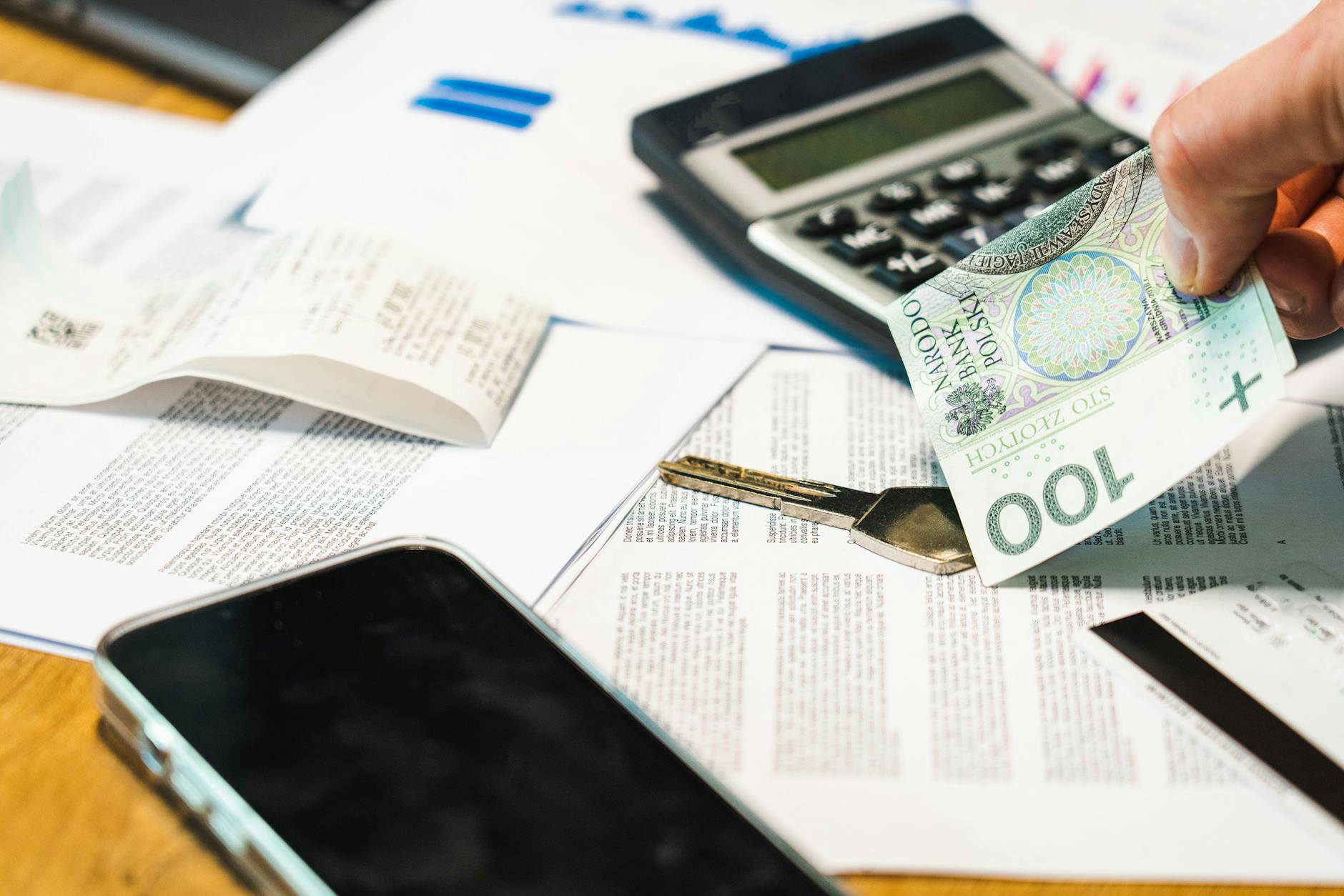
In 2026, the average condo price in Bang Tao, Phuket ranges - based on our estimates - from 4.5 to 8.5 million THB for a unit of 35-65 sq m. For any foreign buyer, the critical legal requirement is not the purchase contract itself, but the correct entry of funds into Thailand and the issuance of a FET (Foreign Exchange Transaction form). Without this document, freehold registration at the Land Office is not possible.
Our team has monitored capital transfer procedures into Thailand for several years. The most common problems we observe among buyers relate not to the transfer amount, but to the payment reference, the currency used, and the banking route chosen. Below we set out the full mechanics of the process - from funds leaving an overseas account through to title registration.
Quick answer
- Funds for a freehold condo purchase must enter Thailand from abroad in foreign currency (not in THB) and be converted into THB by the receiving Thai bank
- The FET document is issued automatically by a Thai bank for transfers equivalent to 50,000 USD or more - in practice, this threshold applies to almost every condo purchase
- The payment reference must include: the buyer's full name, the phrase 'for purchase of condominium unit at', and the buyer's passport number
- A SWIFT transfer from an overseas bank costs approximately 150-250 PLN on the sending side, plus correspondent bank fees (15-30 USD per hop); specialist FX brokers offer spreads up to 0.5-1.5% lower than retail bank rates
- Transit time for a SWIFT transfer to Thailand is 2-5 business days; via an FX broker with conversion outside the origin country it can be faster (1-3 days)
- An incomplete or missing FET blocks not only the registration of ownership, but also the legal repatriation of sale proceeds when the property is eventually sold
Options and scenarios
Option 1 - direct SWIFT from an overseas bank
The most straightforward route. The buyer instructs a SWIFT transfer in EUR or USD from their home bank to the developer's account (or to the buyer's own Thai bank account, if one has been opened). The Thai bank automatically generates the FET form when foreign currency equivalent to 50,000 USD or more arrives. We verify on the ground that banks including Bangkok Bank, Kasikornbank, and SCB honour this document at the Phuket Land Office.
Typical cost breakdown for a transfer of 6 million THB (approximately 700,000 PLN at indicative 2026 rates):
- SWIFT fee on the sending side: 150-250 PLN
- FX spread at the home bank (local currency to EUR/USD): estimated 1.5-3% of the amount
- Correspondent bank charges: 15-50 USD
- Thai bank incoming wire fee: 200-500 THB
The combined hidden cost embedded in the spread and fees can reach 10,000-21,000 PLN on a 700,000 PLN transfer.
Option 2 - specialist FX broker (Wise, OFX, TorFX or comparable platforms)
The buyer sends local currency to the FX broker, who converts it at an interbank rate with a margin of 0.3-0.8% and dispatches the funds in USD or EUR to the Thai bank. A key operational note: the broker must structure the transfer so that the Thai bank identifies the buyer as the originator - otherwise the FET may not be correctly issued in the buyer's name.
Estimated saving on the FX spread compared with Option 1: 0.5-1.5%, which on a 700,000 PLN transfer amounts to roughly 3,500-10,500 PLN in reduced currency costs.
Option 3 - staged payments on a developer payment schedule
Most developers in Bang Tao, Layan, and Kamala use a phased payment structure: a reservation deposit (50,000-200,000 THB), a tranche at contract signing (20-30% of price), construction-stage instalments (30-50%), and a balance on handover (20-30%). Each tranche requires a separate international transfer, and the Thai bank issues an FET for each incoming transfer above the threshold. At Land Office registration, all FET forms must collectively cover at least the full purchase price.
Option 4 - developer instalment plan or regional bank financing
Mortgage options for foreigners in Thailand remain very limited. Based on our data as of 2026:
- UOB (Thailand) and ICBC (Thai) offer home loans to selected non-residents, but typically require stable income in Thailand or a substantial deposit (minimum 30-50% of the property value)
- Loan-to-value ratios cap at 50-70%, with interest rates of 5-7% per annum (variable)
- Several Phuket developers offer in-house instalment financing over 3-5 years at zero stated interest, but the embedded cost lies in a higher unit price - we estimate a premium of 10-20% over the outright cash price
- An alternative some buyers consider is leveraging assets held abroad (e.g., a mortgage against a home-country property at prevailing rates), then transferring those proceeds to Thailand. This route introduces currency exchange risk across the full repayment period
Comparison table
| Parameter | SWIFT from home bank | FX broker | Developer instalment plan | Thai bank mortgage |
|---|---|---|---|---|
| FX spread | 1.5-3% | 0.3-0.8% | None (price quoted in THB) | None (loan in THB) |
| Transfer fee | 150-250 PLN + 15-50 USD | 0-100 PLN | None | None |
| Transfer time | 2-5 business days | 1-3 business days | Not applicable | Not applicable |
| FET generated | Yes (automatically) | Yes (sender details critical) | Yes (per instalment) | Not applicable (domestic funds) |
| Currency risk | One-off at transfer | One-off at transfer | Spread across schedule | None |
| Capital required upfront | 100% own funds | 100% own funds | 20-30% to start | 30-50% own contribution |
| Hidden cost (estimates) | 10,000-21,000 PLN per 700k PLN | 2,000-6,000 PLN | 10-20% premium in unit price | 5-7% interest per annum |
Risks and mistakes
Incorrect payment reference is the single most common problem we observe. If the reference does not specify the purpose ('purchase of condominium'), the unit number, and the buyer's details, the Thai bank may issue an FET with a generic description. The Phuket Land Office will then refuse freehold registration, and rectifying the situation requires either a corrective transfer or protracted correspondence with the bank.
Sending funds in THB rather than a foreign currency disqualifies the transaction from an FET perspective. Funds must arrive in USD, EUR, GBP, or another freely convertible currency, and be converted into THB by the Thai bank upon receipt.
Transfer from a third-party account creates complications. The FET must name the individual or entity being registered as owner. A transfer from a spouse's account, a company account, or an intermediary's account without proper legal authorisation complicates the registration process and may require additional documentation.
Currency risk on exchange rate movements is real and measurable. A worked example based on our estimates: if the exchange rate stands at 8.50 units of home currency per THB at contract signing, and it moves to 8.00 at the time of the final instalment six months later, the cost of a 6 million THB condo rises from approximately 706,000 to 750,000 PLN - a difference of 44,000 PLN from exchange rate movement alone. Over the past three years, volatility on this currency pair has reached 10-15% on an annual basis. We recommend checking the current rate with a currency adviser before each instalment.
The 50,000 USD threshold - for transfers below this equivalent, the Thai bank is not obliged to issue an FET automatically. In such cases, the buyer should request a 'Credit Note' or 'Transaction Advice' from the bank confirming the receipt of foreign currency.
Missing documentation for capital repatriation is a trap that many buyers only discover at the point of exit. Without a complete set of FET forms or Credit Notes, an investor cannot legally transfer sale proceeds out of Thailand. Every incoming transfer should be documented at the time it is made.
FAQ
What exactly is the FET form and who issues it?
The FET (Foreign Exchange Transaction form, formerly known as Thor Tor 3) is a document issued by a Thai commercial bank confirming the receipt of foreign currency from abroad and its conversion into THB. Issuance is automatic for amounts equivalent to 50,000 USD or more. The document is required for freehold condo registration at the Land Office.
Can I send funds directly in a non-major currency?
Technically yes, but we advise against it. Currencies outside the major pairs are rarely accepted by Thai correspondent banks, which generates additional conversion costs and delays. Our recommendation is to convert to USD or EUR before sending, or to use a specialist FX broker for the conversion.
How long does a SWIFT transfer to Thailand take?
Typically 2-5 business days, depending on the number of correspondent banks in the chain. USD transfers usually route through a US correspondent (such as Citibank New York), which can add one business day.
Will an FX broker platform generate a valid FET?
Yes, provided the transfer reaches the Thai bank with the buyer's name as the originator and the correct reference text. We verify on the ground that some platforms send funds from pooled accounts, in which case the FET may be issued in the broker's name rather than the buyer's, making registration impossible. Before choosing a platform, confirm that the transfer will be individually identified with the buyer's details.
What information must appear in the transfer reference?
The buyer's full name, passport number, purpose of transfer ('for purchase of condominium unit'), the unit number or identifier, and the project name. If any element is missing, the Land Office may reject the supporting documentation.
Can a foreign national obtain a mortgage from a Thai bank?
Options are very limited. As of 2026, only a small number of banks - including UOB Thailand and ICBC Thai - consider applications from non-residents, and they typically require demonstrable income in Thailand or the broader Southeast Asian region, plus a minimum own contribution of 30-50%.
How can currency risk between home currency and THB be managed?
The primary instruments are forward contracts offered by FX brokers (locking in a rate for a future date) and splitting the transfer into smaller tranches spread over time. Neither method eliminates risk entirely, but both reduce exposure.
Can I repatriate sale proceeds when I eventually sell the condo?
Yes, but only if you hold a complete set of FET forms or Credit Notes documenting the original inward transfer. The Thai bank uses these records as the basis for authorising an outward transfer of the equivalent amount. Any capital gain is subject to separate tax regulations.
Does the reservation deposit also require an FET?
The reservation deposit (typically 50,000-200,000 THB) usually falls below the 50,000 USD automatic threshold, so the FET is not generated automatically. We recommend requesting a Credit Note from the bank and retaining the transfer confirmation, as these documents may be needed when assembling the full registration package.
Can a foreign-registered company purchase a condo in Bang Tao?
Legally yes, but a foreign company is subject to the same rules as an individual: funds must enter Thailand from abroad in foreign currency, and the FET must be issued in the company's name. Additionally, corporate documentation - articles of association, board resolution - must be translated into English and appropriately certified.
In summary: a correct wire transfer for a condo purchase in Bang Tao requires three elements - foreign currency, a precise payment reference, and an FET document issued in the buyer's name. Based on our analysis, choosing an FX broker over a direct bank transfer saves approximately 1-2% of the transaction value, which on a typical 6 million THB condo translates to an estimated 7,000-15,000 PLN in currency costs. Every transfer should be reviewed with a Thailand-based property lawyer before it is instructed.
Researching property in Phuket or Koh Samui? Get in touch - our analysts will prepare a data brief for your shortlisted location.