

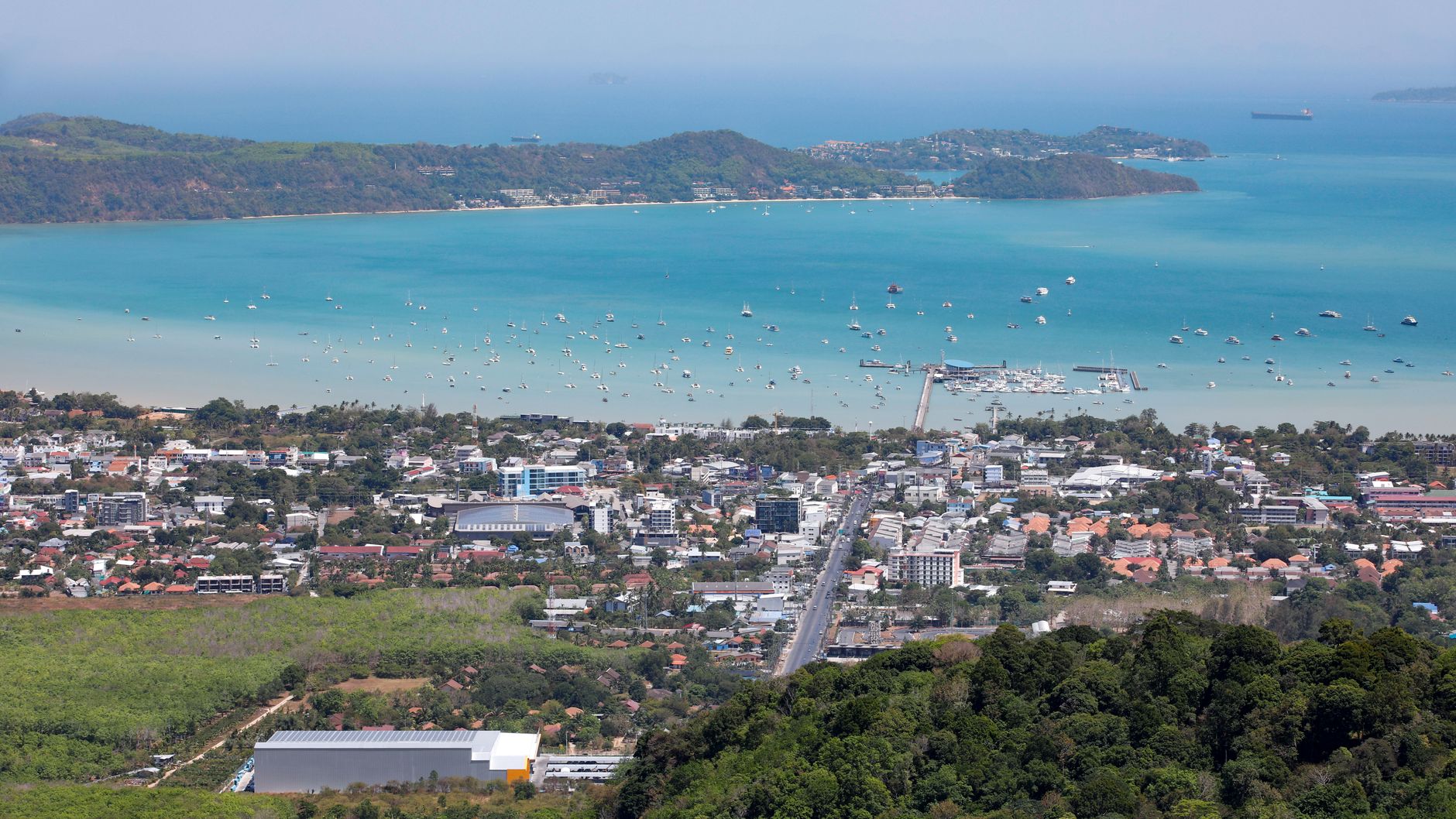
In Q1 2026, foreign buyers accounted for an estimated 38-42% of all registered condominium sale contracts on Phuket, based on our tracking of Land Department records over the past several quarters. That represents a gain of roughly 4 percentage points compared with Q1 2025. The structural shift we are monitoring is significant: buyers from mainland China, Russia, and the Middle East are playing an increasingly prominent role, while Western European demand has broadly stabilised.
For currency context relevant to international investors: as of early 2026, the Thai baht is trading in a range that makes a 5 million THB condominium equivalent to roughly 565,000-585,000 PLN for Polish-based buyers, or approximately 130,000-140,000 EUR for euro-zone buyers. Compared with 2023, the baht has softened modestly against several major currencies, which lowers the effective entry cost in foreign-currency terms.
Quick answer
- 38-42% of Phuket condominium transactions in Q1 2026 involved foreign buyers, based on our estimates derived from Land Department data
- Median price per square metre in the freehold condominium segment rose by approximately 8-12% year-on-year across most districts, as of Q1 2026 data
- The highest concentration of foreign demand is in Bang Tao, Layan, and Kamala, where foreign buyers account for more than 50% of transactions
- International arrivals at Phuket International Airport (HKT) totalled approximately 9.2 million passengers in 2025 (Airports of Thailand data), equivalent to roughly 95% of the 2019 baseline
- On Koh Samui, foreign participation is materially lower: we estimate 22-26% of transactions in Bophut and Chaweng involve non-Thai buyers
- The confirmed pipeline of new condominium units on Phuket currently under construction stands at approximately 4,800-5,200 units, with scheduled completions in 2026-2027
Options and scenarios
Baseline scenario - moderate demand growth
This scenario assumes international arrival volumes hold near the 2019 recovery level observed in 2025. Foreign condominium demand grows at 5-8% per year, driven primarily by buyers from mainland China (supported by the digital nomad visa and Long-Term Resident Visa programme) and Russia (where capital outflow to accessible offshore markets remains elevated). In the premium districts of Bang Tao, Surin, and Layan, we model price appreciation of 6-10% annually. In Rawai and Nai Harn, the pace is more measured at 3-5%. On Koh Samui, Bophut and Maenam are tracking 4-7% annual growth per our estimates.
Optimistic scenario - regulatory acceleration
The Thai government has indicated it is reviewing the Condominium Act to potentially raise the foreign ownership quota from 49% to 75% in qualifying projects. In our quarterly modelling, if such legislation passes and takes effect, we estimate a step-change in demand of 15-20% within 12 months of implementation. Waterfront and beach-adjacent locations could see a one-time price adjustment of 10-15% upward. The associated risk is market overheating followed by a correction within a 2-3 year horizon.
Downside scenario - external shock
A global recession or the introduction of a transaction surcharge on foreign property purchases (comparable to mechanisms used in Singapore and Hong Kong) could reduce foreign demand by 20-30% year-on-year. In this scenario, less liquid locations such as Karon, Kata, and Lamai on Phuket, and Lamai on Koh Samui, face price declines in the 5-10% range. Premium districts, where supply remains constrained, would likely hold nominal price levels with a longer time-on-market.
Comparison table
| Parameter | Bang Tao / Layan | Kamala / Surin | Rawai / Nai Harn | Bophut (Koh Samui) |
|---|---|---|---|---|
| Median price per sqm (THB, Q1 2026) | 120,000-160,000 | 110,000-145,000 | 75,000-100,000 | 80,000-110,000 |
| Foreign buyer share of transactions | 50-60% | 45-55% | 30-38% | 22-28% |
| Dominant buyer nationalities | China, Russia | W. Europe, Russia | Russia, C. Europe | W. Europe, Australia |
| New unit pipeline (2026-2027) | approx. 1,800 | approx. 1,200 | approx. 800 | approx. 400 |
| Estimated gross rental yield (annual) | 5-7% | 5-6.5% | 6-8% | 5-7% |
| Short-term rental occupancy (2025) | 72-78% | 68-74% | 65-72% | 58-66% |
| Year-on-year price growth (estimate) | 8-12% | 7-10% | 4-6% | 5-8% |
Risks and mistakes
Regulatory quota risk. The 49% foreign ownership cap in any single condominium building is codified in the Condominium Act of 1979 (as amended). In projects where the foreign quota is already fully sold, non-Thai buyers can only acquire on a 30-year leasehold basis with a renewal option. We are monitoring legislative progress on raising this threshold, but as of Q1 2026 no amendment has been enacted.
Currency conversion costs. International buyers who transfer funds from overseas accounts should account for the foreign exchange spread, which typically runs 1.5-3% at retail bank rates. On a transaction of 8 million THB, that spread adds a real cost of approximately 1,200-2,400 EUR (or the equivalent in other currencies), which is frequently overlooked in initial budget calculations.
Rental yield inflation in developer marketing. We regularly encounter developer-guaranteed return figures of 7-10% per year in pre-sale materials. Our on-the-ground verification shows that actual gross rental yields in most Phuket and Koh Samui locations fall in the 5-7% range. After deducting property management fees (typically 15-25% of rental revenue), maintenance costs, and applicable tax, net yields drop to 3.5-5.5%.
Supply-side pressure. A pipeline of approximately 5,000 new condominium units scheduled for delivery in 2026-2027 creates localised oversupply risk, most acutely in Bang Tao, which absorbs over 35% of the new supply. For investors in that district, this translates to potential downward pressure on short-term rental rates and slower resale value growth in the near term.
Leasehold renewal uncertainty. A leasehold structure (commonly documented as 30+30+30 years) does not guarantee renewal. In practice, the second and third terms depend on the landowner's consent and the regulatory framework in force at the time of renewal, both of which may differ materially from conditions at the point of purchase.
Foreign Exchange Transaction (FET) form requirement. Funds used to purchase a freehold condominium must be transferred from abroad in foreign currency and converted into Thai baht at a Thai bank. The bank issues a Foreign Exchange Transaction (FET) form, which is a mandatory document for Land Department registration of foreign freehold ownership. Without it, the title transfer cannot be completed.
FAQ
What share of Phuket property transactions involve foreign buyers in 2026?
Based on our analysis of Land Department records, foreign buyers account for approximately 38-42% of condominium transactions on Phuket in Q1 2026. In premium districts such as Bang Tao and Kamala, that share exceeds 50%.
Which Phuket districts have the highest concentration of foreign demand?
We record the highest foreign buyer participation in Bang Tao, Layan, and Kamala, where foreign buyers collectively represent more than 50% of registered transactions. Surin follows closely, while Rawai and Nai Harn in the south show lower but growing foreign interest.
Can a foreign national buy property in Phuket in freehold?
Yes, but only for condominium units, and only when the foreign ownership quota in the specific building does not yet exceed 49% of total floor area. Houses, villas, and land cannot be held freehold by non-Thai nationals and are typically structured as leasehold or through a Thai-majority company.
How do airport arrival numbers relate to the Phuket property market?
We monitor Airports of Thailand passenger data as a leading indicator. Our data sets suggest that a 10% increase in international arrivals translates, with a lag of 2-3 quarters, into a 4-6 percentage point improvement in short-term rental occupancy, which then feeds into 3-5% upward movement in listed asking prices.
What realistic net rental yield should an investor expect in Phuket in 2026?
Gross rental yields in 2026 range from 5-7% depending on location and unit specification. After accounting for management fees (15-25% of rental income), maintenance, and applicable tax, net yields fall to approximately 3.5-5.5%. Developer-quoted guarantees of 7-10% require careful scrutiny against independently verified occupancy data.
How does foreign demand in Koh Samui compare with Phuket?
Koh Samui is a materially smaller market. We estimate foreign buyers account for 22-26% of transactions in the main districts of Bophut and Chaweng. Lower market liquidity means longer average resale timelines compared with Phuket, which is an important consideration for investors with a defined exit horizon.
What are the transaction costs for a foreign buyer purchasing a Phuket condominium?
Total transaction costs for the buyer side typically amount to 1-3% of the property value. This covers the transfer fee (commonly split equally between buyer and developer in new-build sales), any applicable withholding or specific business tax on the seller's side (which can affect net pricing), and administrative fees at the Land Department.
Does the new supply pipeline threaten price stability in Phuket?
The 4,800-5,200 unit pipeline scheduled for 2026-2027 delivery creates real supply pressure, particularly in Bang Tao. However, in our data sets we observe that a substantial portion of new pre-sale inventory is absorbed by foreign buyers during the construction phase, which moderates the volume of unsold units at completion.
What is the regulatory risk around the 49% foreign quota?
As of Q1 2026, the Condominium Act foreign ownership cap of 49% per building remains in force. Proposed legislation to raise the limit to 75% is under review but has not been passed. Buyers targeting projects where the foreign quota is already full face a leasehold-only purchase structure, which carries different resale and legal characteristics.
What is the FET form and why does it matter for foreign buyers?
The Foreign Exchange Transaction (FET) form is issued by a Thai bank when foreign currency is converted into Thai baht to fund a property purchase. It serves as documentary proof that the funds originated abroad, which is a mandatory condition for Land Department registration of freehold title in a foreign buyer's name.
Researching property in Phuket or Koh Samui? Get in touch - our analysts will prepare a data brief for your shortlisted location.