

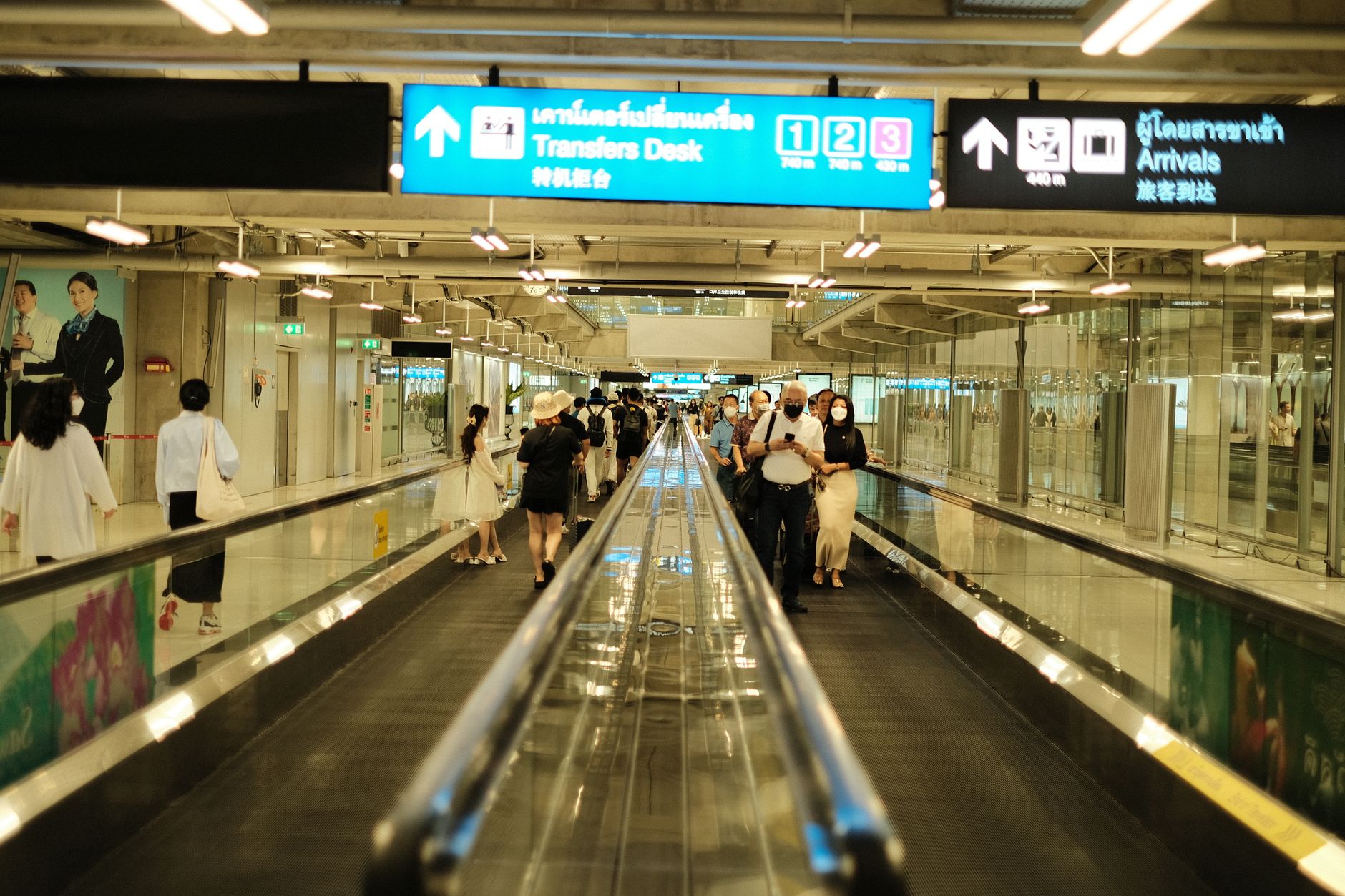
In the first four months of 2026, Phuket International Airport (HKT) processed over 7.2 million passengers according to Airports of Thailand (AoT) data, representing an approximately 11% year-on-year increase. For owners of short-term rental properties, this is one of the most reliable leading indicators available: rising passenger volumes typically flow through into higher occupancy rates with a lag of four to eight weeks.
Our analysts track the correlation between HKT arrival counts and villa and apartment occupancy across districts including Bang Tao, Kamala, Surin, Rawai, and Koh Samui's Bophut and Maenam. The sections below set out the data, the mechanisms, and the scenarios that help investors read the Thai resort property market through the lens of airport statistics.
Quick answer
- 7.2 million passengers processed at HKT during January-April 2026 (AoT data)
- Year-on-year growth: approximately 11% versus the same period in 2025
- International passengers accounted for close to 68% of total HKT traffic in Q1 2026
- Russia, China, and India were the three largest source markets, together representing over 42% of international arrivals
- Short-term rental occupancy in Bang Tao and Kamala reached an estimated 78-84% during peak season (January-March 2026), based on our estimates
- Average daily rate (ADR) for a two-bedroom villa in Layan and Bang Tao during peak season: 8,500-12,000 THB per night
- Koh Samui Airport (USM) recorded approximately 640,000 passengers in Q1 2026, up 8% year-on-year
Options and scenarios
Baseline scenario: moderate growth in arrivals
If the momentum of the first four months holds, HKT could close 2026 with 21-22 million total passengers. That would approach the 2019 record of 18.9 million (per AoT), though direct comparisons are complicated by the completion of the expanded international terminal in 2024, which increased handling capacity materially. Under this scenario, we monitor pressure on occupancy during the low season (May-October). In Karon and Nai Harn, districts that attract a smaller share of Chinese visitors, low-season occupancy in our data sets typically settles in the 45-55% range.
Optimistic scenario: Chinese traffic returns toward pre-pandemic levels
In 2019, Chinese travellers accounted for over 28% of foreign arrivals at HKT. Based on our estimates, that share stood at roughly 14-16% in Q1 2026. If Chinese volumes double in the second half of the year - possible if visa-free access policies continue to expand - annual passenger numbers could exceed 23 million. For owners of rental properties in Surin and Kamala, that trajectory suggests potential ADR growth of 10-15% in the 2026/2027 season.
Pessimistic scenario: global slowdown and currency headwinds
A contraction in key source markets (Europe, Russia) could stabilise annual traffic at 19-20 million passengers. Low-season occupancy would likely compress to 35-45% across most districts. Additionally, the THB exchange rate introduces a layer of real-return risk for investors holding assets priced in baht but reporting returns in other currencies. A 5-8% depreciation of the baht against major currencies would reduce net rental income in home-currency terms, even if THB-denominated occupancy and rates are unchanged.
Comparison table
| Parameter | Phuket (HKT) Q1 2026 | Koh Samui (USM) Q1 2026 | Phuket (HKT) Q1 2025 | Koh Samui (USM) Q1 2025 |
|---|---|---|---|---|
| Total passengers | 5.4 million | 640,000 | 4.8 million | 590,000 |
| International passenger share | 68% | 41% | 65% | 38% |
| Top 3 source markets | Russia, China, India | W. Europe, Russia, Australia | Russia, India, China | W. Europe, Russia, Thailand |
| Short-term rental occupancy (estimate) | 78-84% | 70-76% | 72-78% | 64-70% |
| ADR 2-bed villa (THB/night) | 8,500-12,000 | 7,000-10,500 | 7,800-11,000 | 6,500-9,500 |
| YoY passenger growth | +11% | +8% | baseline | baseline |
Risks and mistakes
Mechanical extrapolation of peak-season figures across twelve months. Peak season (December-March) can account for as much as 40% of annual rental revenue. Investors who calculate returns by multiplying a high-season daily rate by 365 days typically overstate the projection by 30-50%. In our models, we apply a two-tier seasonal split: approximately five months of high season and seven months of low season, each with separate occupancy and rate assumptions.
Overlooking the supply pipeline. Based on our estimates, over 2,800 units were under construction or in pre-sale in Bang Tao and Layan alone as of early 2026. A wave of completions scheduled for 2026-2028 has the potential to compress occupancy by three to five percentage points as new inventory enters the short-term rental pool.
Misreading AoT passenger data. AoT statistics aggregate arrivals, departures, and transits. The actual number of unique tourists is materially lower - by our calculations, approximately 45-50% below the gross passenger count. When comparing data across sources, it is important to confirm that all figures use the same underlying metric.
Currency risk for investors reporting in non-THB currencies. Rental income is denominated in Thai baht. The THB has shown annual volatility in the 8-10% range, which can absorb a substantial portion of net yield for assets generating gross returns of 5-7%. We recommend stress-testing return projections against an adverse exchange rate scenario when building acquisition models.
Koh Samui's dependence on a single airline operator. USM is a privately operated airport (Bangkok Airways), which limits route competition and constrains the number of direct connections. Domestic one-way fares from Bangkok to Koh Samui typically run 3,500-6,000 THB, a structural cost that dampens leisure traffic growth relative to Phuket, where multiple carriers compete.
FAQ
How many passengers did Phuket Airport handle in 2026?
HKT processed over 7.2 million passengers in January-April 2026, per AoT data. Based on the trajectory observed in the first four months, we project a full-year outcome in the range of 21-23 million passengers, contingent on the recovery pace of Chinese inbound tourism.
How do arrival numbers at Phuket affect short-term rental rates?
We monitor a lag of four to eight weeks between an increase in arrivals and a measurable response in short-term rental occupancy. Higher occupancy, in turn, gives property owners room to increase daily rates. In the 2025/2026 season, ADR in Bang Tao rose by an estimated 8-12% year-on-year in our data sets.
Which Phuket districts show the highest rental occupancy?
During peak season 2026, we observe the highest occupancy levels (80-85%) in Bang Tao, Layan, and Kamala. Rawai and Nai Harn register 70-78%, and Karon 65-75%. The spread reflects differences in visitor profile and proximity to key amenities and beaches.
Is Koh Samui growing faster than Phuket in terms of arrivals?
No. USM recorded 8% year-on-year passenger growth in Q1 2026, compared with 11% at HKT. The privately owned airport structure and the relatively high cost of domestic air tickets remain structural constraints on Samui's inbound traffic growth.
What exchange rate should investors use when modelling rental returns in 2026?
We recommend building projections around a range rather than a single point. The THB fluctuated within a roughly 8-10% band through 2025. For conservative modelling purposes, applying the weaker end of the recent range provides a more robust stress-test of net returns.
How much new supply is entering the Bang Tao and Layan rental market?
Based on our estimates, over 2,800 units were either under construction or in pre-sale in Bang Tao and Layan as of early 2026, with completions distributed across 2026-2028. This pipeline represents a meaningful supply-side factor when projecting future occupancy.
Do Russian tourists still dominate arrivals at Phuket?
Russia remains the single largest source market for HKT in Q1 2026, accounting for an estimated 18-20% of international arrivals. China ranks second at approximately 14-16%, and India third at 8-10%, based on our estimates.
How does seasonality affect rental yield calculations for Phuket property?
Peak season (December-March) generates 35-40% of annual rental revenue despite spanning only four months. Low season (May-October) typically delivers 40-55% occupancy and daily rates 30-45% below the seasonal peak. Return calculations anchored only to peak-season data materially overstate realistic annual yields.
What is the short-term rental occupancy outlook for Koh Samui in 2026?
For Bophut and Maenam, we estimate peak-season occupancy at 70-76% in 2026, up from 64-70% in the same period of 2025. Lamai and Chaweng show similar directional improvement, though the absolute levels remain below equivalent Phuket districts due to lower international passenger volumes through USM.
Are there direct international flights to Phuket in 2026?
Yes. HKT is served by direct international services from Russia, China, India, and several European and Middle Eastern hubs. Travellers from markets without direct connections most commonly route through Bangkok, Doha, or Dubai, with total journey times in the 13-17 hour range depending on origin.
Researching property in Phuket or Koh Samui? Get in touch - our analysts will prepare a data brief for your shortlisted location.