

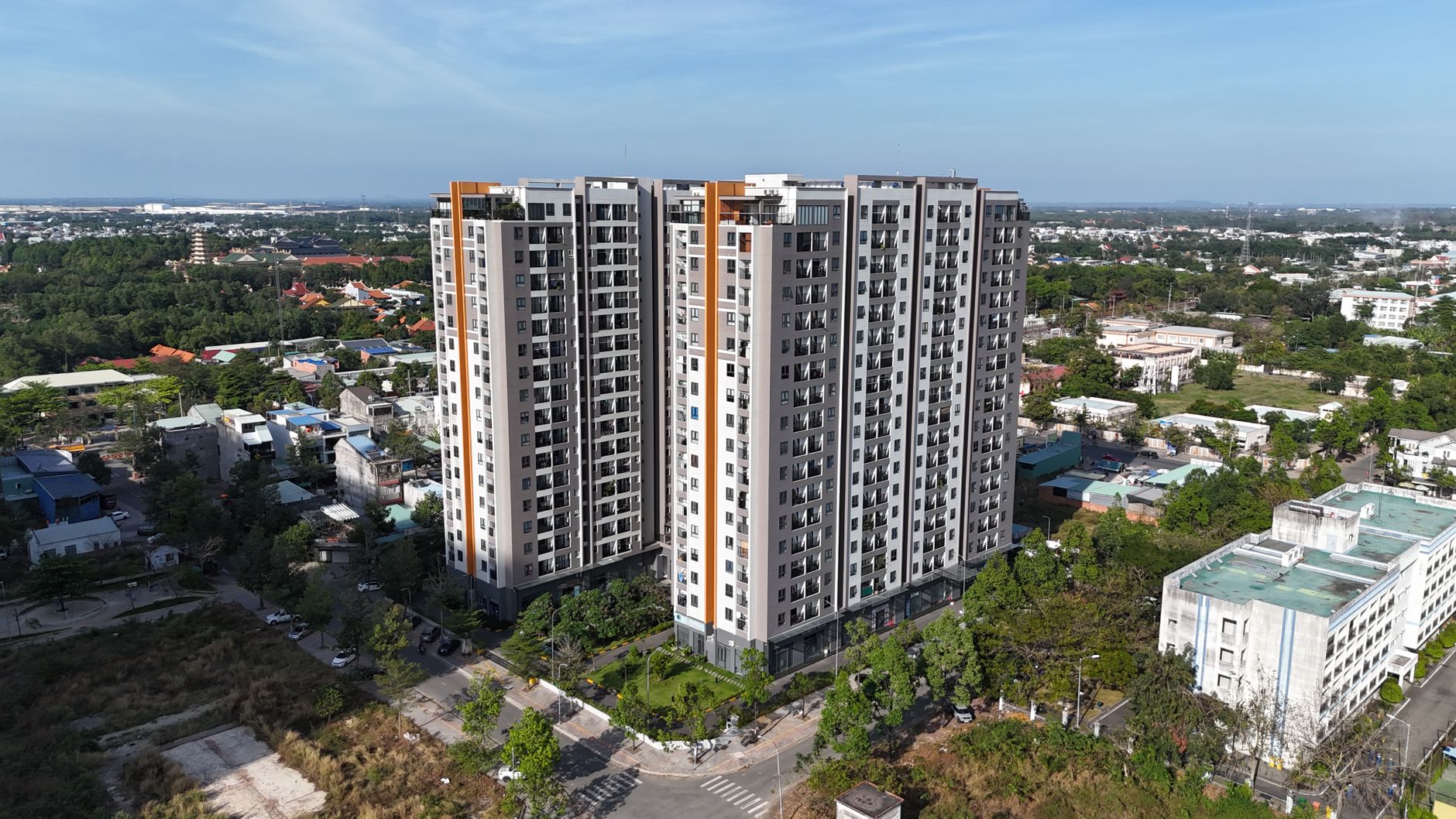
At the close of 2025, approximately 14,008 unsold residential units remained on the Phuket market, with more than 12,300 of those being condominium units. New condominium sales on the island dropped 61.1% year-on-year during 2025, and the number of developer launches shrank by more than half. In response to this structural oversupply, developers are rolling out programmes targeted at foreign buyers, including rent-to-own models that materially alter the risk profile for both the incoming buyer and the existing rental property owner.
We track these figures on a quarterly basis and observe a clear pattern: the higher the volume of unsold stock, the more aggressively developers pursue overseas demand. Per market data reported in October 2026, a Stock Exchange of Thailand-listed developer has extended its rent-to-own programme to foreign buyers, with more than 6,000 unsold condo units to place. This is not a one-off promotional push - it is a systemic signal about the direction of the broader market.
Quick answer
- New condo sales on Phuket in 2025 reached 5,374 units, down from nearly 14,000 the prior year - a 61.1% decline per October 2026 market report data
- Unsold stock on Phuket at end-2025 stood at approximately 14,008 units, of which 88% are condominiums
- Foreign condo transfers on Phuket rose 52% year-on-year in Q1 2026 (420 transactions), with total transfer value up 71% to THB 5.2 billion
- At least one listed developer is actively targeting foreigners via rent-to-own to liquidate more than 6,000 units
- Developer launches on Phuket in 2025 fell 52.6% to 7,205 units; our forward estimates project a further 4.2% decline in 2026
- The villa segment recorded an even sharper correction: sales fell 69.6% while unsold villa stock grew 56.4%
Options and scenarios
How rent-to-own functions under Thai law
Foreign nationals in Thailand cannot hold freehold land title, but they may own a condo unit title provided the building's foreign ownership quota does not exceed 49% of total usable floor area. Under a rent-to-own structure, the tenant signs a long-term lease (typically three to five years), with a portion of monthly rent credited toward the eventual purchase price. The critical caveat is that the tenant holds no title whatsoever until the purchase transaction is completed and registered. Payments made during the rental phase carry the legal status of rent, not a protected deposit.
This exposes the buyer to counterparty risk for the entire lease duration. Should the developer encounter a liquidity shortfall or enter restructuring, recovering amounts paid as 'rent' within creditor proceedings is likely to be difficult. In our quarterly monitoring we are recording a rising volume of such offers in Bang Tao, Kamala and Karon on Phuket, and in Chaweng and Bophut on Koh Samui.
Scenario A: oversupply deepens and list prices decline
If the 2025 sales pace persists and the delivery pipeline from 2023-2024 launches continues feeding completed units into the market, Phuket's absorption rate could fall below 12 months of sales volume - currently sitting at 25-30 months based on our estimates. In that environment, developers would face a choice between cutting transaction prices 8-15% from mid-2024 list levels or expanding rent-to-own programmes with increasingly attractive terms.
For owners of existing short-term rental properties in Bang Tao or Surin, this translates into competitive pressure from newly completed units entering the rental pool. Any developer running a rent-to-own programme must service its stock in the interim, which effectively generates additional rental supply.
Scenario B: foreign demand absorbs the surplus
Q1 2026 data point to a robust uptick in foreign activity: condo transfers on Phuket grew 52% in volume and 71% in value. Phuket accounts for approximately 82% of all foreign condo activity in southern Thailand. If this trend is sustained for another two to three quarters, the oversupply may stabilise at current levels without further deterioration. Rent-to-own would then function as one channel among several rather than as a primary liquidity instrument for distressed developers.
Scenario C: selective correction by district
The most probable scenario, and the one most consistent with patterns in our data sets, is geographic divergence. Premium districts - Layan, Surin and Kamala - are holding values due to constrained land supply. Areas with a high density of recent launches - western Bang Tao, Karon, and Chaweng Noi on Koh Samui - are experiencing more pronounced pricing pressure. Rent-to-own programmes are concentrated precisely in these higher-stock locations, where developers hold the largest volumes of unsold inventory.
Comparison table
| Parameter | Classic Off-Plan Purchase | Rent-to-Own (e.g. listed developer programmes) | Secondary Market Purchase |
|---|---|---|---|
| Title to property | Upon completion and full payment | None until transaction finalised (3-5 year gap) | Immediate upon Land Office registration |
| Developer counterparty risk | High - payments made during construction | High - no title held throughout lease term | Minimal |
| Typical upfront commitment | 20-30% of purchase price | Security deposit of 2-6 months rent | 100% of purchase price |
| Payments credited to price | Yes, from first instalment | Partially - depends on contract terms | Not applicable |
| Oversupply pressure in 2026 | High - 14,000+ units on Phuket | High - instrument for stock liquidation | Moderate |
| Exit flexibility | Low before delivery | Medium - early exit forfeits rent paid | Depends on secondary market liquidity |
| Buyer legal protection | Developer sale-purchase agreement | Lease-with-option agreement | Notarised deed at Land Office |
Risks and mistakes
Developer liquidity risk. With a single developer holding more than 6,000 unsold units and the Phuket-wide figure exceeding 14,000, the financial health of the counterparty becomes a primary factor. In a rent-to-own arrangement, the investor holds no legal title throughout the lease period. If the developer enters insolvency or restructuring, amounts classified as rent do not carry preferential creditor status and recovery can be protracted.
Currency exposure on THB. Rent payments and the final purchase price in these programmes are denominated in Thai baht. Over a three-to-five-year contract horizon, THB fluctuations can shift the effective acquisition cost by 10-15% in either direction. We recommend running at least three currency scenarios before any contract is signed.
Downward pressure on rental yields. Every unit sitting in a rent-to-own programme that is not ultimately purchased returns to the short-term or long-term rental market. This increases competition for existing property owners in districts such as Bang Tao and Chaweng. Based on our estimates, the additional rental supply generated by developer programmes could reduce occupancy rates by 3-7 percentage points in the most saturated locations.
Skipping legal due diligence on contract terms. Rent-to-own contracts in Thailand are not standardised. Each developer sets its own rules for rent-to-price crediting, early termination penalties and price adjustment clauses. Our on-the-ground verification has found contracts that include a clause allowing the developer to revise the final purchase price unilaterally, eliminating cost predictability entirely.
Ignoring the 49% foreign ownership quota. If a building has already reached its 49% foreign ownership ceiling by the time the lease term ends, completing the purchase becomes legally impossible. Verifying the current quota utilisation before signing any lease-with-option agreement is non-negotiable. This risk is particularly relevant in popular projects in Kamala and Surin, where foreign buyer ratios have historically been high.
FAQ
What exactly is rent-to-own under Thai property law?
A rent-to-own arrangement is a lease contract with a purchase option attached. The tenant pays monthly rent, part (or all) of which is credited toward the condo purchase price at the end of the lease period. Until the transaction is registered at the Land Office, the foreign tenant holds no title to the unit.
How many unsold condos remain on Phuket as of 2026?
At end-2025, unsold Phuket stock stood at approximately 14,008 units, with more than 12,300 being condominiums. Developer launches fell 52.6% in 2025, which limits further supply accumulation, but based on our estimates the existing volume requires 25-30 months of absorption at the current sales pace.
Are rent-to-own programmes available on Koh Samui?
Such programmes exist mainly in condo projects in Chaweng and Bophut, though at a smaller scale than on Phuket. Koh Samui carries a lower volume of unsold condo stock but also attracts less foreign demand for condominiums - the island's foreign buyer segment is dominated by leasehold villas.
How does rent-to-own risk compare to a standard off-plan purchase?
Both models expose the buyer to developer counterparty risk. The key difference is in legal classification: off-plan instalments are recorded as purchase price payments, whereas rent-to-own payments are legally rent. In a developer insolvency scenario, the legal position of a tenant is weaker than that of a registered purchaser.
Does the Phuket oversupply affect short-term rental rates?
Yes. Every unit from unsold developer stock that is channelled into the rental market - whether directly or via rent-to-own programmes - increases competition in the holiday rental segment. We are monitoring growing pressure on nightly rates in Bang Tao and Karon, particularly outside the high season.
How does THB exchange rate movement affect rent-to-own economics?
Both the monthly rent and the final purchase price are denominated in Thai baht. Over a three-to-five-year contract, a 10-15% move in the THB exchange rate is a realistic scenario. A weaker baht reduces the effective cost for foreign buyers; a stronger baht raises it. We track quarterly exchange rate movements and recommend modelling at least three currency scenarios before committing.
Can the 49% foreign ownership limit block a rent-to-own purchase at completion?
Yes. If the building reaches the 49% foreign ownership ceiling by the time the lease ends, the developer cannot legally transfer title to the foreign buyer. This risk is most acute in established, popular projects in Kamala and Surin, where the proportion of foreign owners has been high for several consecutive years.
Which Phuket districts carry the highest concentration of unsold condo stock?
The highest concentrations are in western Bang Tao, Karon and Rawai - all areas that saw peak developer launch volumes in 2023 and 2024. By contrast, Layan and Surin show lower unsold stock levels due to restricted land availability for new development.
Are foreign buyer transfers still growing despite the oversupply?
Yes. In Q1 2026, foreign condo transfers on Phuket rose 52% year-on-year to 420 transactions, with total value up 71% to THB 5.2 billion. Phuket accounts for roughly 82% of all foreign condo activity in southern Thailand. Foreign demand is partially offsetting the collapse in domestic buyer activity.
Researching property in Phuket or Koh Samui? Get in touch - our analysts will prepare a data brief for your shortlisted location.